Tag Archives: Igbo Spirituality

Honoring your Ancestors

Standard

By Wise

“The Ndiichie (esteemed ancestor spirits) also held a high place in traditional Igbo society. Elders have always been revered in Igbo society, and even more so after they passed onto Be Mmuo (the land of the spirits). The Ndiichie would often be consulted to offer advice to their descendants and appeal to the Alusi on their behalf. Ndi Igbo have never worshiped their ancestors only venerated them, which is no different then what Catholics do to their saints or what every country does to its national heroes. Respect and honor for the Ndiichie was shown in one way by pouring of libations while chanting incantations. Ndi Igbo believed in the concept of reincarnation and felt that the Ndiichie often reincarnated back on Earth. In fact, all Mmadu (human beings) were believed to reincarnate seven or eight times, and that depending on your karma, one either ascends or descends into another spiritual plane” – Onyemobi

Obu Figures

Obu Figures

Ancestral veneration is a very ancient and common practice all over the world. The Igbo people have understood the importance of honoring the Ndichie (Venerated ancestors)  in order for the civilization to survive and progress from times immemorial. One of the reasons Igbos and Africans in general are in a state of damnation is because we have forgotten how to honor our ancestors.

Figure in an ancestral shrine

Figure in an ancestral shrine

Instead of developing our own culture as a people, we see Western culture as superior to our own and trap ourselves in an inferiority complex. Yes despite hardcore resistance against the Atlantic slave trade, British colonialism, and the Nigerian genocide against our people we ended up losing. Yes our Civilizations collapsed. Yes Nigeria continues to discriminate and oppress Igbo people. We have suffered a lot and nobody shall ever down play that. However, until we remember to honor our ancestors, we will continue on the path of self destruction our enemies have planted for us.

Uxurhe Ancestral Staffs

Uxurhe Ancestral Staffs

The Igbo people are one of the most ancient groups in the world. Like most African groups and civilizations in ancient times had advanced human consciousness, culture, knowledge, creativity, leadership, philosophy, science, and etc. True civilizations respect, honor, and live in accordance to Nature. We once understood the oneness of the Source/Creator (Chineke) with Creation and our relationship with Nature (Ani).

Ani in Mbari House

We honored and respected Ani. That is why we had rich societies and collective democratic leadership that lived by justice, order, peace, unity, and balance. Our ancestors built many ancient civilizations such as the Ugwelle (6000 BCE), Afikpo (3000 BCE), Nsukka (3000 BCE), UmuEri/UmuNri dynasties (500 BCE), Igbo Ukwu (900 CE), and etc. We developed sophisticated architecture such as the Nsude pyramids in Agbaja, Mbari structures, and etc. Igbos developed writing scripts such as Uli, Aniocha writing systems, Nsidibi, Ikwu, and many more. The level of knowledge and scientific (especially metaphysics) discoveries and practices done by the Igbo Civilizations is most likely beyond our imagination. We have a long history of achievements.

Igbo Ukwu Burial

In order for us Igbo people to really rebuild and progress, we must honor our ancestors. We shall not live exactly how our ancestors lived but revive the institutions they built that are applicable today and improve on it. How can you know what today and tomorrow will be if you don’t yesterday was? How can you know who you are if you don’t know who brought you here? The ancestors brought us here and as a mixture of all of them into one, we must know who they were to know who we are. We may say we are children of the ultimate source of all creation and life (Chineke). But through who are we children of Chineke? Who did Chineke give power to bring us into this world and gave life? The answer is our ancestors. Therefore, we must honor and respect them. To honor the ancestors is to honor ourselves and the ultimate ancestor/source of us all Chineke.  Chi (God) Bless

Land of the Rising Sun

“Chukwu”

Standard

by John Umeh

Great Chi
Source of my Chi
Ọm Ọm Ọm Ọm Ọm Ọm Ọm Ọm

Totality of mystic propulsions
Source of life propeller and other propulsions
Ọm Ọm Ọm Ọm Ọm Ọm Ọm Ọm


Aka Ofu the first cause
Aka the First, origin and source of energy and light
Ọm Ọm Ọm Ọm Ọm Ọm Ọm Ọm

Chukwu the Universal Spirit
Revealer of Abia – arcane and other knowledge – first to Agwu
and then to His servant Di-Abia the expert in Abia
Ọm Ọm Ọm Ọm Ọm Ọm Ọm Ọm


Tide of Long-basket Abia
Source of round-basket divination Abia
Ọm Ọm Ọm Ọm Ọm Ọm Ọm Ọm

Olisa the Tide of the Universe
Destroyer and Restorer.  Head-water of eternal purity
Ọm Ọm Ọm Ọm Ọm Ọm Ọm Ọm

The one-eyed One
but all seeing Anthill with eyes all over
Ọm Ọm Ọm Ọm Ọm Ọm Ọm Ọm

Aka Ofu the ancient and the First One
Purest Blaze whose servant the blazing Sun is comparative darkness
Ọm Ọm Ọm Ọm Ọm Ọm Ọm Ọm


O’sa the Wisdom and knowledge that gave round-baskets of
knowledge and wisdom to Holy Spirit Agwu and Dibia
so that they immediately follow behind Him
Ọm Ọm Ọm Ọm Ọm Ọm Ọm Ọm

Obasi the High God
Whose child Dibia is to be titled the child of the High One
Ọm Ọm Ọm Ọm Ọm Ọm Ọm Ọm


Husband of Komosu
Father of the Beautiful Spirit Queen, my mother Idemmili
Ọm Ọm Ọm Ọm Ọm Ọm Ọm Ọm

Father of all fathers
You’re the Kindness, the Kindheart and the Merciful
Ọm Ọm Ọm Ọm Ọm Ọm Ọm Ọm


Chineke – the Creator
Not to be seen in His rectangular sacred Obi house
Komosu opened slightly to see
A spark of golden fire of creation escaped and caused
the greatest tragedy
Ọm Ọm Ọm Ọm Ọm Ọm Ọm Ọm

Love
You pressed the mystic brakes
Komosus corpse and particles of erstwhile monolithic world
come to balance
Some have continued to go round and round
Ọm Ọm Ọm Ọm Ọm Ọm Ọm Ọm


Love, Mercy and Kindness
You too back Your Wife
Wept Your Tears on Her corpse
Salty Oceans and seas that cleansed it of hatred, death
staleness and loss
It became the sacred land/earth
Ọm Ọm Ọm Ọm Ọm Ọm Ọm Ọm

SPIRIT greater than all spirits
Who comes First, followed by Agwu the Holy Spirit
Ọm Ọm Ọm Ọm Ọm Ọm Ọm Ọm


Revealer of all Abia
Dibia the Abia expert after his mission returns to God
Ọm Ọm Ọm Ọm Ọm Ọm Ọm Ọm

Omniscience
The greatest historian eventually goes back to God
Ọm Ọm Ọm Ọm Ọm Ọm Ọm Ọm


The greatest artist/technologist
Eventually goes back to God
Ọm Ọm Ọm Ọm Ọm Ọm Ọm Ọm

Eternal Mystery to the world
The children of the world are striving to know how you are
They are all guessing
For one one sees God and remains alive in this planet
Ọm Ọm Ọm Ọm Ọm Ọm Ọm Ọm


Completeness of potency
Whose words gave existence to innumerable beings and things
up and down the universe
Ọm Ọm Ọm Ọm Ọm Ọm Ọm Ọm

King of kings who verdict is final
being the Being of the last appeal
Ọm Ọm Ọm Ọm Ọm Ọm Ọm Ọm


Eternal Mystery to the world
With no beginning and no end
Ọm Ọm Ọm Ọm Ọm Ọm Ọm Ọm

Defeater of all those who’ve boasted they’ll defeat me
You’ve given me the Lion’s Ikenga that never cools off
Ọm Ọm Ọm Ọm Ọm Ọm Ọm Ọm


Igbulu Ukwu
Great Igbulu greater than Sacred Grove
Source of sacred altar
Ọm Ọm Ọm Ọm Ọm Ọm Ọm Ọm

The Light
Father of  small light the ancestor of all IduuOlu and Igbo
Ọm Ọm Ọm Ọm Ọm Ọm Ọm Ọm


The Potency
Whose hands touched and changed sands to Gold
Ọm Ọm Ọm Ọm Ọm Ọm Ọm Ọm

The greatest and all pervading
Omnipresent, omniscient and all seeing
Ọm Ọm Ọm Ọm Ọm Ọm Ọm Ọm


The One Who’s wide awake even in deep slumber
The one-eyed One that sees all
The One who duplicates Himself in countless numbers
Ọm Ọm Ọm Ọm Ọm Ọm Ọm Ọm

One who is not targetted to time and calendar
Save the time and calendar God has set for himself
Ọm Ọm Ọm Ọm Ọm Ọm Ọm Ọm


The Creator that created Himself
The Breath that breathes Himself
The Life that lives Himself
The Potency that Potentiates Himself
The Word that speaks Himself
The Psalm that sings Himself
The Song/Dance that sings and dances Himself
The Hymn that sings Himself
The Laughter that laughs Himself
The Lamentation that mourns Himself
The Peace that pacifies Himself
The Divination that divines Himself
The Supreme Thought that thinks Himself
The Reflection that reflects Himself
The Wisdom/Knowledge that knows Himself
The Mystic propulsion that propels Himself
The Wind that blows Himself
The Fire/Energy that lit/energized and sustained Himself
The Completeness of Aura that carries Himself
The Prophecy that prophecies Himself
The Title that titles Himself
The Medicine and the Charm that medicates and charms Himself
The Light that lights Himself
The Calendar and the Time that programs Himself
The Completeness that complete Himself
The Hidden Knowledge and the Wisdom that reveals Himself
Ọm Ọm Ọm Ọm Ọm Ọm Ọm Ọm

The Fire/Energy and the Light
Which the uniformed are seeking with their dim palm candle-light
thinking You’re Mkpu termite flies which can be attracted
by the show of owa dim light
Ọm Ọm Ọm Ọm Ọm Ọm Ọm Ọm


From Okponku Abu by John Umeh

Music. Dance. Spirit.

Standard

Igbo Women Playing Udu Drum

By Ezi

For most people, when they think of music (egwu) the immediate things that come to mind involve some form of technology that outputs a song which contains vocals and/or instrumentation. They may think of their favorite artists or songs and hum their tunes. But, I see music as not only something that emanates from my headphones day in and day out, but also sounds, unrefined at times, that emanate from not only within me, but within the environment. Everywhere around you there exists sound and essentially music, if you can open yourself up to a wider definition of what music is and where you can locate it.

There is a rhythm to life. The birds chirping, the sway of an ocean’s waves. The rhythm of 1,000 feet hitting the pavement on their way to work.

Music – vocal, instrumental, or mechanical sounds having rhythm, melody, or harmony

Rhythm – The pattern or flow of sound created by the arrangement of stressed and unstressed syllables in accentual verse or of long and short syllables in quantitative verse

I will dare to say this and you can quote me, that when it comes to instruments, the drum is the pulse of Africa. From East to West, North to South.  Whether it is the ekwe, the djembe, the bata, or the ngoma; the drum operates as that rhythmic pulse, in my opinion. In lieu of the physical drum, the body is also a drum. The body is an instrument, so why then can we not imagine it as a drum? Touch your inner wrist. Do you feel your pulse? Or simply listen to yourself and you will hear your pulse.

For me, when my body is in sync with the instruments that I hear in a song, that is when I can have the most enjoyable and spiritually pleasing experience with music.

Some questions that usually come to mind:

1) What message(s) is this song trying to convey to me?

2) Who is delivering this message(s)?

3) What effect is this song having on my mind, body and soul?

Music is a fundamental component in the way of life of African people.

“Music usually accompanies African religious ritual and is used in prayer to request favors or help from the spirit world. The drum unlocks communication with the spirit world.  Songs are usually accompaniedby the beating of drums and the playing of other instruments.” (Aloysius M. Lugira, African Traditional Religion, p. 74-75)

The beauty in music is that it has a very attractive quality that allows it to be retained in the mind. You can hear a song and it can stay in your head for however long. You may not remember every lyric, but you certainly may remember the melody, the memory attached to the song, as well as what you felt when you heard the song.

When you listen to music, wherever you find it, ask yourself what is the message(s) being conveyed in the song, who is conveying this message(s), and what kind of effect the music has on you.


Finding God in Nature

Standard
Finding God in Nature

“To understand the nature of God, look for God in nature” – Omenka Egwuatu Nwa-Ikenga

Every week, billions of people all around the world attend religious ceremonies in their respective buildings.  Muslims go to their mosques, Christians go to their churches, Jews to their synagogues, Hindus to their Mandirs, and so on and so on.

National Mosque of Nigeria

Believers of these different faiths gather for prayer and worship, fellowship with fellow believers, and to get a chance to hear text that they consider to be the “Word of God”.  These sites are considered to be sacred places. They often are seen as the literal house of the God or gods which they are dedicated to.

Hindu Temple in New Delhi

Hindu Temple in New Delhi

Within these structures, elaborate murals, shrines, scultpures are put up to represent different gods, angels, and saints. Followers of these faiths will often go to these places to speak to these representations in hopes of getting them to intercede in their lives.

Statue of St. Peter

Within these “Houses of God”, people will hear stories about the divine revelations and experiences of their prophets, saints, and holy men and women. But the most ironic thing about these stories is that most of the people described in them did not have their spiritual awakenings, revelations or experiences in a temple or building of any kind. In fact, most of them had their spiritual experiences in nature. Don’t believe me? Consider the following examples:

Moses

Moses experiences God through a burning bush

Moses experiences God through a burning bush

Considered to be the most important prophet in Judaism, Moses had his first experience when he heard a voice speaking to him through a bush that was on fire, yet was not burning.  His second divine revelation from God came to him on a mountaintop.

Moses receives the Ten Commandments on Mount Sinai

Gautama Buddha

Buddha under Bodhi tree

After trying different paths to find an end to human suffering, Siddhārtha Gautama decided to meditate under a Bodhi tree. After 49 days of non stop meditation, he reached Enlightenment, and became a Buddha, which means an “Awakened One.” Those that follow his teachings today call themselves Buddhists.

Jesus Christ

The man known as Jesus Christ is said to have begun his ministry when the spirit of God descended upon him during a baptism ritual performed by John the Baptist at the river Jordan. He then spent the next forty days and forty nights fasting and praying, not in a temple, not in a synagogue, but in the wilderness.

Jesus in the wilderness

According to the scriptures, he remained in the wilderness throughout his ministry,  and  did the vast majority of his preaching in nature, including the famous sermon on the mount.

Sermon on the Mount

Prophet Muhammad

“When Prophet Muhammad [pbuh] was nearly forty, he had been wont to pass long hours in retirement meditating and speculating over all aspects of creation around him. This meditative temperament helped to widen the mental gap between him and his compatriots. He used to provide himself with Sawiq (barley porridge) and water and then directly head for the hills and ravines in the neighbourhood of Makkah. One of these in particular was his favourite resort — a cave named Hira’, in the Mount An-Nour. It was only two miles from Makkah, a small cave 4 yards long and 1.75 yard wide. He would always go there and invite wayfarers to share him his modest provision. He used to devote most of his time, and Ramadan in particular, to worship and meditation on the universe around him.” [Rahmat Al-lil’alameen 1/47; Ibn Hisham 1/235,236; Fi Zilal Al-Qur’an 29/166]

Cave in Hira where the Prophet Muhammad received the Koran

“When he was forty, the age of complete perfection at which Prophets were always ordered to disclose their Message, signs of his Prophethood started to appear and twinkle on the horizons of life; they were the true visions he used to experience for six months. The period of Prophethood was 23 years; so the period of these six months of true visions constituted an integral part of the forty-six parts of Prophethood. In Ramadan, in his third year of solitude in the cave of Hira’, Allâh’s Will desired His mercy to flow on earth and Muhammad [pbuh] was honoured with Prophethood, and the light of Revelation burst upon him with some verses of the Noble Qur’ân.” [Fath Al-Bari 1/27]

So here you have the founders of four of the major religions in the world receiving divine revelation in nature, and yet today, their followers are literally stick themselves inside in large boxes of sticks, stones, glass and metal.  Does anyone else see something wrong with this picture?

Its not only religious people that have become delusional, its also people who proclaim to be scientists as well. Ancient scientists used to learn about nature by actually being a part of it. Sitting around watching the heavenly bodies in the sky, and seeing how different things interacted in nature. Nowadays, they are stuck behind computer screens or locked away in laboratories. The interesting thing is that most of their “theories” and “laws” stem from people like Sir Issac Newton, who “discovered” gravity after an apple fell on his head while he was sitting under a tree. I guess you can call him the Buddha of Physics.

Ndi Igbo (Igbo people), much like other African peoples, did not limit God to  a physical structure or even one piece of land. They recognized the Divine in all of nature.  I recall hearing a story about how when some of the European missionaries came to Alaigbo (Igboland), they had requested some land to build “God’s house”, to the amusement of the Igbo elders that they had spoken to. These same Europeans who claimed that their God was omnipresent truly did not believe it, for if they had, they would not have condemned the Igbo traditions which truly placed God in everything.

Contrary to popular belief, Igbos DID NOT worship or pray to “idols” or wooden sculptures. The idea of Africans worshiping or praying to an object that they created is downright insulting. The ironic thing is that the people who perpetuate this myth spend a good amount of time doing the same thing that they have historically condemned others for:

Offerings to a Statue of Mother Mary

Instead of worship, Igbos entered into communion with Spirit. Divine experiences were not limited to special prophets or holy men or saints, but could be  had by everyone. The vast majority of  places for public communion in traditional Igbo Omenala (custom and tradition) were either at trees or groves of trees. These trees were representations of divine forces, but were not the divine forces themselves.  The following are some examples:

Agwu deity represented by Ogilishi tree

Ngwu deity represented by Ngwu tree

Both examples taken from Ngü Arö Öka The Öka Lunar Calendar, 2010 -2021 by Nevbechi Emma Anizoba.

The pouring of libation at the shrine of Onye ama-ama in Amaeke

Sacred Grove of Ihu Nne Chukwu at Obiene

The use of trees as connections to the spirit world is illustrated beautifully in the “Tree of Souls” in the film, Avatar, where the Na’vi would go there in order to commune with the spirit of their planet, Eywa.

Tree of Souls in Avatar

This use of trees as places of communion with Spirit carried onto the Diaspora. Ayiti (Haiti) was one place where alot of Igbos ended up during the Maafa (African Hellacaust). Here we see a picture of Haitian Vodouisants (Practioners of Voodoo) having a ceremony at a sacred Mapou tree:

Voodoo Ritual at Mapou Tree

Two hundred years ago, their ancestors gathered together in a sacred grove in the Bwa Kayiman woods and declared that they would no longer be enslaved by the white people or their god.

Voodoo Ritual at Bwa Kayiman Woods

Even in North America, the significance of trees as sacred communal places has not dissappeared from the lives of Africans in America. Below are some pictures of the special trees of some of the black fraternities and sororities:

Iota Phi Theta Fraternity Inc. Tree

Sigma Gamma Rho Sorority Inc. Tree

Zeta Phi Beta Sorority Inc. Tree

Delta Sigma Theta Sorority Inc. Tree

Alpha Kappa Alpha Sorority Inc. Tree

What’s significant about the black fraternities and sororities in America is that they also trace part of their lineage to the Ekpe society of southeastern Nigeria, but that is a conversation for another day.

Besides trees, caves also were used as sacred places. Two of the great oracles of Alaigbo (Igboland) were found in caves, including the Ibini Ukpabi oracle of Arochukwu (also known as the Long Juju) as well as the Agbala oracle of Awka. Below is a picture of a shrine in the Ibini Ukpabi cave:

Ibini Ukpabi Oracle

Of all, the most famous public places of African communion with Spirit have always been bodies of water. Rivers, lakes and streams have always been viewed as extremely sacred all over the continent, as evident by the number and popularity of water divinities (Yemaya, Oshun, Auset, Het-Heru, Nommo, Mami Wata, etc).

Those who visited these sacred waters would go for spiritual cleansing, purification, and healing, to become one with Spirit, for initiations and for a variety of other reasons. Water is perhaps the easiest medium to go into a state of trance , in order to connect with Spirit as well as ancestors.  If you want to learn how to connect with Ezenwanyi, the Divine Igbo mother water goddess, click here. Below is a picture of a Voodoo bathing ritual in Haiti:

Voodoo Bathing Ritual

I hope you have enjoyed all this information that has been presented to you. If you want to get a deeper understanding of the concepts mentioned above, the most effective way for you to do that would be to simply go outside. Whether you go a park, or a stream or even your backyard, you will gain a far deeper insight into what God is from simply getting back to Nature and being still then you would from reading any book or blog. Yagazie (May we prosper).

The Transmission of Odinani & Omenala in Pre-Colonial and Modern Society (Part 2)

Standard

by Omenka Egwuatu Nwa-Ikenga

Ifuru (mythology)

Ndi Igbo (Igbo people), like other ancient people around the world, created mythology to answer basic questions about how the world was created, where their people came from, and why things are the way they are in the world. However, unlike many unenlightened people today, they were not naive enough to take these stories literally, and understood them to be symbolic.

The following myth deals with the origin of Afa (divination). Although the Yoruba system of Ifa is the most popular, it did NOT originate with them and appears all over West Africa. The Fon people call it Fa.  The Urhobos call it Epha. To the Ewe, its also called Afa.

Divination Apparatus

The excerpt is from page 86 of  John Umeh’s After God is Dibia Volume 1:

“The Igbos have a very interesting history of the origin of Afa Ugili/Akpukpala. There was a very brilliant Igbo lady who made accurate prophecies and inspired utterances and accurately read the minds of God, spirits, ancestors, men and women, stars, planets and all that exists and saw clear and accurate visions of what was, what is, and what will be. Additionally, she heard, with the help of her mystical third ear, what was, what is, and what will be.

She was consulted on all problems which she solved with precision and complete satisfaction. She lived to a very ripe old age, serving humanity and God with her clear vision and uncanny audition. When she finally died, humanity was thrown into a great wailing, chaos and confusion.

A delegation was therefore sent to Chukwu (God) with a request that He kindly send a replacement or make it possible for all to have the vision and audition of the dead wise old lady sage. God consoled the delegates and sent back, through them, His merciful words of consolation to humanity.

He instructed them on how to bury the old, dead divination sage with a promise that an Ugili, sacred tree, will sprout and grow from her head and that its fruits, when they ripe and fall, should have their shells broken into two and arranged four on each of four strings, which when cast and interpreted will tell with accuracy, what was, what is, and what will be.The delegates left home for the human world with the good news, divine words of consolation and instruction on the new divination system that would replace the uncanny vision and audition of the lady sage of divination. God’s instructions were obeyed to the last letter. The result was as promised”

Ugili Tree

Unlike other mythologies where women usually are blamed for the downfall of the human race, a woman is seen as being the source of this sacred divination system, and women played very important roles in pre-colonial Igbo society as dibia afa (diviners) and priestesses.

Ukabuilu (parables)

Parables are alot like mythology, but mostly deal with moral lessons rather than answering questions of origins. The following is a parable from the Oraifite community of Igboland. More can be found at this link.

“Many years ago there was a Calabar hunter called Effiong, who lived in the bush, killed plenty of animals, and made much money. Every one in the country knew him, and one of his best friends was a man called Okun, who lived near him.

But Effiong was very extravagant, and spent much money in eating and drinking with every one, until at last he became quite poor, so he had to go out hunting again; but now his good luck seemed to have deserted him, for although he worked hard, and hunted day and night, he could not succeed in killing anything.

One day, as he was very hungry, he went to his friend Okun and borrowed two hundred rods from him, and told him to come to his house on a certain day to get his money, and he told him to bring his gun, loaded, with him.

Now, some time before this Effiong had made friends with a leopard and a bush cat, whom he had met in the forest whilst on one of his hunting expeditions; and he had also made friends with a goat and a cock at a farm where he had stayed for the night.

But though Effiong had borrowed the money from Okun, he could not think how he was to repay it on the day he had promised.

At last, however, he thought of a plan, and on the next day he went to his friend the leopard, and asked him to lend him two hundred rods, promising to return the amount to him on the same day as he had promised to pay Okun; and he also told the leopard, that if he were absent when he came for his money, he could kill anything he saw in the house and eat it.

The leopard was then to wait until the hunter arrived, when he would pay him the money; and to this the leopard agreed. The hunter then went to his friend the goat, and borrowed two hundred rods from him in the same way.

Effiong also went to his friends the bush cat and the cock, and borrowed two hundred rods from each of them on the same conditions, and told each one of them that if he were absent when they arrived, they could kill and eat anything they found about the place.

When the appointed day arrived the hunter spread some corn on the ground, and then went away and left the house deserted. Very early in the morning, soon after he had begun to crow, the cock remembered what the hunter had told him, and walked over to the hunter’s house, but found no one there. On looking round, however, he saw some corn on the, ground, and, being hungry, he commenced to eat.

About this time the bush cat also arrived, and not finding the hunter at home, he, too, looked about, and very soon he espied the cock, who was busy picking up the grains of corn. So the bush cat went up very softly behind and pounced on the cock and killed him at once, and began to eat him.

By this time the goat had come for his money; but not finding his friend, he walked about until he came upon the bush cat, who was so intent upon his meal off the cock, that he did not notice the goat approaching; and the goat, being in rather a bad temper at not getting his money, at once charged at the bush cat and knocked him over, butting him with his horns.

This the bush cat did not like at all, so, as he was not big enough to fight the goat, he picked up the remains of the cock and ran off with it to the bush, and so lost his money, as he did not await the arrival of the hunter.

The goat was thus left master of the situation and started bleating, and this noise attracted the attention of the leopard, who was on his way to receive payment from the hunter. As he got nearer the smell of goat became very strong, and being hungry, for he had not eaten anything for some time, he approached the goat very carefully.

Not seeing any one about he stalked the goat and got nearer and nearer, until he was within springing distance.

The goat, in the meantime, was grazing quietly, quite unsuspicious of any danger, as he was in his friend the hunter’s compound. Now and then he would say Ba!! But most of the time he was busy eating the young grass, and picking up the leaves which had fallen from a tree of which he was very fond.

Suddenly the leopard sprang at the goat, and with one crunch at the neck brought him down. The goat was dead almost at once, and the leopard started on his meal.
It was now about eight o’clock in the morning, and Okun, the hunter’s friend, having had his early morning meal, went out with his gun to receive payment of the two hundred rods he had lent to the hunter.

When he got close to the house he heard a crunching sound, and, being a hunter himself, he approached very cautiously, and looking over the fence saw the leopard only a few yards off busily engaged eating the goat. He took careful aim at the leopard and fired, whereupon the leopard rolled over dead.

The death of the leopard meant that four of the hunter’s creditors were now disposed of, as the bush cat had killed the cock, the goat had driven the bush cat away (who thus forfeited his claim), and in his turn the goat had been killed by the leopard, who had just been slain by Okun.

This meant a saving of eight hundred rods to Effiong; but he was not content with this, and directly he heard the report of the gun he ran out from where he had been hiding all the time, and found the leopard lying dead with Okun standing over it.

Then in very strong language Effiong began to upbraid his friend, and asked him why he had killed his old friend the leopard, that nothing would satisfy him but that he should report the whole matter to the king, who would no doubt deal with him as he thought fit.

When Effiong said this Okun was frightened, and begged him not to say anything more about the matter, as the king would be angry; but the hunter was obdurate, and refused to listen to him; and at last Okun said, “If you will allow the whole thing to drop and will say no more about it, I will make you a present of the two hundred rods you borrowed from me.”

This was just what Effiong wanted, but still he did not give in at once; eventually, however, he agreed, and told Okun he might go, and that he would bury the body of his friend the leopard.

Directly Okun had gone, instead of burying the body Effiong dragged it inside the house and skinned it very carefully. The skin he put out to dry in the sun, and covered it with wood ash, and the body he ate.

When the skin was well cured the hunter took it to a distant market, where he sold it for much money. And now, whenever a bush cat sees a cock he always kills it, and does so by right, as he takes the cock in part payment of the two hundred rods which the hunter never paid him.

MORAL: Never lend money to people (who cannot pay it back), because if they cannot pay they will try to kill you or get rid of you in some way, either by poison or by setting bad Ju Ju’s for you.”

Ute ikpe ekpere (prayers)

Prayer has always been a central part of Igbo life. It served as a direct link to ala mmuo (the spirit land). The following is an excerpt from pages 199-200 of Traditional Igbo Beliefs and Practices by  IK Ogbukagu. A morning prayer  of this nature was done every day by the head of each household while offering oji (kola nut) to the different divinities.

A kpopu uzo, a kpopu onu
The dawning of a new day marks the beginning of a routine struggling for the means of human and other beings existence

Ubosi kpatalu nu nya likalie
The day that fetches more benefits than others deserves to have more of those items of benefit

Uchu adi agba mma ekwu
The pen kinfe routinely deployed for splitting of kolanuts because of the nature of its assignment is always assured of early morning breakfast

O bu n’igwe , O bu n’ana, chedo anyi
God who lives in heaven and on earth, please protect our interest

Omebia, Odokwaa
God you destroy and regenerate lives

O sibe, O dika a ma elisi
God bestows gifts as though these benevolence would remain endless

E lisie, o dika a ma eweta ozo
He allows or rescinds these gifts as he considers appropriate or expedient

Taa oji a n’otu ka anyi taa ya n’ibe n’ibe
Almighty God, take this kolanut in whole, while we take it in cotyledons

Oru mmuo na nnu mmo bianu taa oji
All classes of spirit/elementals, especially the good ones, please have your own share of this nut

Ichie ukwu na ichi nta
Titled and non-titled ancestors to join us in this exercise

Ndi mvu na ndi egede
The primordial and other ancestors of the spirit world also to join

A nalu nwata ife o ji ama mma mma ya aluru
When a child is deprived of what he loves he subsequently is made miserable

Ana, ndi afulu anya na ndi afuro anya, nke na enwero okpa ibe ya kwota ya n’azu
This land, indigines dead and alive; among the dead;the deformed and the crippled helped by others also are invited to join

Unu ekwena ka oji dalue ana, ma o bu ka nwa-ngwele gbaa aji
(Almighty God) do not allow this kolanut to drop from my hand or subject us to any misfortune today

Ofo nn m nyiba m alo, e welu m aka abo bulu ya
I will at all costs endeavor to protect all the heritages handed over to me by my father

Mmuo na anoro ya, mmadu ebulu oche ya
If an oracle vacates its seat, a human being takes over

Izuzugbe nzugbe, anunu gbe
All (spirits/ancestors) are enjoined to rally and then fully participate in these early morning prayers

O sii nwata, jide nkakwu, ya ga-ekunye mmili o ga-eji kwo aka
Anyone who makes a child commit a crime will have to bear the consequence of his action

Oso chuka nwata, o gbanaa ikwu nne ya
A child who has a serious disagreement with his fraternal household may op to move over and settle with his maternal relatives

Nee ubosi taata dozie ya ka o di ka ibe ya
God bless today as you did with other days

Ndi ilo ezuana anyi n’uzo
We earnestly pray we do not fall prey to the evil plans of our enemies

O bialu egbu anyi gbue onwe ya
Wicked plans designed to harm the innocent are to have boomerang effect

Ile oma ka ejuna ji agan’ogwu
We achieve much progress by being good, kind and gentile

Ife any ga-eli bia, nke ga eli anyi abiana
We pray for the good things of life and abhor evil tendencies

Izu gbajulugwo o kaalu nti
Secrets and malevolent plants at some point in time, may be revealed

Ututu tutauta ife
May today be blessed with blessed with lots of good luck

Onye welu ututu tutuba otutujue akpa
If you start early enough to toil, you will achieve a lot by the end of the day”

As you can see, Igbo prayers were a combination of affirmations, praises, proverbs, and requests. There were not wish lists or the marathon sessions of begging that are prominent in some traditions today. Most importantly, Igbo prayer was almost always never done empty handed, and placed a good deal of responsibility on the part of the person doing the prayer to follow it up with the right actions and deeds that would lead to its fulfillment.

Back in Time: Igbo Farm Village in America

Standard

by Omenka Egwuatu Nwa-Ikenga

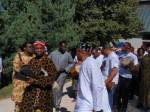
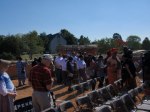
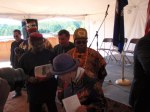
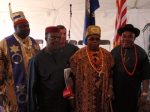
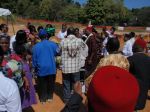
This weekend, I had the pleasure of attending the official dedication of the Igbo farm village at the Frontier Cultural Museum in Staunton, Virginia. This museum is the first of its kind, and it includes live recreations of the living conditions of some of the various immigrants who helped in the creation of America. These exhibits include English, Irish, German as well as West African, with a special emphasis on Igbo.

By all accounts, the Igbo represented a large number of Africans transported to the Americas, especially to the state of Virginia. At one point in time, Ndi Igbo (Igbo people) constituted 70% of the enslaved Africans in the state (source). If you are an African American with family ties to Virgina (including West Virginia), its almost guaranteed that you have some Igbo ancestry. In fact, according to Dr. Douglass Chambers, 60% of ALL African Americans probably have at least one Igbo ancestor (source). Below are some of the pictures that I took from the dedication weekend. In the future, there will be ALOT more posts about Igbo culture in the Americas, as well as photos from the village as it evolves.


Revisiting Igbo Ukwu: A Lost Ancient Civilization

Standard

Knowledge of history and the context in which things happened is essential in order to have a more balanced view of the world. One important site to the history of Ndi Igbo (Igbo people) is Igbo Ukwu (literally, the Great Igbo), where a number of original artifacts were found beginning in 1938.

“Igbo Ukwu is an archaeological site in Igboland, in Anambra State to be exact. These artifacts are dated to approximately 900 AD, but they may be much older(in fact I’m sure of it), and indicative of a lost ancient civilization in Igboland.

Strangely there isn’t much known about these artifacts beyond what you will find in standard Google searches. What you will generally find are brief descriptions of what was uncovered at Igbo Ukwu with some picures. Mind you there are hundreds of pieces, and you will not find them all online. Also, sadly, many of the Igbo Uwku artifiacts, our artifiacts, because these are indeed ours, are locked away in the British Museum.

Igbo Ukwu artifact

These pieces, which I believe to be indigenous productions, are vital in helping to reconstruct some of the ancient history of not only Igbos, but of the human existence within ancient Africa.”

To read more about Igbo Ukwu, visit this blog that deals with Igbo migrations, which is also listed in our related links page.

The Call

Standard

Royal Woman in the making 

Ezenwanyi reawaken

Royal woman

Open your veil and let your eyes behold your beauty

Light of Chukwu sacred gateway

Sing the:

Divine Mother tune

For …

She longs to bathe you with her sunlight

Wash your sorrows with rain

Adorn your crown with flowers

Delight your taste buds with her fruits

Dazzle you with her colors

Caress you with her winds

Make you walk on lushes of green

Lighten your steps to the tune of silence

Sing you lullabies in the coos of a bird

Reawaken your existence as the universe at play

Dance you daughters of God

Move your hips to the rhythm of the cosmos

Dance

Dance

Dance

Away

The subjugations, the denials

The definitions, the sorrows

The incisions, the invasions, the blame

The censorship, the forced responsibilities, the lies

And

Many

Many

Other fixations

For your Queendom is finally at hand.

By Ebele Chizea


The Transmission of Odinani & Omenala in Pre-Colonial and Modern Society (Part 1)

Standard

by Omenka Egwuatu Nwa-Ikenga

A good portion of the people of the world today attribute their beliefs and practices from one or more texts that they consider to be sacred. These “holy books”, as they are called, contain the cosmogony, proverbs, traditions, mythology, laws, customs, and other characteristics of a group of people, and are often considered to be either the “Word of God(s)” or the words of men that were “divinely inspired.”

“Holy” Book

Ndi Igbo (Igbo people) on the other hand, did not limit the transmission of their Odinani and Omenala on scriptures written by men. The reason for it is simple. When a group of people is able to see the Divine in everything, they do not place limits on how they transmit their points of view (the fundamental definition of a cosmogony is how a people see the world). While the transmission of Odinani and Omenala are found in every walk of Igbo life, this series of articles will only focus on some of the main avenues, which include: aha (names), ilu (proverbs), egwu (music), ukabuilu (parables), ifuru (mythology), okwa nka(art), and kentoaja(rituals)/mmemme (festivals). Modern additions such as literature, movies, poetry, and comic books/graphic novels will also be discussed.

(Aha) Names

Alot of information could be gathered from an Igbo name, as each one carries some significance and meaning. From an Igbo name, one could gather information such as the market day someone was born (Okafor means a male born on Afor day), their clan (Nwaneri means a descendant of Eri), the profession of their father (Ezeana means the descendant of a priest of Ani), as well as the circumstances around their birth (Ijeagha refers to a child born during war). Besides these things, alot of Igbo philosophy is apparent in many names. Take for example, the meanings of these names:

Afulukwe: “Seeing is believing”

Akobundu: “Wisdom is Life”

Azikiwe: “To turn one’s back is better than getting angry”

Chibueze: “God is King”

Ezinne: “Good Mother”

Jideofor: “Hold on to righteousness”

Nneka: “Mother is Supreme”

Nkeiruka: “The future is greater”

Nwachukwu: “Child of God”

Onyemobi: Who knows the heart?

Onwuasoanya: “Death respects no one”

Tabansi: “Have the patience (of a vulture)”

A more extensive list of Igbo names and their meanings can be found at this site as well as this one.

People were not the only things that were given special names, the Igbo Alusi (spiritual forces) were also given names that revealed alot about them and their functions in the society:

Chukwu: “The Big God” (the sum total of everything)

Amadioha: “Freewill of the people”

Anyanwu: “Eye of the Sun”

Idemilli: “Pillar of water”

Ikenga: “Place of strength”

More time will be spent in future posts explaining the meaning of the names of the Alusi as well as their attributes.

Ilu (Proverbs)

An Igbo proverb about proverbs states: “Ilu bu mmanu e ji eri okwu” (Proverbs are the palm-oil with which words are eaten). There are not many things that can teach you alot about a group in such a concise manner as a proverb, and Ndi Igbo (Igbo people) are amongst the most prolific in the world at producing them. In fact, I would go as far as to say that its probably impossible to have a full conversation with an elder Igbo person without hearing at least one. It makes you wonder whether ancient Igbos spoke in nothing but proverbs like Yoda.  Here are a couple that  give a taste of Igbo philosophy:

Eze mbe si na nsogbu bu nke ya, ya jiri kworo ya n’azu” (The tortoise said that trouble is its own; that’s why it carries trouble on its back)

Explanation:  One should try and shoulder one’s own burden

Nwaanyi muta ite ofe mmiri mmiri, di ya amuta ipi utara aka were suru ofe” (If a woman decides to make the soup watery, the husband will learn to dent the fufu before dipping it into the soup)
Explanation: One should learn to change tactics to suit a situation.

Madu bu chi ibe ya” (Man is God to his fellow Man)
Explanation: God works through human beings

Onye ahala nwanne ya” (Never leave your brothers and sisters behind)
Self explanatory

Aku m diri Ubani” (My wealth lies in the good in my community and what I do to bring it forth)
Self explanatory

Ebuno jị ibi éjé ogụ” (The ram goes into a fight head first)
Explanation: One must plunge into a venture in order to succeed.

E gbuo dike n’ogu uno, e ruo n’ogu agu e lote ya” (Kill a warrior during skirmishes at home, and you will remember him when fighting enemies)
Explanation: Don’t destroy your leaders.

Ugo chara  acha adi(ghi) echu echu” (A mature eagle feather will ever remain pure)
Explanation: One well trained will stand the test of time.

Ome nta ome imo, ya gwuo-nu ala lia onwe ya!” (A man who believes that he can do everything, let him dig a grave and bury himself!)
Explanation: Its not wise to believe that one is without limitations

Amara akagh ngburu oke madu.  Akaa anugh ngburu onye ogbede” (Knowing (the truth) but not telling it is what kills old men.  Hearing (the truth) but not heeding it is what kills young men.)
Self explanatory

Egbe belu-Ugo belu. Nke si ibe ya ebena, nku tije ya” (Let the kite (type of bird) perch and the hawk perch, and if one rejects the perching of the other, may his wings be broken)
Explanation: Live your life and let others life their lives

More Igbo proverbs can be found here and here.

Egwu (Music)

Ndi Igbo, much like other African peoples, had a soundtrack for every occasion in their life. They had songs for children being born, songs for marriage, and for when people were being laid to rest. They had songs for work and for play. They had songs to prepare for war, songs to celebrate or call for peace, and songs to show discontent.

One such way of showing discontent through song was demonstrated through the act of “sitting on a man”, which Igbo women used to protest a man who they had felt that wronged them. “Sitting on a man” or a woman, boycotts and strikes were the women’s main weapons. To “sit on” or “make war on” a man involved gathering at his compound, sometimes late at night, dancing, singing scurrilous songs which detailed the women’s grievances against him and often called his manhood into question, banging on his hut with the pestles women used for pounding yams, and perhaps demolishing his hut or plastering it with mud and roughing him up a bit. A man might be sanctioned in this way for mistreating his wife, for violating the women’s market rules, or for letting his cows eat the women’s crops. The women would stay at his hut throughout the day, and late into the night, if necessary, until he repented and promised to mend his ways.Although this could hardly have been a pleasant experience for the offending man, it was considered legitimate and no man would consider intervening. (van Allen, Judith. “Sitting on a Man”: Colonialism and the Lost Political Institutions of Igbo Women. Canadian Journal of African Studies / Revue Canadienne des Études Africaines, Vol. 6)
Songs dedicated to the birth of children were a bit more positive than the ones that dealt with “sitting on a man.” These songs, which were referred to as omumu nwa songs are sung by groups of women after a successful childbirth. It is also usually accompanied by a dance. Below are two contrasting examples:

Uha (Lies)

Ye-ye-ye-yeo mumuo ma (Ye-ye-ye-ye good childbirth)

Uha-a aha we uha, uha (Lies, they are telling lies, lies)

Omumu otuotuo oluilu (Childbirth sweet and bitter)

Uha-a aha we uha, uha (Lies, they are telling lies, lies)

Omumuo ririu darao cha (Childbirth eater of ripened udara fruit)

Uha-a aha we uha, uha (Lies, they are telling lies, lies)

Aha we uha ekwu we r’ezi (Whether they are lying or telling the truth)

Uha-a aha we uha, uha. (Lies, they are telling lies, lies)

According to the article, “The Birth Song as a Medium for Communicating Woman’s Maternal Destiny in the Traditional Community” by Grace Okere: “This song is an expression of joyful disbelief by the mother of a woman who has successfully and safely delivered her child. They must be telling lies, she sings, although she wishes and knows that they are telling the truth. Apart from the rhythmic effect of the repetitive refrain, “uha-a aha we uha, uha” (“lies, they are telling lies, lies”), the song exploits the literary devices of paradox and imagery to effectively communicate meaning. Childbirth is paradoxically said to be “sweet and bitter.” This is so because it can bring boundless joy to the household into which a pregnant woman safely bears a child. On the other hand, it is “bitter” if the woman dies in childbirth. Then, there would be no songs of joy but sorrow and tears. Childbirth is also personified as “eater of ripened udara fruit.” This is an apt image used to communicate the fact that childbirth can kill a woman in her prime. This euphemistically expresses the sorrowful side of childbirth, when a woman dies in the process. The song brings out the antithetical qualities of childbirth- it is sweet but can be bitter, good but can send a young woman to an early grave” (Okereke, Grace Eche. “The Birth Song as a Medium for Communicating Woman’s Maternal Destiny in the Traditional Community” Research in African Literatures, Vol. 25, No. 3, Women as Oral Artists (Autumn, 1994), pp. 19-32)

This song offers a very different perspective:

Ah Nwa (The War of Childbirth)
Aha nwas u r’abalii si, osur ‘ogorowu (If the war of childbirth happens  in the night, it happens in the afternoon)
Niyi aso egwu, oha era (Do not be afraid owners of breast )
Aha nwaa yie jebekwae je (The war of childbirth we must go)
Ejem eje, ala m ala (I will go, I will return)
Aha nwaa yie jebekwae je (The war of childbirth we must go)
Ma m’eje aha nwa (If I don’t fight the war of childbirth)
Mbia ji agbu enyi nkwu? (Shall I use rope to climb palm tree?)
Aha nwaa yie jebekwae je (The war of childbirth we must go)
Ma m’eje aha nwa (If I don’t fight the war of childbirth)
Mbia ji egbe eje ogu e-e? (Shall I use gun to fight e-e?)
Aha nwaa yie jebekwae je (The war of childbirth we must go)
Aha nwa bu ogu egbe ndi iyom (The war of childbirth  is the gunfight of women)
Aha nwaa yie jebekwae je. (The war of childbirth we must go.)

Regarding this song, Okereke states that: “a stylistic analysis of the song reveals a rich exploitation of literary devices like metaphor and imagery, rhetorical questions and reversal of word order. All these combine to generate a solemn effect on the audience, especially the women themselves. The epithet “oha era,” literally meaning “owners of breast,”is a synecdochic expression used to praise women and challenge them to action in matters of grave importance affecting them or the entire community. By aptly using the image of war to describe childbirth, the song brings out the physical  strength and valor required of women in parturition . It also brings out the suffering and danger of losing one’s life during childbirth as in war.The women’s courage, confidence, and determination to achieve victory in this “war” are brought out in the repetitive emphasis  of and resolve in the words” I will go, I will return.” This determination and certain victory derive from the fact that most women throughout history have fought the war of childbirth and have returned victorious-alive with their babies. This positive mental attitude can go a long way in aiding a woman’s safe delivery.

The reversal of the word order in the refrain,”ahan wa ayi ejebekwa eje” (“the war of childbirth we must go”) gives the song a militant rhythm, which raises it to the status of a war song. This befits the war situation of childbirth….The rhetorical questions “If I don’t fight the war of childbirth/ShalI l use rope to climb palm tree?/ …/ Shall I use gun to fight e -e?,” not only spur woman to victory, but further reinforce woman’s view of her relevance in the traditional community as being anchored on childbearing. The double metaphor in the expression ” the war of childbirth is the gunfight of women” shows how highly women value this duty, and how they see it as their “crowning glory,” as the greatest of all their achievements. Like men in war, childbirth is the arena in which women prove their worth and valor; it is the achievement that will etch a notch on a woman’s bow of honor, just as the number of human heads a man brought home from battle determined the number of notches in his bow in the old days o f inter-ethnic wars. (Okereke, Grace Eche. “The Birth Song as a Medium for Communicating Woman’s Maternal Destiny in the Traditional Community” Research in African Literatures, Vol. 25, No. 3, Women as Oral Artists (Autumn, 1994), pp. 19-32)

Igbo musicians

It is my opinion that music is the most effective and efficient way of transmitting a culture. From this single tool, you can transmit a language, history, proverbs, mythology, dances, rituals and much much more. Music is perhaps the one thing that people of African descent have not regressed on, in fact, its the one area that I believe we have even outdone our ancestors in. Despite the abominable state that we have found ourselves in worldwide , nobody can say that we are not the best in the world at making music. If we are to create the new systems that can meet the needs of our people and elevate us to a higher level, music must play a critical role in their development and implementation.

Ani Song

Standard

We are the children of Ani

The great mother of life

We are children swimming in the pool

Of her sacred rivers

We hop with the butterfly

Coo with the bird

Delight in the fragrance of flowers in bloom

We dig our feet deep in the sand

Play with ocean tides

Flap our arms against the wind

Pick up stones, wear or put them in jars

We climb tree branches

To perceive its secrets and wisdoms

Collected through the rings

Of time

We are not from here or there

We’ve existed before and forever will

We come time and time again

Because of love

And though we may be persecuted

Tried and refined by fire

We understand she is our friend

Together with water and air

We are the Kingdom of heaven

With all its riches buried within our hearts

We are the Queendom of earth

Come to manifestation

We are the children of Ani

The great mother of life

And our ammo is freedom

By Ebele Chizea