A messenger of the gods
A mediator and a peacemaker
He was between the world and the other side
He consults for those that are worried
He mediates for those that are in dispute
Whenever he moves around
Know that the gods have a message
A message for peace
A message for the good to come.
A messenger of the gods
A prophet, came to warn us
He was between the continent and the other side
He said that the gods are sad
We would turn our backs on them
The peace we ever knew will go
The unity we ever had will change
Our happiness will change
We should never lose our talent
We should remember where we come from
And be proud for who we are.
“For man, everything he needed, he needs and or he shall need has been provided. With leaves and the like we can perform any action which modern science (western) cannot anticipate of even in the next ten thousand years or more”—Nwankwo Nnabuchi (In Defence of Igbo Belief System, 1987)
Mythical Origin of Akpụkpala as described in “After God is Dibia Vol 1” page 86
Áfá/Ává/Áhá (pronounced differently from the Āfà for “name”) is an Igbo term that denotes all oracular, divinatory, predictive and clairvoyance practices; only seconded by the much more conversant practice of Amuma or IbuAmuma – Prophecy. Among the virtually listless variety of divination systems found in Igbo culture, which run well into their hundreds, the primordial Akpụkpala system of divination has surfaced as the most sophisticated, versatile, accurate, enduring and encompassing system thereof; employed successfully since time immemorial in determining and addressing all phenomena.
Rightly so, various questions have been raised by both dedicated scholars and keen enthusiasts of Igbo culture around the world as to the underlying mystery behind the prominently ancient AfaAkpụkpala divination system. Many have attempted to explain and even compare it with the far more recent binary computing system of Western epistemological tradition; an approach that is highly flawed in itself but somewhat aids in lifting the heavy veil of mystery in which the Akpụkpala divination system has been much shrouded in. Indeed, as concerns the profound mystical science undergirding the Akpụkpala divination practice, Prof. Onwuejeogwu (1997) and Prof J. A. Umeh (1999) has in their respective ways, invested great efforts in bringing some of the primary mysteries undergirding the Akpụkpala oracle to academic light. Umeh for instance elucidated that, “this form of divination has its own language which the Igbo people believe to be not only the oldest Igbo language but also indeed the oldest language in the whole world” (Umeh 1999). Quoting Nwankwo Nnabuchi, he maintained that,
“The language of Ikpakpala [Akpụkpala] was based on the original Igbo language which was later modified in the time Amuta [Uga Chi] to accommodate the known innovations. Subsequent to that, there were other modification which gave rise to the loss of a higher percentage of the original concept. This development notwithstanding, its language is still the oldest language in Igbo history. Some people call it the language of Dibias. It is correct because it is the Dibias who still retain some of the earlier culture, practices and religious rites….the study of Ikpukpala shall to an extent reveal a lot about the origins of Igbos (Umeh 1999: 84; emphasis mine).”
Akpụkpala oracle
However, as one would agree, at the time of the penning of Umeh and Onwuejeogwu’s individual monumental works, the likes of Ron Eglash (2005) and Gabriel Oyibo (2002) whose much welcome research revelations are gradually revolutionizing the world of contemporary mathematics and physics were yet to significantly emerge. And even now that they’re here, one still recognizes how incredibly difficult a task it is to initiate a full-fledged scientific exegesis on the Akpụkpala oracle, talk more of fully accomplishing such a project.
Agreeably, perseverance in the face of mounting obstacles is a must, if such colossal tasks are to be accomplished by Africans in this day and time. However, frankly speaking, asides all the ritualized ethics of “discreet practice” embedded in Igbo sacred traditions which even Prof. J. A. Umeh himself confessedly had to override to write his book, asides all that, attempts of elucidating the under-girding mystical principles animating the Akpụkpala oracle naturally embodies a herculean task for anybody since contemporary science is yet to develop any meaningful and somewhat analogous scientific cum epistemic system that can mirror the great mysteries of the Akpụkpala oracle.
Infact, as it appears, the algebraically contrived binary computing system and more recently, quantum computing system is as far as the Western mind can attempt of this feat. But one should be aware that the binary encoding threshold system (AkwunaObi) as confessedly extracted from the ancient Akpụkpala system by Western seekers merely embodies one of the preliminary, Akashic gateways that an Afa adept (DibiaAfa) has to “pass through” (Ịkwu Afa – literally, jumping into Afa/shifting into the Afa mode of consciousness) before arriving the 5th dimension from where the herculean task of Afa-seeking (Igba Afa) actually takes off and well-extends into an infinity of dimensions or universes.
As such, considering the highly sophisticated methodologies, ritualized speech and mystical knowledge that under-girds the utilization, sustenance and successful application of the AfaAkpụkpala oracle, it becomes highly apparent that the binary computing system as “formulated” by Westerners is but a helpless recourse to mathematical theorization in an attempt to engage a phenomenon that clearly transcends this four dimensional plane of existence (ahịan’anọ, ụbọchịn’anọ i.e. 4 market holdings = space and 4 diurnal cycles = time). Indeed, what these early Western seekers of African sacred knowledge concocted up as the “binary computing system” is honestly atrocious and pale in comparison to the profound essence embodied in the Akpụkpala oracle.
Binary code
As such, one can rightly assert that, any attempts by African scholars and researchers to utilize such tentative, Western-concocted “information systems” to explain the profound principles and procedures of the great Akpụkpala oracle will merely amount to an innovative boost for the Western epistemological tradition and nothing else; since these are actually plagiarized systems in essence. It is the author’s candid suggestion, that such interested scholars and researchers should engage these original, African mystical systems of knowing from their indigenously conceived and understood perspectives. Secondly, the problem with attempting to utilize even the recently concocted “quantum computing system” in explaining Akpụkpala oracle (QCS was imperfectly plagiarized almost word-for-word from the Dogon “fox-sand-seed-fingerprint” divination system – again the mystical number “4” is key here) lies in the narrowness of its cosmological scope.
Let us not forget that the Western epistemological tradition whose global hegemony continues to stifle other richer, epistemological traditions from enlightening humanity is still in denial of Ala Mmụọ (the other inter-existing worlds/universes/dimensions). Besides, as with BCS, any careful analysis of QCS (Quantum Computing System) will readily reveal that it is simply the result of Western seekers, once again, extrapolating about 10-15% of the embedded principles found in the mystical “fox-seed-sand-fingerprint” divination system of the generous Dogon people and transforming the same into a mere, quantum-mathematical “information system”. Whereas the original Dogon system is actually post-quantum oriented! And even at that, QCS is virtually still in its theorization stage!
A selection of Akpụkpala combinations from page 90 of “After God is Dibia Vol 2” by John Umeh
Quite simply, the point being made here is that the original parent, mystical systems of these concocted forms of “information systems” clearly transcends the “quantifiable” or empirical mode of consciousness which the Western epistemic tradition appears to be trapped in. Infact, as attested by Umeh on this issue, “in a situation where one has to select one meaning out of 823,543 meanings per each Afa seed words the task clearly defies quantification or description” (Umeh 1999). Thus, as the likes of Umeh, Oyibo, Eglash, Afigbo etc. have respectively pointed out, African epistemological systems are mystical in principle and as such are post-empirical, pot-literate and post analytic in nature.
Their profound solution systems, operative bearings, determinative and harmonizing capabilities encompasses but ultimately transcends the empirical scientific system of today’s world. This truth in itself, embodies an insurmountable proof that humanity has known far more advanced civilizations in the past. One is only left in wonder as to how Africans allowed and continue to allow themselves to be convinced by anyone to abandon such a profoundly advanced resource and constitutive element of their super civilization.
Hence, after considering such deep-seated epistemic and academic flaws encountered in candid attempts of elucidating the undergirding mysteries of the Afa Akpụkpala oracle, one is left no choice but to recourse to the original Igbo epistemological system for reference (as Indian scholars still do today). And likewise, since most of the hardcore sacred knowledge embedded in Igbo culture are seldom couched in demotic Igbo, one also has no choice but to recourse to the ritualized oracular tongue of Afa (a sonically distinct, highfrequency meta-language essential for oracular programming, slightly distinct from the original Afa mother-tongue itself known as OfuOra) for any precise and articulate presentation of this mystical, Igbo divination system.
“After God is Dibia Vol 2” by John Umeh
Speaking to this, Umeh has specified that “Afa is a mystery tongue of the Dibia, unknown to all save those admitted to the requisite Afa Mysteries that require the Afa language…It is the very language which the Igbos believe the Gods, Goddesses and other Spirits speak” (Umeh 1999). Infact, he went ahead and defined the Akpụkpala oracle as “a mystic super-computer of limitless capacity as well as limitless retrieval abilities” (Umeh 1999). Further still, he specified that, It is the most scientific of all divination methods as afar as the state of scientific knowledge stands in the world today, and so, those who are obsessed with having scientific explanation even for metaphysical complexities, issues and realities which our present day sciences have not yet developed fully into understanding, can more easily learn and appreciate his form of divination (Umeh 1999: 84).
In conclusion, it should be noted that since one can thus far demonstrate a sense of what the Afa Akpụkpala oracle conceptually and operatively entails, in both the mystical and modern scientific sense, the cogent question for Igbo thinkers, scientists, policy makers, scholars, researchers et. al. is as thus: how will this profound system of inquiry, learning and harmonization once again advance the Igbo civilization of this day and time? Indeed, the oracle itself is as ever vibrant, competent and productive as always, as aptly captured in one of its mystical appellations as “agadi nwanyi osi asili” literally, “the ever gossiping [informing] old woman”.
The problem is when will the Igbo mind fully awaken to its matchless, God-given genius abilities and take up their Akpụkpala seeds and divine another wondrous civilization into reality as they were highly renowned of in the past. Indeed, whether they will realize this soon enough, or later on with much disappointment and whether they will ever be able to undress their acquired western “intellectual costumes of the mind” and humbly approach the wise, mystical oracular systems of their ancestors for guidance, profound knowledge, wisdom and understanding is entirely up to them.
References_____________________________________________________________
1. Umeh, J. A. 1999. After God Is Dibia, Vol. II. London: Karnak House
2. Afigbo, A. E. 2001. Time and Its Measurement in Igbo Culture. Nigerian Heritage: Journal of the National Commission for Museums and Monuments. 10, 2001, pages 11-21.
3. Onwuejeogwu, M. A. 1997. Afa Symbolism & Phenomenology in Nri Kingdom and Hegemony. Nigeria: Ethiope Publishing Corporation
4. Eglash, Ron. 2005. African Fractals: Modern Computing and Indigenous Design. New Jersey: Rutgers University Press
5. Oyibo, G. A. 2002. Grand Unified Theorem: Representation of the Unified Theory or The Theory of Everything. New York: Nova Science Pub. Inc.
6. Griaule, M. and Dieterlen, G. 1986. The Pale Fox. Continuum Foundation.
7. Nielsen, Michael A. and Chuang, Isaac L. 2010. Quantum Computation and Quantum Information: 10th Anniversary Edition. Cambridge: Cambridge University Press
8. Nnabuchi, Nwankwo. 1987. In Defence of Igbo Belief System: A Dialectical Approach. Nigeria: Life Paths Print. Press
9. Chimakonam, Jonathan O. 2012. Introducing African Science: Systematic and Philosophical Approach (Studies in African Philosophy, Science, Logic and Mathematics). Indiana: AuthorHouse
In the last part of this article, I gave an overview on the history of the failed “Oriental Hypothesis” that has re-emerged in this modern day immigration scam. The filmmaker, Jeff Lieberman deceived people into thinking that Igbo people have been in the dark for all these years about where they come from. In fact, he goes so far as to state early in the film that:
“It is only recently with the arrival of the internet that things began to change. Young Igbo like Samuel began researching their roots and comparing Igbo traditions with Hebrew traditions.” – Jeff Lieberman
This of course ignores the various debates that took place in the early 1900s, and the fact that “by 1940 then, the Oriental hypothesis was to all intents and purposes dead as a serious explanation of Igbo culture history.”
SOURCE: “The Culture History of the Igbo Speaking Peoples of Nigeria” by Adiele Afigbo,West African Culture Dynamics: Archaeological and Historical Perspectives, page 309
But what I intend on doing in this part is to take a look at each of the claims that are made in the film and test the veracity. The results of my research have been posted below, as well as the title of each source used. Furthermore, many of the books and articles have been uploaded to this site for everyone to be able to see them for themselves. It has taken me a few years to build up my collection of Igbo related documents and books, and it took me a few months in order to be able to put this all together. I would urge those who are truly interested in learning Igbo history and culture to take the time to read the sources and come to their own conclusions. The topics that will be evaluated will be the following: Traditions of Origin, Eri, Migration Routes, Circumcision, Kosher Diet Customs, Sabbath & Other Holy Days and Concept & Names of God.
1. TRADITIONS OF ORIGIN
According to the “Igbo Jews” most Igbos are aware of their “Jewish origin”. Samuel even goes so far as to say that he’s “always known that Igbos are Jews.” However, just a few second later he says the following:
“I can’t imagine myself practicing Judaism without going to the Internet cause I go there to study.” – Samuel
How in fact could this be the case? If he was truly interested the traditional religion of the Igbo people, then why didn’t he consider going to the Igbo traditional priests who have a wealth of knowledge of those traditions? They aren’t hard to find. In fact, you can even find them given interviews and press releases for local Nigerian newspapers.
Traditional Priest of Umueri
What about the local universities, which have published an abundance of academically sound research papers? What about his own parents? Certainly that’s the primary source of the vast majority of people to learn about their ancestral traditions right? Why does he have to resort to going to random internet links to find out about his own origins?
“Samuel is looking towards Israel as the birthplace of his ancestors. Its a notion he and so many other young Igbo first heard growing up in Nigeria, an oral history passed down through generations of the Igbo people” – Jeff Lieberman
Exactly what oral history is Lieberman speaking of? Of which communities and how many generations? Lets compare this statement to some pronounced scholarship on this issue:
“In the Igbo area, three different types of traditions of origins can be distinguished. The first claims that the community concerned migrated from an important kingdom outside the Igbo area, such as Benin or Igala. The second claims that the community migrated from a place within the Igbo area, while the last type typically claims that the community migrated from nowhere. Scholars have used these traditions of origin in two different ways: either to come to conclusions as to where the Igbo as a group came from, or to decide on the relative importance of the different groups within the Igbo area”
Abiriba – Migrants from other parts of Igboland & Enna (Efikland) SOURCE: Nigerian History, Politics, And Affairs: The Collected Essays Of Adiele Afigbo By Adiele Eberechukwu Afigbo & Toyin Falola, page 132
Arochukwu clan (responsible for over 100 settlements in Nigeria) – Migrants from the Igbo heartland, Cross Rivers area, Ekoiland and natives from Ibibioland SOURCE: The Slave Trade and Culture in the Bight of Biafra: An African Society in the Atlantic World by G. Ugo Nwokeji, pages 26-27
Anioma clan- Migrants from Nri, Ogboli, & Nteje groups of Igbo, and Benin Kingdom SOURCE: “Anioma” by Emeka Esogbue
Adazi-Nnukwu – Did not come from anywhere, and sprang from the earth SOURCE: Traditional Igbo Beliefs & Practices by Professor IK N Ogbukagu
Egbuoma – Migrants from Umuehi & Umu-uzu villages in Igboland SOURCE: The Paragon of Civilization by Sylvanus A Enworom, page 33
Ekpeye (Akpaohia) clan – Migrants from Benin Empire & other parts of Igboland SOURCE: “Ekpeye History”– Usama Ekpeye USA, Inc
Ika clan – Migrants from Benin Empire, Ishan & other parts of Igboland SOURCE: “The Ika People” by Onyeche Ifeanyi Joseph, PhD
Mbaise clan – Created by God in their current land (Orie-Ukwu Oboama na Umunama to be exact) SOURCE: African Christianity Rises Volume One: A Critical Study of the Catholicism by David Asonye Ihenacho, page 8
Neni – Settlers from Umudioka in Igboland SOURCE: “The Politics of Igbo Origin & Culture” by Dr. Nwankwo T. Nwaezeigwe
Ngwa – The Igbo village of Umunoha (near Owerri) in Igboland SOURCE: Palm Oil and Protest: An Economic History of the Ngwa Region, South-Eastern by Susan M. Martin, page 18
Owerri – Migrants from Umuori Village, Uratta in Igboland SOURCE: “History of Owerri” from the Palace ( Ibari) of Eze Owere His Majesty Pharm. (Dr) Emmanuel Emenvonu Niemanze Ozuruigbo of Owerri
Ukwuani – Oguta village in Igboland SOURCE: Studies in Ibo Political Systems: Chieftaincy and Politics in Four Niger States by Ikenna Nzimiro, page 237
Umueri (Aguleri, Nri, Enugwu-Ukwu, Enugwu-Umeh, Nawfia, Nnokwa, Oraerim, etc) clan – Igalaland SOURCE: The History of Aguleri by M.C.M, Idigo, page 5
Its clear from this sample of some of the major areas in Igboland that all of these communities claim descent from:
A. Other parts of Igboland
B. Neighboring ethnic groups & kingdoms
C. The earth itself
So exactly what are the communities that have “oral traditions” of Israelite ancestry? And if so, how old are these “oral traditions”?
Jeff Lieberman then goes on to make a very revealing statement. He states the following:
“What simplified the ease of transitioning into this Judaism was that it was somewhat familiar to Samuel. Prayers were made in the name of Jesus. And many of the evangelical elements of Christianity were blended into Judaism, making it palatable to once-Christians. But yet this mixture of Judaism and Christianity made it theoretically completely contradictory. Despite that, the Messianic or Sabbatarian movement remains quite popular in Nigeria, seemingly attracting large fund and large amounts of people. It was a wrong turn for Samuel, and many once Christians, but one quite common on the Nigerian road to Judaism.” – Jeff Lieberman
Later in the film, one of the Igbo Jews also reveals the path that they took:
“Six years ago we started from Messianic, before we grow up to practicing Judaism.” Elder Habbakuk
If people in Nigeria decide to convert to Judaism, the only thing they would be returning to would be the roots of CHRISTIANITY, not of their native religions, which are still being practiced to this day. This is further demonstrated by the statement of one of the neighbors of Habbakuk who says:
“I used to be very scared of him, because of the religion. I don’t know the kind of religion, my first time of seeing such religion” – Johnleo Raymond
Every Nigerian knows exactly how their native religion looks like (even enough to put them in Nollywood films), so why would this woman claim that this was the first time of her seeing “such a religion” like this unless of course it was foreign?
2. ERI
One of the most “convincing” pieces of “evidence” that the Igbo Jews have to offer for their Israelite origin is that they are descended from a man named Eri, who happens to share the same name as one of the sons of the Biblical Gad. They give all types of details about this man named Eri:
“According to the history, Eri is the forefather, the ancestor that we had. He came with his brothers down to the East and established his first home.” – Igbo Jewish man
“In exploring a Jewish connection, many Igbo also point out that a figure named Eri is frequently mentioned in the Old Testament. To determine if the Igbo ancestor could be the same Eri of Biblical times, we can gain a few facts from the Old Testament. Jacob had 12 sons, the 7th son was named Gad. Gad himself had 7 sons, the fifth by the name of Eri . Eri is only mentioned in one other place in the Bible, in Numbers, reveleaving that Eri had himself multiplied, and Gad and his descendants now numbered over 40,000. Jacob and his 12 sons, and his vast number of descendants became the 12 tribes of Israel. 10 of these tribes, including that of Gad, made home in Samaria, today the northern part of present day Israel. In the year 722 B.C, the tribes were attacked by Assyria, and quickly conquered. Sent into exile, they scattered throughout the land. And it is here that we lose track of the 10 lost tribes Including Gad, Eri and their families. Could Eri and his descendants have ended up in Western Africa? In Nigeria, the belief is yes. And there are many theories on just how they got there.” – Jeff Lieberman
“When you visit Aguleri, Nri, there’s many evidence to show that is where they first, our ancestors migrated to” – Igbo Jewish man
“The palace of Eri, has stayed over a thousand plus.” – Yermiyahu
“Its a small house they built for a man. That’s what they mean – Aguleri.”
“There’s burial ground of Eri, in Aguleri.” – Yermiyahu
“Maybe the person that came is the descendant of Eri. It could be Eri, it could be the descendant of Eri. But all I know is that the lineage of Eri came down to Nigeria” – Igbo Jewish man
Does the Biblical Eri have any relationship whatsoever to the one spoken of here? Lets see:
a. They are separated by thousands of years
The Biblical Eri would have lived nearly 3000 years ago, while the Nigerian one lived a few hundred years ago (which is even admitted by one of the Igbo Jews)
“The Aguleri people originated from Igara (sic) and migrated to their present abode about three or four centuries ago. The leader Eri, a warrior, took his people on a war expedition, and after long travel and many fights, established his camp at Eri-aka, near odanduli stream, a place which lies between Ifite and Igbezunu Aguleri. Eri, with his soldiers, went out regularly from his settlement to Urada, Nnadi and other surrounding towns on war raids and captured many of the inhabitants. These were the Ibo-speaking people and by mixing with them and inter-marriage, the immigrants adopted the language.”
SOURCE: The History of Aguleri by M.C.M, Idigo, page 5 (Published in 1955)
“According to the tradition of the Nri themselves, a man of Igala stock from Idah called Eri, son of Achado, a native doctor and hunter, came down the Omambala River in search of the River at a place later called Aguleri (Aguleri Igbo), and begat a number of children, to whom he passed on the secrets of his arts. His eldest son, who succeeded to the paraphernalia of his trade, was called Nriifikwuanim.”
Its pretty safe to say that these two people have NO RELATIONSHIP WHATSOEVER, and linking is another fraudulent attempt to fabricate an Israelite lineage.
3. MIGRATION ROUTES
One of the most entertaining segments of the film was where some of the Igbo Jews attempted to explain how their ancestors ended up in Nigeria:
“I know from birth I’m a Jew, only I know that my forefathers missed the way. They missed the way by coming down to Nigeria and decided to behave like Nigerians. We are not Nigerians, I am sure of that” – Igbo Jewish woman from Nnewi
“The 10 lost tribes of Israel are scattered all over the world. And they believe some of them will be in Africa, Western Africa.” – Samuel
“Well Israel is not far away from Nigeria…very close to Nigeria. They enter Ethiopia, enter Cameroon, and Cameroon with our place.”
“Through Asia, and now they migrated to….through Sudan to Africa.”
“I don’t want to sound racist. If I saw Abraham is Black, then I’ll be saying his white descendants are not his descendants. And if I say he’s White, then I may be saying he cannot have Black descendants. So I think it has to do with environmental factors.” – Samuel
“When the Jerusalem was destroyed, and we were dispersed, we set-up…stayed in Egypt. then Ethiopia, and the travel continued until we find ourselves scattered all over the place.”
“It was a mixed bag of Israelites, that migrated down here. They moved..majority..moved from North Africa, Morocco, passed through Mali, Northern Nigeria, entire length of Nigeria, then Igboland. In not very very ancient times, the traffic between Africa south of the Sahara, and north of the Sahara was quite immense. The Sahara desert was not a barrier. There was serious traffic. We are seeing evidence that Jewish people participated in the foundations of some of the empires that existed in Sub-saharan Africa. We have Judar Pasha. I don’t think anyone but a Jew could have answered the name Judar Pasha. He lead Morocco’s armies against the Songhai Empire. So its more likely for Jews to be participating in the traffic, in the trade” – Remy Ilona
Not only can they not get a coherent story together (coming through different routes as well as time periods hundreds of years apart), but its pretty clear that they are making up the stories as they go along. And not good stories either. To explain the dramatic difference in phenotype between Middle Easterners & Sub-saharan Africans, Samuel insinuates that their skin must have gotten darker as they moved closer to the equator (which sounds pretty racist by the way). The woman from Nnewi claims that she’s not from Nigeria and that her forefathers got lost and miraculously ended up in Nigeria. For some odd reason, her Nnewi ancestors forgot to mention that in their oral history when they stated they came from Orlu in Igboland. She goes on to claim that “Israel is not very far away away from Nigeria”, despite it being over 4000 kilometers (2500 miles) apart, and separated by the largest desert, most inhabitable in the world. The same desert that was able to keep the Roman, Ottoman, & Macedonian empires from penetrating further than North Africa was not really much of a barrier at all, according to Remy Ilona. He also makes the claim that Judar Pasha must have been Jewish because of his name, despite the fact that he was a Spaniard who was born a Catholic but then converted to Islam.
But the most damning question is that if Igbo people are descendants of Jews who migrated from Israel, why don’t they have any type of relationship with any of the other groups in Africa that claim the same thing such as the Lemba of Zimbabwe, Beta Israel of Ethiopia, or Yibir of Somalia? Why is that that until now, they had never heard of such groups although its pretty clear that if their narratives were true, that they would have either been part of them at some time or at least encountered them? And if they did come from the Sephardic populations in Northern Africa, why is there record of such a migration on either end? Furthermore, why don’t any of their surrounding neighbors have any stories of wandering Hebrews or Jews passing through their land? The only people in Nigeria that share some of the migration routes that the Igbo Jews are claiming would be the Fulani people, who have populations in West, Central, North and East Africa.
4. CIRCUMCISION
Probably the argument that is used the most as “proof” of a Jewish origin of Igbo people is the fact that they circumcise their infant males:
“People who generally mention that Igbo people came from Israel talk about circumcision on the 8th day, which is universal among the Igbos” – Igbo Jewish man
Unfortunately, what they forgot to mention is the fact that circumcision on the 8th day is NOT universal in Igboland. There are places like Afikpo where it could be done as late as the teenage years. But when it was done in Igboland, the delay was typically 1-8 days after birth. The delay of both the circumcision and naming of the child in Igbo culture was done mainly because of the high infant mortality rate in the days before colonialism, and that practice was shared amongst many African groups. There is no covenant whatsoever mentioned when the rite is done, and the foreskin is not even preserved, as it often is in the Jewish rite. Furthermore, the burial of the umbilical cord (Ili Alo) actually has far more significance than circumcision and actually does represent a covenant, between the child and Ala (the Earth deity), as well as the ancestors. Furthermore, they also intentionally leave out that both MALE & FEMALE circumcision was a part of the traditional society until recently, which is certainly not apart of the Levitical code.
Unfortunately, female circumcision is one aspect of the tradition that’s still being practiced to this day, with figures estimating that nearly half of women reportedly still undergoing it.
Last but not least, the two methods of circumcision are extremely different. Especially since in the Orthodox Jewish circumcision tradition, the mohel (the Jewish priest doing the circumcision rite) performs what is known as metzitzah b’peh, or oral suction, where they takes a mouthful of wine and then his mouth around the base of the boy’s penis and uses suction to clean the wound. This is ritual is not done anywhere in Igboland. A rabbi explains this practice in this video:
This practice has recently been the center of some controversy in New York Ciy.
5. KOSHER DIET CUSTOMS
Another claim that is made amongst the Igbo Jews is that they share the same dietary customs as those prescribed in the Levitical code:
“As a child, my father taught us, we do not eat these fishes without scales, how did he know that? We don’t eat pigs, how did he know that?” – Igbo Jewish woman
The following is a list of the foods that Igbos traditionally have eaten that are specifically banned in the book of Leviticus:
The following is a list he foods that Igbos traditionally have eaten that are NOT specifically banned in the book of Leviticus, but would have been, because of their characteristics:
Unnamed “unpure” animals that Igbos eat:
Squirrel (Osa/Osia, Uze, Ukpepe), Dog (Nkita), Hyena (Edi), Snake (Agwo), Porcupine (Ebinitu)
As one can see, the traditional Igbo clearly diet violates the Kashrut, which is the Jewish dietary law. Ironically, Samuel actually confirms this when he states the following:
“Grasscutters. They are a kind of rodent. They are like rats, but they are larger, and they live in the wild. So its a very popular meat in Africa, especially in the Igboland. We call it Nchi. And it is believed that when you have a guest, and you give him grasscutter, you’ve really honored your guest. But its not Kosher, so I stopped eating it. We still eat our African food but we make it Kosher” – Samuel
Greater Cane Rat, a traditional Igbo delicacy
The fact that Samuel admits that they have to make their traditional food “kosher” means that the whole concept is one that is not native to their culture. The same woman who lied about the kosherness of Igbo foods tried to make an argument for ritual slaughter being the same way as done in Judaism:
“Even the way we kill our animals, which is killed in a kosher way” – Igbo Jewish woman
“Ritual cleansing – using of birds, animal sacrifice, they slaughter” – Igbo Jewish woman
However, this is negated by the fact that (a) the animals that are killed aren’t “kosher” and (b) ritual cleansing is a worldwide phenomenon.
6. SABBATH & OTHER HOLY DAYS
A common trait amongst all Jewish communities worldwide is the observation of a day of rest on the 7th day of the week. One of the Igbo jews makes an extremely misleading statement in the film:
“In Igboland we have resting days” – Igbo Jewish woman
What she is saying is in fact true. Igboland still does have resting days. The only problem is that there was no such thing as a Shabat (Sabbath) in Omenala. In fact, Igbos didn’t even have a 7 day week, they had a 4 day week (comprised of Eke, Orie, Afor, and Nkwo respectively). The “sacred day” not only differed by town, but also was particular to the deity in which a person was dedicated to. For example, devotees of Amadioha or Anyanwu would perform certain rituals on Afor day. Devotees of Owumiri spirits like Ogbuide or Urashi would perform their rituals on Orie day. Titled men and women also had their respective days of rest and meditation.
Another interesting statement is made by Jeff Lieberman:
“Whether its Shabat or Jewish holidays like Sukkot and Passover, each is greeted by Igbo gathering together from all corners” – Jeff Lieberman
What’s ironic about Lieberman’s statement is the fact that when goes and analyzes festivals and holidays in Igboland, you will not find any that trace their origin to Israel or relate to any historical events of the Jewish people. Celebration of Jewish holidays such as Hanukkah, Purim, Sukkrot, Shavuot, or Pesach are completely foreign to Igbo culture. Stories about the Exodus from Egypt, Destruction of the Temple, exiles to Persia, Babylon, etc are completely absent from Igbo mythology and folklore.
The vast majority of traditional Igbo festivals are related to agricultural cycles, culminating in the largest of all, the New Yam Festival. As stated in Indigenous Knowledge Systems in Igbo Traditional Agriculture:
“Traditional festivals in Igboland are mostly linked to stages in the farming operations and activities. They therefore serve as the farmer’s calendar of events both within the farm and off the farm. They mark the period of procurement of planting materials and farm implements, the time to tend the crops, the time to harvest and store farm produce, and the time to relax and celebrate any success achieved during the farming year. The sequence of events that take place in the farming system is aligned with the different festivals that take place during the year. The traditional Igbo society does not have any names of months, rather it is the festivals and the times they are held that guide them in their farming operations.”
SOURCE: Indigenous Knowledge Systems in Igbo Traditional Agriculture by Francis O C Nwonwu page 301
Examples of some of these festivals include the Festival of the New Year (Ikpuko), the Festival of the Grasshopper(Agugu ukpana), the New Yam Festival (Ufioioku, Iri ji, Ikeji), the Asala Festival, the Palm wine tappers Festival (Agbu Nkwu), etc. Agricultural deities are thanked during all of the aforementioned festivals. Other festivals that are dedicated to traditional Igbo deities include the Olisa, Agwu, Ekwensu, Ani & Ikenga festivals. Festivals dedicated to women include the Ogbe Festival. Other festivals include the Ufala festival, the Alo festival for Ozo titleholders, & the AluloMmuo festival.
SOURCE: Indigenous Knowledge Systems in Igbo Traditional Agriculture by Francis O C Nwonwu Chapter 12
An integral part of nearly all of these festivals is the presence of masquerades. Mmanwu, as they are called in Igboland are performed by secret societies and represent ancestral spirits as well as deities. During the festivals, they provide entertainment as well as protection to those in attendance. This central part of Igbo culture is not found anywhere in Judaism or Jewish society.
7. CONCEPT & NAMES OF GOD
Several attempts in the film are made to equate the concepts of the Supreme Being in Judaism with the one in the Igbo tradition.
In the beginning of the film, Samuel states: “My parents are not Christians, neither are they Muslims. Like my father, I know he only believes that there is God, and when he wakes up, he prays to God and that is all. I’ve never seen my parents go to church.” But what is really telling is what he does not say. Samuel never once goes and states the name that his father used for God. Was it Hashem? Was it Jehovah? Or was it Chukwu, Chineke or Obasi, which are some of the traditional names of God in Igbo listed below:
42 Igbo names & epithets for the Supreme Being:
Chukwu – The Great Chi (Edeh, pg 133)
Aka – The Origin, the Antiquity and the First One (Umeh, pg 129)
Okasi-Akasi – The Highest Highest (Edeh, pg 121)
Okike Chi – Sharer that shares Chi (Umeh, pg 129)
Obasi – (Onunwa, pg 27)
Ife-Anyi – For whom nothing is impossible (Edeh, pg 122)
Okike Uwa – Creator of the World (Umeh, pg 129)
Onwa n’etiri oha – The moon that shines for all (Udoye, pg 39)
Awuwa walu ife – Cutter that cuts things (Umeh, pg 130)
Eze-Igwe – King of Heaven (Edeh, pg 121)
Na Okike kelu ife – Creator that creates things (Umeh, pg 130)
Okaike – Most Powerful (Edeh, pg 122)
Anyanwu na Agbala – The Sun & the Mighty Spirit that holds the world in place (Agu, pg 23)
Ofu – The First of all that exists (Umeh, pg 130)
Chineke – (Edeh, pg 33)
Onye no n’elu, ogodo ya n-akp n’ala – One who dwells above and his wrapper stretches to every part of the world (Onunwa, pg 27)
Odenigbo – Whose fame resounds everywhere (Edeh, pg 122)
Ezechitaoke – King of the spirits & creation (Onunwa, pg 45)
Omacha – (Edeh, pg 33)
Anya Ukwu Na-Ele Uwa – The big eye that sees the entire world (Onunwa, pg 27)
Chidiokike – (Edeh, pg 33)
Eze-ogholigho-anya – King of knowledge who knows all (Edeh, pg 122)
Anyanwu – Eye of Light (Edeh, pg 125)
Obibie Okwachi – Great destroyer & repairer (Onunwa, pg 27)
Eke-ji-mma – Creator who holds goodness (Edeh, pg 122)
Ikpo Nkpume – The impregnable rock (Onunwa, pg 27)
Ike-ife – Bringing into being, originating or causing without pre-existent material (Edeh, pg 122)
Onye-Okike – Being who creates (Edeh, pg 121)
Ife – The Light (Umeh, pg 135)
Omelu-k’okwulu – Who keeps to his words (Edeh, pg 122)
Nna Ife Nta – The Father of the Small Light (Umeh, pg 135)
Otu Aka Oru Mba – One who points from one spot and it stretches to any part of the universe (Onunwa, pg 26)
Obasi Di’Elu – God that Lives in the Sky (Umeh, 133)
Igwe ka Ala – Heaven above the earth (Udoye, pg 39)
Chukwu Abiama – God the Revealer of Wisdom (Umeh, pg 135)
Olisa (Edeh, pg 33)
Olisa Ebili Uwa – God the mystic tide of the Universe (Umeh, pg 133)
Osebuluwa – Lord who carries the world (Edeh, pg 122)
Agbala ji igwe – The pillar holding up the sky (Udoye, pg 39)
Eke ekelu Igwe na Ana – The Creator who created heaven and earth (Udoye, 37)
Amassi Amassi – Known but never fully known (Edeh, pg 122)
Onozu-ebe-nine – Present everywhere (Edeh, pg 122)
A Handbook of African Religion & Culture by Professor Udobata Onunwa
The Book of Dawn & Invocations by Ogonna Agu
Besides comparing the names and titles, we must also consider the nature of God in both traditions.
“The Igbo people, by nature and tradition, they believe in the worship of one God” – Pinchas
Is this the whole truth? Lets hear from a famous practitioner of the Igbo traditional spirituality:
“Broadly speaking, there are two related concepts of God: Chineke, and Chi.
The first idea is the Supreme Being, God, the Creator, the universal God. He is the same for all persons and races and nations. He has no angels or holy messengers because he needs none. He can do everything. He created the whole cosmos alone and without fatigue. He is not human and does not possess an animal nature that would need food and drink; our sacrifices are symbolic. No one has ever seen him physically and no artist dare portray Him in wood, bronze, or painting. He is a spirit and communicates to man not in body but in spirit.
We believe that man is different from lower animals only in one primary sense: God left in every man a portion of his breath. When this element leaves the edifice called man, the residue is a mere matter. From this belief we derive our idea of personal gods, called Chi in Ibo (Igbo) language. There are as many Chi as there are personalities. No one Chi is like another, because no two persons are identical. A rich man’s Chi is rich and a poor man’s Chi is poor. A man’s Chi is masculine while a woman’s Chi is feminine. A man’s Chi is equal to that man. This personal god does not leave its master until death. It is a personal guard to which God entrusted every human being.
It is a common saying that a man is as great as his Chi. Thus in art, the personal god of a baby is represented as a baby. This god is visible through the individual persons. Hence it is not an invisible being, although it cannot be separated from the person without causing death to the individual. This is the concept of Igbo spirituality which has been most seriously misunderstood and misrepresented both by foreigners and some Igbo who are trying to interpret its relation to the social order.”
SOURCE: My Africa By Maazi Mbonu Ojike (1946) pages 182-183
From the account of a man who was a practitioner of the Igbo traditional spiritual system, the Igbo concept of God does not have angels, prophets or the need to receive offerings or sacrifices. Furthermore, Chukwu never needed to have holy books, never had a chosen people and never declared any particular land to be a holy land. The Igbo concept of God as being simultaneously an internal, personal force, as well as a collective one is virtually identical to the concepts of Atman and Brahman in Hinduism.
“The Igbo man has one Supreme God called Chukwu, who deserves worship alone” – Remy Ilona
Did the traditional Igbo people actually practice monotheism? Perhaps, we should confer with one of its respected traditional priests for some insights:
“Is the Igbo a polytheist? Yes, and he is closer the truth about God than the sneering, ignorant monotheist. We saw above that God is both one and many, just like the Army. The Army is a Unit with functional subdivisions. The same holds true for God. It is one Spirit, one Unit whose functional parts are Gods or Spirits. The functional parts of the Army are hierarchized. The same is true of the Gods. It is meaningless to assert that I applied to the Army for help to put out a fire in my house. The correct statement is that I applied to the Fire Brigade of the Army for help to put out a fire in my house. It is the Fire Brigade of the Army, not the whole Army, which handles fire-fighting. Similarly, we apply for help to a God in charge of a particular function, say, procreation (Akwalï Ömümü). To pray to a God makes sense, but it is foolishness and ignorance to pray to God. To worship or venerate God is inefficacious, but to worship or venerate a God yields immediate results. Our ancestors knew this and that is why they were ö-göö o-lee. Their prayers to a given God always yielded the desired result.
We repeat: Before the advent of Christianity in our midst, the Igbo mindset was that God is both one and many, just like the Army. The Christian mind-warping strategy was to assert that there is only One God, the Christian God, which is the God of all Gods. Man’s salvation lay in venerating and worshipping this Christian super-God. But the sober truth is that the Christian God is just one among the many Gods. The attempt to reject the Gods and cling to some super-God unsettles the mind because that mindset goes against all our observations. Can the world in front of our eyes be the creation of one super-God? No! Nature confirms the reality of Gods or fashioning powers, but not the reality of one super-God.”
SOURCE: Odinani: The Igbo Religion by Ezeana (Priest of the Earth Deity) Emmanuel Kaanaenechukwu Anizoba, page 35-36
We can see clearly from this statement that the traditional Igbo worldview would not be classified as Monotheism in any sense of the word. It would be far closer to Polytheism, and more specifically, Pantheism, which is defined as the view that everything is part of an all-encompassing immanent abstract God; or that the universe, or nature, and God are equivalent. The Igbo concept of God doesn’t have much in common with the Jewish one.
In summary, Jeff Lieberman & the Igbo Jews have yet to name any villages or clans that have oral traditions of origin from Israel, have yet to show any relationship between the Eri of the Bible and the person who was the founder of the Umueri clan, and cannot demonstrate a coherent or realistic migration route from Israel to their current location. Furthermore, it becomes clear with proper analysis that there is no link whatsoever between Igbos and Jews when it comes to circumcision rites, dietary customs, holy days, and concept and names of God. Its becoming more and more clear that Jeff Lieberman & the Igbo Jews are attempting to scam people, especially the Jewish communities in America & Israel by fabricating history and facts that don’t exist. In part three, I will cover the following claims: Linguistics, Christianity & Igbo Tradition, Family & Village Traditions, Artifacts, Igbos & The State of Israel, “Expert” Opinions & DNA Testing.
This year, a documentary came out, entitled: “Re-Emerging: The Jews of Nigeria”, which claims that Igbo people are one of the “Lost Tribes of Israel.” Its a very interesting and entertaining documentary. However, its one that is very much misnamed. What the documentary should be called is “Re-Emerging: The Failed Oriental Hypothesis.” What the filmmaker, Jeff L. Lieberman forgot to inform the audience of was that the propaganda he is trying to push has been debunked for nearly 100 years. Before we even get to review the film, let’s first go through history so we can figure out how this documentary came to be:
The first person to posit any relationship between Igbos and Jews was Oladuah Equianio. In his autobiography he states:
“Such is the imperfect sketch my memory has furnished me with of the manners and customs of a people among whom I first drew my breath. And here I cannot forbear suggesting what has long struck me very forcibly, namely, the strong analogy which even by this sketch, imperfect as it is, appears to prevail in the manners and customs of my countrymen and those of the Jews, before they reached the Land of Promise, and particularly the patriarchs while they were yet in that pastoral state which is described in Genesis–an analogy, which alone would induce me to think that the one people had sprung from the other.”
The Interesting Narrative of the Life of Olaudah Equiano Or Gustavus Vassa, The African (Chapter 1)
This statement compares the two groups, but doesn’t actually say which one he believe came from the other. In recent years, evidence has emerged that Equianio (whose legal name was Gustavus Vassa) was actually born and raised in South Carolina, and only wrote about Igboland from the stories he heard others who were born there tell. Furthermore, one can argue that even if he were born in Igboland as he claimed, Vassa admits that not only is his memory very imperfect (having been removed from his people at such a young age), but that he is now looking at it from a Christian point of view, which would biased him to arguing for a Biblical connection to his people.
Professor Adele Afigbo, one of the prominent Igbo historians writes about other people who speculated on Igbo origins in the Middle Eastern area:
“(George) Basden (1912) pointing to certain constructions found in the Igbo language and what he considered the deep religious feeling of the people, propagated the view that Igbo culture probably evolved under the impact of the Levitical Code.
Impressed by what he considered the superior intelligence of the Aro Igbo and by their religious systems and rituals, (Sir Herbert Richmond ) Palmer contended that they carried Hamitic blood in their veins and that it was under their leadership that the “higher” aspects of Igbo culture had evolved.
Similarly, impressed by Igbo sun-worship and by the feature of dual organization in their social structure, (M.D.W) Jeffreys held that that the Igbo at some stage in the past had come under Egyptian influence, the carriers of this influence probably being the Nri of Akwa in northern Igboland.
The pseudo-scientific racial theories prominent in the colonial period made their impact on the Igbo in two ways. In the first place, colonialism was a severe humiliation for the Igbo. It also gave them Western education, which made them capable of accepting the myths about the cultural similarities between them and the peoples of the Near East. To show that they had not always been as “despicable” as the colonialists found them, they started laying claim to an Eastern origin on the basis of such cultural similarities.
In the same manner, the application of the Oriental hypothesis to Igbo cultural history by colonial officials had a propagandistic side to it. These men refused to concede that the Igbo cultural traits which they traced to the East could indicate that the Igbo came from there. To do so would, in the intellectual climate of the time, have been to assign this despised colonial people a higher place on the world tree of culture than the colonial masters would have found convenient. Instead, the colonial theorists claimed that these traits showed that he Igbo had once been under Egyptian or Jewish cultural dominance. Implicit in this claim was the idea, not hitherto emphasize by anyone, that British colonialism was not a radical departure from the past, but in some sense a continuation of the cultural education of the Igbo which had been started long ago by the Egyptians. In this regard it is revealing that the Oriental hypothesis was imported as an explanation of Igbo history in the 1920s, when the colonial government was experiencing great difficulty in the administration of the Igbo. It was in this situation that it came to be argued first that Igboland had once been under Egyptian influence, second that the spread of Egyptian culture in Igboland was the work of a small elite, who after interbreeding with the people, became the Nri and Aro of today, and third that if the British really wanted to rule the Igbo “indirectly”, then they had to do so through the Nri and the Aro (Afigbo 1965)
By the late 1930s, the Oriental hypothesis had been argued out ad nauseam and abandoned, since no amount of research, not even (Herbert Frank) Matthew’s at Arochukwu and Jeffrey’s at Awka could uncover solid historical or anthropological evidence in its support. C.K Meek, the government anthropologist who had coordinate the research into this and related issues in Igboland, closed the debate as far as the government was concerned when he warned that: “no purpose would be served by engaging in speculations about ancient cultural contacts, such as that the prevalence of sun-worship, of forms of mummification, and of dual organization points to some distance connection with Ancient Egypt. As far back as we can see within historic times, the bulk of the Igbo peoples appear to have lived an isolated existence.”
By 1940 then, theOriental hypothesis was to all intents and purposes dead as a serious explanation of Igbo culture history.”
“The Culture History of the Igbo Speaking Peoples of Nigeria” by Adiele Afigbo, West African Culture Dynamics: Archaeological and Historical Perspectives pages 307 to 309
This dead in the water theory was resurrected for a brief period of time during the Nigerian-Biafran War, when the Biafran Republic received support in the form of arms from Israel, among other nations. Apartheid South Africa and Rhodesia also supported Biafra, but nobody uses that as proof as any ancestral connection that Igbos have to any of those white settler regimes.
Over the years, other Igbo historical heavy weights through the years have also weighed in:
“It may well be that the proponents of this oriental hypothesis base their argument on circumstantial evidence. Non-Igbos who believe in this theory drew their conclusion on the strength of some similarities between Igbo sharp practices in trade and moneymaking ventures with that of the Jews. Still other people who buy this theory do so because the Igboman’s resentments in Nigeria resemble those of the Jews. The wide dispersion of the Igbo just like the Jews is also one of the reasons advanced to support this thesis. Today, however, the concept of the oriental or eastern origins is in danger. The idea has been impugned vehemently and is fast losing its credulity. The tradition is considered to be more of a fable than reality. No wonder the theory has been opposed and even rejected by some indigenous writers. Afigbo has written of its proponents as victims of the ‘oriental mirage’ and warned that the oriental extraction should not be taken seriously. Similarly (Professor. Elizabeth) Isichei has dismissed the theory as a ‘mistaken stereotype.’ To (M.A) Onwuejeogwu, the argument is ‘unscientific and only fulfills man’s quests for its origin without coming close to the answer.’ Because of the caliber of these critics, the first Hermetic hypothesis of the Igbo origins as obsolete and untenable. This is because it has neither established convincingly the circumstances surrounding the original home of the Igbo nor trace chronologically how the Igbo came to live whre they are today. But put more succinctly, contemporary studies on Igbo origin are contending that earliest Igbo first emerged in Nigeria and not from the near or far East.”
Migration and the Economy: Igbo Migrants and the Nigerian Economy 1900 to 1975 By Mathias Chinonyere Mgbeafulu, page 8
More:
“Some elders still claim that the Igbo are the original inhabitants of their present place of abode. Some late theories of Hebrew link are yet to be confirmed with authentic ethnographic data.” A Handbook of African Religion and Culture by Professor Udobata R Onunwa, Page xxi
More:
“Some Igbo writers have since then followed him (Dr. George Basden) and written in the same vein saying that the Igbos are of Jewish origin. Some of the undisputed similarities in some Jewish practice and those of the Igbos are stated in support of their claims. One has to observe however that some of the examples given appear too far-fetched…This account of the origin of the Igbo is immediately knocked out out by archaeological evidence that Igbos have been in their present settlement from well over 3000 B.C.”
Igbo People: Their Origin and Culture Area by Dibia John Umeh (Traditional Priest), Pages 32-33
So by 2012, when this documentary was made, the Oriental hypothesis, that Igbo culture and/or people is derived from Israel or Egypt had been abandoned by the very people that promoted it in the first place (Basden, Jeffreys, Palmer, Matthews, Meek etc) had been dismissed by serious indigenous and non-indigenous academics (Afigbo, Isichei, Onwuejeogwu, Mgbeafulu, Onunwa) and had never been taken seriously by traditional priests (Umeh) in the first place. You will not find arguments for the Oriental hypothesis in any recent academic journal, any recent dissertation or thesis, or any books written by traditional Igbo priests or practitioners. So how in the world did this movie actually get made?
There are two sources for the re-emergence of this failed hypothesis. As the film rightly pointed out, the Pentacostal Christian movement began to spread like wildfire in Nigeria in the 1970s and 80s. Unlike its predecessors, the Pentecostal churches did not put an emphasis on education for either its clergy or its congregation. Compared to the highly educated Anglican and Catholic Priests, Pentecostal ministers could literally be anyone off the street who received a “calling.” Furthermore, the Pentecostal churches did not open up schools at the same rate or at the same caliber as the Anglican and Catholics did, and also appealed to many of the unemployed, hopeless masses.
The mid-1980s also saw Nigeria’s once strong economy start to decline due to a poor decisions from the military leadership, as well as Structural Adjustment Programs by the World Bank. By the 1990s, Nigeria’s economic situation was extremely bleak. Many people looked for ways to escape. In 1993, an Igbo migrant worker in Israel named Chima Onyeulo went to the Interior Ministry to claim Israeli citizenship as a “returning” Jew. Onyeulo claimed that although most Igbos were now Christians, they were once Israelites, and on that basis, he should be allowed the “right of return” afforded to Jewish people. Furthermore, he insisted that Igbo was simply a corruption of the word “Hebrew.” His application was rejected.
African Refugees from the Sudan in Israel
His failure did not deter others from also trying to trying to be recognized as a Jew and escape out of Nigeria. In 1999, after one Igbo man traveled to Israel, he came back and told the rest of his Pentecostal church that they were from Israel , and convinced them embrace Judaism. Members of that church became practicing Messianic Judaism, which is nothing but Christianity that also keeps some of the Old Testament law. Messianic Judaism constitutes the overwhelming majority of self purported Igbo Jews today. That same year, the Association of Jewish Faith in Nigeria was founded.
Is it a coincidence that the Oriental Hypothesis began to re-emerge when Nigeria’s economic and political situation worsened? Does anyone else find it interesting that there is almost no record of any of these Igbo Jewish groups before the 1990s? Why did it take for them to get internet access before learning that they were Jews? Why were no practitioners of Odinani, Igbo traditional priests or Dibias interviewed in the film? Why were the academics in Igboland not interviewed either? How it is that in 2012, Jeff Lieberman has been able to find evidence for this supposed Hebrew lineage that Basden, Jeffreys, Palmer, Meek and Matthews could not find nearly 100 years ago before people had embraced Christianity as much as they do now? Isn’t it pretty clear what is going on here?
The Igbo Jews are trying to escape Nigeria by any means. They want Israel to airlift them out of Nigeria as they did to the Ethiopian Jews (Beta Israel) in the 1991 during Operation Solomon. They have even gone so far as to fabricate physical evidence and create traditions out of thin air that never existed in Igboland. While other Nigerians have used “green card marriages” or fake visas as a way to illegally immigrate out of the nation, these people have decided to pursue the religious route, and imitate foreign Ashkenazi traditions like donning the yarmulke caps, which is a tradition from Poland. They have even gone so far as to wave the flag as Israel as much as possible, despite the fact that the state of Israel as a secular nation and Judaism are not synonymous, and there are many Jews that do not identify with that state. Other commentators on various websites have pointed out the scam as well:
“Fraudsters! If I was an African living in squalor I would also claim to be Jewish to get a free ticket to Israel. The more we indulge these so called ‘Jews’ the more they will continue appearing”
“If Nigeria was a British colony, why couldn’t they find out about Judaism prior to the internet? The same Christian missionaries who converted many Nigerians to Christianity could have given them access to knowledge of Judaism. Were there no Jews in Nigeria during the British era? Wouldn’t the Christians have used the Old Testament which talks about the Jews?”
“The men are all circumcised as babies 8 days old??? I’m sure NOT. This is just a scam to get into Israel.”
“The Igbo people are not from Isreal. They do not have anything in common that one would even guess that they are from Isreal. Igbo people do not have any culture that relates to that of the Isrealis. The Ibos are Roman Catholics. The Igbo people should plan how to better their lives and that of their communities, and stop thinking negatives.”
This comment hit the nail right on the head:
“Well, looking at the situation i Nigeria where there is no social security, no light, no water, no good roads, no affordable health care system coupled with bad governance, one cannot but seek affiliation with another good country that may be willing to accept him. If Nigeria were to be a good country where the welfare of its citizen is well attended to, the Igbos would have denied that they are Jews even if Israel request for them.”
This documentary reminds me of another one that came out this year. Anyone remember Kony 2012??
Once the Ugandans got wind of it, they were able to help end Invisible Children’s party and expose them for the fraud they were perpetuating on people. Perhaps Jeff L. Lieberman knows this, and is choosing to avoid showing this film to Nigerian audiences as shown from the screening schedule on the website.
In conclusion, the only thing that has been re-emerging, is a racist scam that perpetuates the notion that African people are only intelligent enough to create their own traditions. This failed hypothesis, which says that Igbos in particular, could not have derived their culture by themselves, and must have been influenced by Jews or some other foreign group is being used as a means of escape from a failing state by some very desperate people. In the second part of the review, we will point out every single false or half-true statement in this documentary, and start the process of finally killing the debunked Oriental hypothesis once and for all. Please spread the word and don’t allow others get caught up in this latest Nigerian scam.
Today we speak of the white man’s government as if we had no government in the past. The Okonko was an ancient society which served as a traditional system of government before the advent of the white man. The Okonko enforced the verdicts of the Amala (village assembly). In the past, if the Okonko music was played near the house of anybody, anxiety was created as to the reason for the beating of the drum. And if a palm leaf was left behind the man’s house, it meant that the person was to appear before the Okonko court of appeal. As at present, there was then no age limit for whoever wanted to be a member of the society. But then, only men of proven character and without any shameful past were accepted into the Okonko society. When we people talk of a better government today, we laugh because any thief can be in government because he has the money.
Okonko Masqueraders
Whenever there was a stalemate it any Okonko decision, the Okonko society would consult other recognized Okonko societies in other areas for mediation. Non-members of the Okonko society were known as “Okpo” and they were forbidden to go near or greet Okonko members when they were in the full session. To be recognized as a full member of the Okonko society, one must go through the Idaiyi ceremony which is as follows:
The rite is performed as midnight, when the atmosphere is charged. The man that is to be initiated is surrounded by the old members and a palm frond (omu) is placed between his lips to enforce silence. The members taunt and harass him. The priests now reveal about seven secrets to him, which he is not to reveal to any person. I shall not tell you these secrets either, since you an “Okpo.”
Okonko from Ibeku
The new member is paraded round the village, after which he comes back to the Okonko base. Later they move towards the stream or river. As they near it, the new member is exposed to the Ida iyi ceremony thereafter, the new initiated remains for about 14 days in hiding before he comes out. Non-members are warned not to come near the roads leading to all the streams or rivers in the area. Marketplaces are blocked with palm leaves. Before the Ida iyi ceremony, the novice is expected to offer a goat, seven eggs, four bottles of homemade gin, a white cock, ten large yams and one alligator pepper. These things, including a he-goat and a caly pot, are to be presented on the following Orie market day.
Young boy and masquerade at Okonko Festival in Ihitte/Uboma
The chief priest prepares yam in a hot pepper soup (mmiri oku ji) which every Okonko member partakes. During this Ida iyi ceremony, women are not supposed to see the members of the society. The traditional belief is that any woman who sees a member of the society will surely die, unless she brings a ram and alligator pepper -this is to facilitate her reincarnation- and stays one month in hiding. The Okonko society is highly respected, and during the Ida iyi ceremony which lasts for seven days, members from far and wide dressed in different Okonko attires attend. Even compared with the white man’s rule then, Okonko as an instrument of government has no rival. The most important objective of every government is to enjoy the loyalty of the governed, and this the Okonko enjoyed before the white man brought his own government. Okonko has three stages of initiation which are as follows: Akang, Mboko and Ekpe. Once you go through the three initiations, you become an Ezumezu. Once you become an Ezumezu, at this stage, one is very competant to discuss the affiars of this great ancient society.
The couple sitting at the desk hugged each other as Tobenna spoke to them. He had just closed on another mortgage, and he was having the best month all year.
“Thank you so much Mr. Onwuhara!” the wife said, “We couldn’t have done this without you.”
“It was my pleasure”, he replied, with a grin on his face.
“God bless you my brother!” the husband said as he and his wife left the office.
Tobenna Onwuhara was one of the rising stars at Bank of USA. Business was booming, and they were practically giving mortgages away. Whether people were really qualified or not was not their main concern. They made far more off selling the mortgage backed securities on the secondary market. As he was starting to prepare for his next appointment, he heard a knock at the door. One of the clerks came then into his office.
“One of your previous clients is here to see you” she said.
“Tell her to come in”, Tobenna replied.
In walked a light skin woman holding the hand of a young child.
Tobenna rose up and exclaimed “My sister! How you dey?” while reaching out his right hand for her to shake.
The woman gave him a mean look and asked him “So now all of a sudden I’m your sister?”
He paused and remembered why the woman was angry.
“Mrs. Kalu, I’m so sorry that I couldn’t help you keep your house. You know I did all I could…”
“Mechionu (Shut up)!!! You are a liar!” Mrs. Kalu continued, ” The only reason I’m here now is because you stopped picking up my calls and returning my emails.”
Tobenna attempted to say something but was cut off again before he could utter any more words.
“Ever since the untimely death of my husband, you knew full well how hard it’s been for me and my son. You assured me that everything was going to be ok when I fell a little behind on my payments, and that you would do everything you could to help me explore my options. But I can see that it was all a lie. You probably made more money by the bank seizing my house than by letting me keep it. I can’t prove it yet, but I know what your bank did against me was fraudulent.”
How’d she guess? Tobenna thought to himself. He replied:
“Well unfortunately madam, there’s not much I can do for you now. Again, I’m very sorry”, Tobenna said to her, “Now if you don’t mind, I have an appointment that’s about to walk in the door any second now…”
The woman looked at him, raised two fingers in his directions and shouted: “Onwuhara! Amadioha magbukwagi! (Onwuhara! Amadioha will punish you!”)
Tobenna started to laugh at her. “Old woman. Where do you think we are? In the village? Those things don’t work over here.”
She gave him another piercing stare, grabbed the hand of her son and briskly walked out the door. Although Tobenna had laughed at her when she had cursed him, there was something about her statement that had sent chills down his spine. Growing up in Nigeria, he had been told stories of how Amadioha had terrorized wrong doers in the days before the coming of the white man, but had all but disappeared in modern days. On occasions, one would still hear accounts of a white ram with flaming red eyes appearing before some calamity was unleashed on someone accused of wrongdoing, but those were simply stories right? Anyways, he figured, he was in America now, and as they say, juju no cross wata.
A few weeks had passed and Tobenna had completely forgotten about the entire account. He was sitting home on a very Thursday night getting some work done on his computer when all of a sudden it began to rain. That’s funny, Tobenna thought to himself, he didn’t remember seeing rain in the forecast.
He recalled that he had left his car windows down and immediately rushed out to wind them up. As soon as he got outside, the rains became a lot heavier, and thunder and lightning followed. Tobenna wound up his windows and rushed inside…now dripping wet.
All of a sudden, the sky was totally lit up by a flash of lightning and the power in Tobenna’s house was out. He cursed as he tried to remember where he had placed his flashlight. He found his flashlight on top of the fridge, and began to walk to the basement, where the fuse box was. As he walked to the staircase, he peered out of a window and noticed that his was actually the only house on the block that had actually lost power.
He went down the stairs and turned the power back on. Walking up the stairs, he started to smell smoke and immediately ran to the direction it was coming from. He entered his home office and observed that the lightning had not only destroyed his surge protector but also had totally fried his laptop, which had valuable files that he had been working on for the last several weeks. Tobenna shouted some four letter words as he tried boot up the machine in vain.
But before he knew it, thunder filled the air and plunged him in darkness again. Frustrated, Tobenna went down the stairs to turn the fuse box and discovered that the power was not coming back either.
Today was not his day, Tobenna thought to himself and made his way to his bedroom. He threw himself on the bed and closed his eyes. As he lay in bed calculating how long it would take to catch back up with the weeks of work he had lost, he began to hear a thumping sound downstairs.
His fiancee was still away on a business trip, and his mistress wasn’t supposed to come over until tomorrow. Fearing the worst, Tobenna grabbed the gun he had stored under the bed, and loaded it with ammunition. He didn’t think anyone would actually try to commit a robbery during a thunderstorm, but crazier things had happened.
As he headed down the stairs, Tobenna had his back against the wall, and shouted “Whose there?” No response. He kept going down the stairs, inching closer to where the sound was emanating from. “I’m armed!” He shouted as he tried his best to sound tough, but this was the first time he had ever even pulled out the gun since he purchased it and he never anticipated that he might actually have to use it.
By the time Tobnenna got to the bottom of the stairs, his heartbeat was so intense that he could barely differentiate between it and the sounds. Holding the gun firmly with both hands, he turned the corner and was confronted with a red light in a sea of darkness. The source of the sound was revealed to be…his stereo.
Relieved, he started to laugh as he walked closer to the stereo and heard the sounds of intense drumming coming from them. Tobenna recognized the album, Sun Ra Live at Montreux, track 6, his favorite one from that CD. He hadn’t listened to that album in years! As he walked closer, the drumming not only got louder, but more intensified. His amusement turned to more confusion as it dawned on him that the stereo was on despite everything else being turned off.
He hit the power button to no avail. Was he going mad? He started hitting the button harder, and then finally reached behind and unplugged the machine. To his amazement, it was still on! And now the drumming was even more intense than earlier on. When he tried to turn the volume down, it actually got louder. In fact, it was so loud, it was starting to hurt his ears. All of a sudden, he heard a deep thunderous voice speaking over the track that said to him:
“Perhaps you’re wondering if this is a nightmare and if you will wake up soon. But I want to let you know that only one of those answers is yes.”
Tobenna froze in his tracks. He actually would have preferred dealing with robbers than whatever was happening now. Holding his gun up, he turned around and shouted:
“I don’t know who or what you are or how you’re doing this, but in the name of Jesus, I banish you from this place!”
To his amazement, the music stopped. Tobenna was relieved and surprised that it actually worked. All of a sudden the voice thundered:
“What do you think this is, a Nollywood movie?”
Immediately he rushed for the front door and was shocked…quite literally as soon as his hand touched the knob.
“You think you can escape so easily?”, the voice said.
“Who are you?”, Tobenna screamed as he was still cringing from the jolt that he received.
“To those who are innocent, I am their defender and avenger. And to the guilty, I am judge, jury and executioner.”
Tobenna’s stomach dropped as he figured out whose voice he was hearing.
“Amadioha!”
As Tobenna spoke that ominous name, there was a flash of lightning outside. Could this really be Amadioha? The god of thunder and lightning that he had heard so many stories about in his youth?
“But this can’t be! You only exist in the village! And its only old people that speak about you!” Tobenna shouted. To any bystander, it would have appeared as though he had gone mad.
“I get around”Amadioha replied.
“Oh really? Where have you been as the born agains destroyed your shrines and as all the politicians have been chopping our money?”
“Why should I care? Your ancestors used to revere me, but as soon as the oyibo man came with his tricks and gadgets, they began to forget about me. So I forgot about you too. While you have been praying to your imported gods to no avail, I have been silently transforming into something brand new. Any recent stories you’ve heard have only been my shadow, my previous forms. Today, your entire lives depend on electricity…which I have mastery over. I no longer have any need for those old shrines. My presence can be felt in any electrical device on this planet. I am actually more powerful and deadly than I have ever been”
Amadioha began laughing. Tobenna had enough. Without thinking of how much it would cost to replace it, he lunged towards his stereo set and threw it to the ground. As he kicked his sub woofers, the laughter began to fade away. He was relieved.
Suddenly Tobenna’s flat screen plasma television came on. On the screen was the image of a white ram with bulging red eyes…in high definition.
Tobenna screamed: “What did I do to deserve this?”
In surround sound, the white ram answered: “You wronged one of my daughters. And now you will pay the price.”
Tobenna immediately recalled what he had done to Mrs. Kalu.
“Ok look. I’m sorry for what I did to her. I promise that I will call her first thing tomorrow and see what I can do to find good accommodations for her and her son.”
The ram did not look amused. “No need to worry. I’ve already found a new place for her” , he said.
Tobenna was confused. “What do you mean?”
The ram replied “Yours. Its not like you’re gonna need it after I’m done with you.”
Tobenna screamed: “Over my dead body!”
The ram smiled and said “Be careful what you wish for.”
Tobenna attempted to fire his gun at the screen, but for some reason, it wouldn’t fire. He suddenly felt a jolt of electricity in the hand that he was holding the gun, and dropped it to the ground. Frustrated, he picked it up and threw it at the screen, shattering it in many pieces. Immediately, he ran back upstairs and went to seek refuge in his bathroom.
As soon as he got inside, he locked the door. There were no electronic devices plugged in here, and he felt this was perhaps the safest place that he could be in the entire house. This whole ordeal was extremely traumatic, and he needed to clear his head and figure out his next move. He removed his clothing and hopped into his shower.
“Thank god for my gas water heating.” Tobenna thought to himself as the warm water poured on him. What was he going to do? Calling the police was out of the question, and anyone else he called would recommend that he be placed in an asylum. The only solution would be an escape.
As he has been pondering, the water temperature had begun to rise, without Tobenna turning the knob. It suddenly became so hot that it started to burn his skin. He reached to turn down the heat, but the water only continued to getting hotter. In his attempt to shut the water off, he nearly slipped and fell in the tub. Luckily, he jumped out of the shower before it became scalding. Tobenna realized that if he wanted to stay alive, he would have to leave his house.
He immediately got dressed and began to survey how he would escape. Tobenna had always seen on T.V how people would climb out of a window using knotted bed sheet, maybe it would work for him. He began to knot his bed sheets together, and then tied it at the base of his bed. He opened his window and threw the line out. Despite the pouring rain outside, he felt this was a safer alternative than trying to deal with Amadioha.
Tobenna stepped down on the roof area, and began to lower himself down the line. About a quarter way down, the line broke and he tumbled the rest of the way down. The wet grass broke his fall, but he felt that it also broke his tail bone. Stumbling up, he limped to his SUV and got inside. Safe at last….
He didn’t know where he was gonna drive to…all he knew was that he had to get as far away from his house as possible. He turned on the radio to calm his nerves as he entered the highway. “The next song is by special request, and is dedicated to Tobe Onwuhara”, the DJ announced.
Tobenna wondered who had dedicated the song to him. “Turn out the lights” by Teddy Pendergrass began to play. It must have been his mistress, Sheila. He could pay her a surprise visit until he would figure out his next move.
To his amazement, his headlights went out and he was thrown into pitch blackness. Tobenna began to hear the same drumming he had heard in his house, accompanied by a deep voice laughing. The last thing he remembered was Amadioha saying “I have the power to give life and to take life, and for you I will do both”, before he veered off the road and slammed into a large tree…
…The ambulance arrived and luckily, the paramedics were able to remove his body from the wreckage. “He’s still breathing!”, shouted one of the female EMTs. They loaded Tobenna’s body in the back, and began to speed towards the hospital. He was hooked up to a machine that monitored his heart rate. After a few minutes, it began to get weaker, before suddenly flat lining.
The male EMT brought out the defibrillator machine, and shouted “clear” before applying it to Tobenna’s chest. After the 3rd time, his heart beat returned….
…”Well the good news is that your son is speaking again Mrs. O”, Tobenna’s lawyer was doing his best to console his mother over the phone. “And since you left, his recovery has been progressing too, although the large black mark on his forehead doesn’t seem to be healing at all. Yesterday, we did have a close call though. His ex-fiancée and another woman, his former mistress I would assume, attempted to throw hot grits on him before one of the security guards who was an avid Al Green fan, stopped them before they entered the room.”
“And the bad?” Tobenna’s mother asked the lawyer.
The lawyer sighed before saying: “Well, for one, the bank is gonna settle the lawsuit against them for all of the illegal foreclosures they had done. In doing so, they are also throwing your son and all of the other employees that played major roles in the fraud under the bus, and seizing the property they acquired through bank financing.”
“You mean..”
“Yes, he is losing his house. And ironically, one of his former clients says she is gonna purchase it with the settlement money she’s gonna receive.”
“Well can I at least talk to him? “
“Well yes, you can, but there’s a minor dilemma…”
“Which is?”
“Well since he regained full consciousness, he hasn’t been acting sane. He twitches sporadically, and when he speaks, all he’s been doing is raving like a madman, and repeating a strange word over and over again. Madam who is or what is an Amadioha?”
There was silence on the phone.
“To those who are innocent, I am their defender and avenger. And to the guilty, I am judge, jury and executioner.” – Amadioha
Note: Chi is the traditional Igbo concept of the god of each person, ofeach individual
When those two fighters met at the horizon
Half pregnant with the yellow sun, which rose
And fell at once in Schrödinger decree,
They spun so much imperfection of soul
And circumstance into their tumbled dice
That its sum could be none other than me,
Quantum twin unleashed from the black hole’s edge–
I am perfected fortune of my Chi.
Some randomized permutation of genes
Spelled these very left and right brain cortices–
Spotlight nerves on sheer possibility;
Some Mendel melody conjured these eyes,
These muscles, grafted these veins under this skin;
I am too many pin-point faults to be
By design yet I crown my own life’s fitness:
I am perfected fortune of my Chi.
But that same line some call the thread of fates
To which I fit my mind and body’s curve
In its degrees is certainly not free;
Somewhere along its future lies a point
Where my close arrival is luck of the draw
Passed onward in a rightful symmetry;
I am the series that evolves to that embrace:
I am perfected fortune of my Chi.
Uche Ogbuji was born in Calabar, Nigeria, and has lived, among other places, in Egypt, England and the U.S., where he now makes a home near Boulder Colorado with his wife and four children. He’s a computer engineer and entrepreneur whose abiding passion is poetry. His poems have appeared in sundry journals, and he is poetry editor at The Nervous Breakdown. Poem first appeared at Soundzine.
These retreats will cover: Forgiveness, clarity, manifestation, fertility and so on.
The theme for June is: “Manifesting your desire through manifesting the grace in you!”
Step one: The seven wisdom movement Step two: Defining our ultimate desire in order to manifest it by the next full moon Step three: Sowing our desire with faith and trusting in its manifestation
In many ancient cultures the phases of the moon are celebrated and honored. The new moon is recognized as a sign of new beginnings while the full moon is a sign of completion.
We will conclude the evening gathering around the sacred light, witnessing an African Spirit mask come to life. The presentation will make African masks and art from Oscar’s collection come alive in a powerful learning experience. The Spirit mask will bless and help each participant release whatever holds him or her back from manifesting their intentions. It is our dream that these intentions will be realized by the next full moon.
An experience of a lifetime!
Sponsored by the College of Arts & Sciences and the Office of Multicultural Affairs
Chief Oscar Mokeme comes from a long Igbo royal lineage of healers, Umu-Dibia, from Nigeria with over 35 years of experience. He was awarded Traditional Healer Master by The Maine Arts Commission.
The nature of expression (divine/sacred, mundane, mystical, occult and aesthetic) in Igbo culture is captured in many well-known Igbo proverbs. The following three examples are very key in this particular sense, “Onye n’akwa nka na adu ihu: the artist/craft-adept often appears to wear a frown in the process of their work”, “Edeala mara mma bu umeala onye dere ya: the beauty of Edeala sacred expression lies in the calmness of its scribe” and “Ube nkiti nwa nnunu bere n’ohia bu izu mmuo gbaaraDibia: the most simple expression of a bird is wisdom to the Dibia—coming from the spirit world”.
In all three axioms, it can be observed that a certain trait appears to be deep rooted in the traditional Igbo mind, and this is the act of often equating mundane observations with spiritual/phenomenal origins/qualities. To the contemporary mind, of course, this will seem ridiculous. However, in many provable ways, this pattern of understanding has been recognized as a major intellectual catalyst in some of the world’s earliest artistic/scribal traditions and societies.
In pre-modern times—contrary to conventional notions—there were at least four existing Igbo scripts, these were Edeala, Uli, Ukara and Nsibiri/Nsibidi. There is no known single origin of the scribal tradition in Igbo culture and most of the available accounts are heavily couched in myths as is the tradition; the better part of which are reserved for the highest initiates. However, some of these mythic narrations (given their heavy roles in the enculturation process of the general society) were often modified by the priests and passed on to the community griots—who later narrated these stories to the young/old of the society.
Court Record written in Nsibidi script
Also, significant of mention is the existence of many other cult symbol scripts, many of which are yet to be written down or even conventionally known. In a nut shell, it’s a well-accepted fact (at least within honest academic circles) that the scribal tradition has its roots in Africa. Yet often than not, there have also been adverse arguments as to whether such preserved/discovered inscriptions are of direct/literal or symbolic orientations; in other words, if they qualify as “writings” as we understand them today. Needless to say, this approach of judgment is highly biased; since strictly speaking, most ancient societies understood human expression—and expression generally—to be symbolic in its primary nature.
Resolvedly, most of the less esoteric cult teachings of the time were expressed through highly complex symbol systems—from which originated some of the mundane writing traditions of the modern world. Therefore any attempt to understand the communicative modes of ancient societies without an initial, dedicated understanding of their worldview—as concisely shown here—is erroneous by default. In the course of this discourse, insights will be drawn from two of such mythic narrations. As well, few snippets will be equally utilized from one of the aforementioned esoteric myths.
The Principle of the “First Word” in Igbo Cosmology
The archetypal Igbo society held that words were so potent that one must ensure to count their “teeth with their tongue” before or after any question. It is an advice for one to find out something for oneself, especially when one is indulging in self deceit and is seeking for answers from some other person instead of self-reflection. Usually the person advicing will say “i choro ka m gwa gi ya; were ire gi guo eze gi onu–Do you expect me to tell it to you? Count your teeth with your tongue.” However, in dealing with written expressions, the potency inevitably doubles, since the idea being communicated will now (supposedly) outlive its author. There is also the mystical tradition of “the first word” i.e. okwu izizi. In many ways, this ancient principle encapsulates—in totality—the Igbo cosmic orientation of life in relation to the Divine. The mystery of the first word is well illuminated in the classical Igbo tale about the journey that was undertaken by the Dog (Nkita) and the Tortoise (Mbekwu Nwa Aniga).
Dog and Tortoise
In this tale, it is held that the Dog and the Tortoise were both sent by humans to deliver two important messages to Chukwu; from which will be determined whether human beings will live to achieve immortality or die at a certain age. To the Dog was given the message of immortality, while the Tortoise was given the message of impermanence. As they both set out for Chukwu’s house, the Dog—priding itself with its ability of swiftness—was said to have stopped several times along the way to sleep, scout for bones or even a mating partner, while the persevering Tortoise continued on its path, undistracted. In the end, the classic endurance of the Tortoise led it to Chukwu’s house, long before the Dog—who was outraced during its many short breaks to sleep or explore the road sides.
Hence, Mbekwu Nwa Aniga (the Tortoise) delivered its message of “Death for the Humans” and thus was the mystery of death introduced into human life. Of course, the Dog did arrive later on—totally convinced that it was the first to reach Chukwu’s house, only to be told that “Chukwu and the Spirit World” does not accept second “Words”. Hence originated the Igbo mystical phrase “okwu izizi erugo be Chukwu: the first word has reached God’s house”.
From this particular tale, a great deal of Igbo cosmological principles dealing with expressions—can be illuminated. Firstly, there is the duality of life as represented by the two choice animals. The principle of duality remains a core aspect of Igbo life and spiritual practices till this very day. And then there is the principle of pre-duality or unified existence. In other words, creation: although dual in nature proceeds from a unified point of One. Hence, the Dog was told that Chukwu and the Spirit World do not accept the second “Word”. The second word here symbolizes physical creation, realized in the sacred number Two.
Also, there is the principle of Uncontrolled Motion/Chaos and Controlled Motion/Order. Both principles were symbolized in the specific choice of animals used in the narration; where the Dog’s undisciplined swiftness stood for chaotic motion and the disciplined fortitude of the Tortoise stood for ordered motion. Both principles were further made potent in their meanings by the messages that both animals were meant to deliver. In the case of the Dog (embodied chaos) the message was immortality (unending spiritual enlightenment), while for the Tortoise (embodied order) the message was impermanence (interrupted spiritual enlightenment).
Chaos Star
The Spiritual and Aesthetic Potency of Human Expressions
As the Dog was late to reach Chukwu’s house, it then resulted that human life (as a mortal opportunity for spiritual learning) will be eternally teased with the mystical potency of Ndu Ebi-Ebi (Everlasting Life/Immortality). Just as the delivered message of the Tortoise meant that human beings (indeed all creations) will be forever bound to the physical responsibility of observing/maintaining Divine order.
This dual expression most likely gave rise to such classical Igbo thoughts as “okirikiri k’eji ari ukwu ose: the pepper tree is only climbed by means of cautious encirclement” and “nwayo-nwayo k’eji aracha ofe di oku: a hot soup can only be consumed gently”. Furthermore, the Dog symbolism is equally characteristic of the archetypal Ego (the precarious pride that originated with the Dog’s knowledge of its swift abilities). While the Tortoise in this sense, symbolizes the Super Ego (the self-regulating aspect of us that strives for perfection and orderliness). Although, this last feature is essentially interpretational, the instructional nature of the original tale however supports its validity.
In a sense then, it can be observed that the Igbo worldview fundamentally perceives human expressions/expressions generally as a holistic exercise. Indeed, the greater implication of this conviction is that no expression of creation/life is devoid of meaning and no human expression is devoid of sense; regardless of how “senseless” that expression might seem. This notion is well established by another ancient Igbo principle (stemming from another mythic account) which holds that Chukwu created the world using two words, Ọm and Om.
“Om” written in Devanāgari
These two Divine expressions, according to ancient Igbo mystics, became “The Two Sacred Words” i.e. Okwu abuo Chukwu ji were ke uwa”. Again, the basic notion here is duality—but specifically this time; duality dealing with the two Igbo mystical principles of Akwu na Obi (Stillness and Motion). It is remarkable to note that these two principles unified, remains one of the most utilized and infinitely explored of all Igbo mystery teachings. The “Two Sacred Words” as explored in another Igbo mystery cult is also held as the “Two Primordial Sounds”. In this respect, it expresses one of the most esoterically studied of all Divine expressions i.e. sound. In Igbo mystery circles, the naturally produced human-sound (phonetically molded continuously from birth, eventually condensed into a specific lingual form as the child matures) is held to be a mystery of its own. Hence, the ancients explored it in a separate, dedicated cult where its latent creative powers were synthesized for use in invocations, spiritual chants and several forms of oracular practices.
It can therefore be noted that the mystical/occult potencies of human expressions (in a very broad and in-depth sense) have always occupied a place of great significance in Igbo mystery traditions as well as, Igbo culture proper. In this sense, ancient Igbo mystics, after much in-depth observations, were able to ascertain that our voiced expressions do not merely stem from some innate human tendencies to communicate archetypal emotions, as is conventionally held today. But rather, every word we utter and each syllabic expression thereof is actually a released potency. The same goes for aesthetic/artistic expressions; as all forms of human articulations are essentially generated from one point of activity in the mind and charged forth with spiritual potency—at the point of release, whether consciously meant or otherwise.
It is for this great reason that another ancient Igbo axiom maintains that “okwu Igbo/uke bu n’ilu n’ilu: the Igbo language/cult communication is expressed through aphorisms”. Suffice it to say that the ancients well-considered the potency of their expressions/language (indeed the Igbo language in this case) apparently too heavy for any mere direct conveyance of ideas; given the possibility of unanticipated manifestations resulting from careless utterances. Hence, their language/voiced expressions had to be communicated by means of proverbs and indirect insinuations, colored once in a while by plain riddles and chants. Remarkably, this pattern of communication is still observed by the Afa, Mmonwu, Ekpe and Agwu cults (some other Igbo cults inclusive) till today.
It is also interesting to note that even the non-human naming tradition also followed this principle in the past. So that animals, trees, mountains, rivers and other forms of creation were not merely named through direct articulations of their perceivable essences. Rather, it was through a metaphorical intellection of their place in the greater scale of life that their names were articulated. For instance, the Chameleon (in Igbo culture) didn’t get its name from its immediate perceivable characteristic of rapid coloration. Instead, its name “Ogwumagana” literally translates as “If it sinks, I shall not step”. Hence, the name metaphorically denotes the ancient belief among the Igbo that the Chameleon was created at a time when the Earth was still wet. Thus it literally had to enquire from Ala (The Earth Goddess) before making each step, lest it sinks.
Also interesting is the fact that the Chameleon is sacred to Ogwugwu, an Igbo fertility Goddess. The name “Ogwugwu” also denotes a hole or the act of digging. Remarkably, conventional science has been able to determine that matter is basically a hole dug by sub-atomic propellants in space (ether). Therefore, the obvious connection between the Chameleon and this Goddess—as was long established by ancient Igbo mystics—not only preceded modern scientific thought, but unlike the latter, was more clearly expressed and aptly symbolized; so much so that even a youngster could grasp the concept. This tradition, so obeyed, extended even into the designation/articulation of numerical principles, planetary bodies and highly abstract undertakings such as astronomical calibrations.
Furthermore, the aesthetic principle of expression in Igbo culture is also embodied in the aforementioned Uli body-painting/inscribing tradition. The Edeuli or Uli, for short, is a sacred, linear-oriented body-inscribing aesthetic employed by women in pre-contemporary Igbo society. It’s highly attractive and intricately executed expressions were regarded deeply by women and young girls—even beyond the Igbo cultural area. Among other things, it is also a key feature of the Ala (Earth Goddess) cult.
Uli mystical writing (from “Afterr God is Dibia”)
Conclusively, as the name of this discuss states, “Chukwu bu Ulidereuwa: God embodies the Divine Script through which all creation was expressed”. In other words, the expressive nature of Chukwu as the primal aesthetist, as the most accomplished author that will ever be, as the first and original artist of all creative forms that ever was, is and will ever exist—is here underscored. From the ongoing, it is not only made clear that the tradition of expression in Igbo culture is apparently complex in both scope and depth, but also, the inexhaustible nature of indigenous knowledge preserved in Igbo culture is equally made evident here.
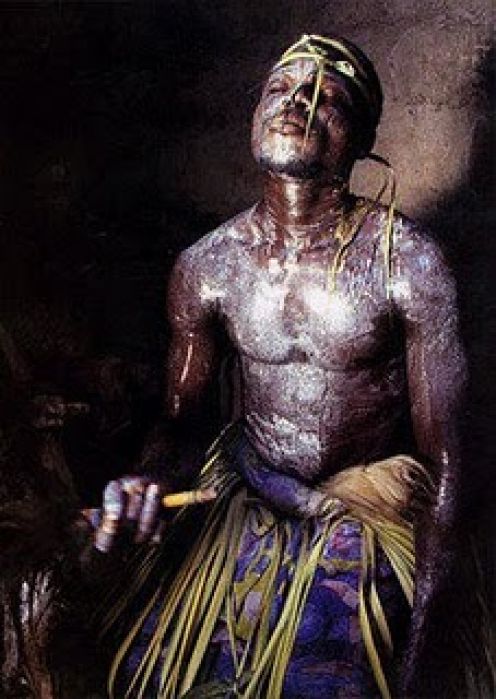





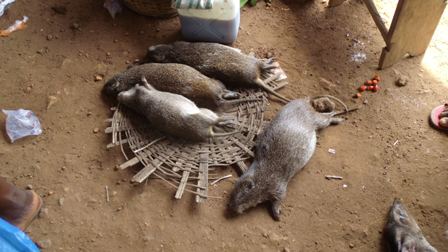


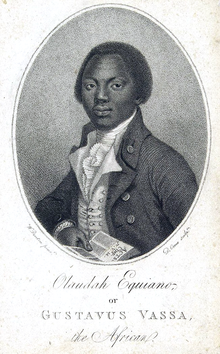





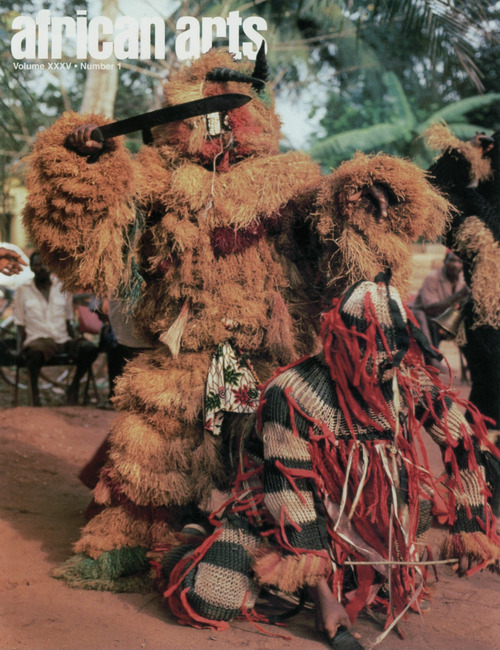


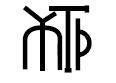
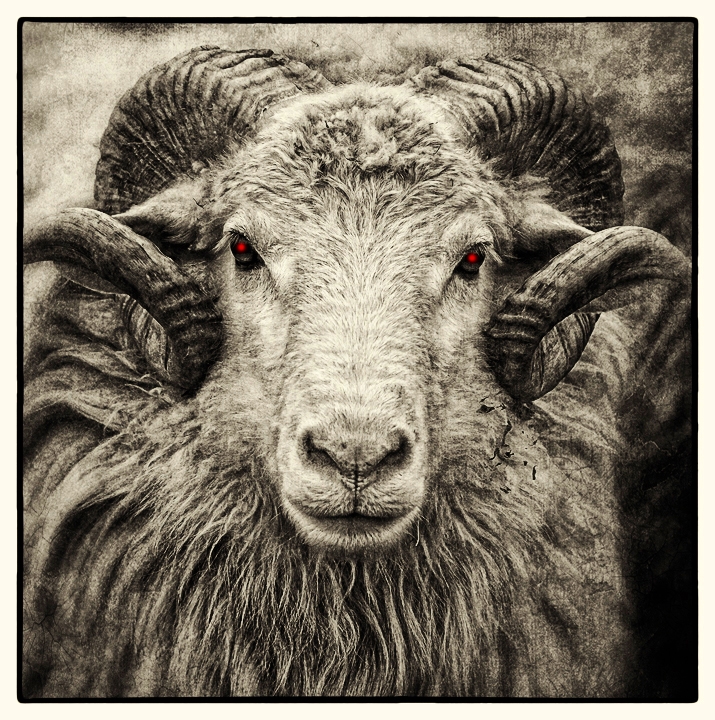








 Odinani: The Sacred Arts & Sciences of the Igbo People