Author Archives: Omenka Egwuatu Nwa-Ikenga

Anyanwu: The Eye of Light

Standard

“Anywanwu” by Ben Enwonwu

The sun is one of the most universally revered objects in human history. Just about every culture on the planet honors it for all the different gifts that it brings to our planet, bringing both the light and heat that make life on our planet possible.

Sol Invictus

For one, our method of keeping time is based on it, as for the majority of human history, our clocks were sundials. Most of our modern calendars (including days of the week ala Sun-day), are based off it, and lot of our major holidays originally started as solar equinox or solstice celebrations (such as Easter and Christmas respectively). Even western astrology focuses on a person’s sun signs. Needless to say, our lives revolve around the sun…literally.

“The Sun Shine Brightly” by Uche Okeke

Amongst Ndi Igbo, the Sun was referred to as Anyanwu (An-yan-wew). This is a combination of two different words. The first word, anya means eye. The second word, anwu, means light. Together, the phrase reads as “eye of light.”

Anywanu and other cosmic entities on an Igbo compound wall

Metamorphosing the sun as an eye is not an exclusively Igbo concept. Another famous example of this can be found in the ancient Egyptian character of Ra, who was depicted as a Falcon headed man who hand a sun disk on his head.

Ra

Eye of Ra

A modern example of a celestial eye can be found on the left side of a dollar bill. Here are some other examples found throughout different cultures:

Back of $1 bill

Masonic Eye of Providence

Coat of Arms of Brasłaŭ, Belarus

With the multiple appearances of this “all seeing eye”, one question will naturally arise: Exactly whose eye is it and why is it portrayed in that way? The answer will be revealed throughout this post.

The sun is a symbol of both physical and spiritual awakening. In most societies, peoples sleep cycles closely followed that of the sun. They would wake up around the time the sun rose, and go to sleep soon after the sunset. Many plants and animals also follow this trend.As an agriculturalist, I have been taught that the best way to save seeds is to keep them dry and in the dark, as they will germinate (awaken) if exposed to moisture and sunlight.

Awakening of a seed

Awakening of a seed

When spiritual awakening occurs, its usually referred to as enlightenment. If one has a good eye, they will notice that many of the holy men and women throughout history are quite often portrayed with a sun disc behind their head. Even their titles and epithets reveal as much. The Buddha, for example, name literally means “The Awakened One.”

The Buddha (Awakened One)

Lao Tzu

Green Tara

Jesus the Christ (Annointed One)

Kwan Yin (A Female Buddha)

Krishna

Krishna

It is no coincidence  that Alaigbo (Igboland) was referred to as the land of the rising sun. Many of the most enlightening spiritual teachings and examples in all of Africa had been found in that land in what is now southeastern Nigeria. One place in particular was so highly developed that people considered it to be  one of the  major cultural epicenters of modern Igbo civilization. This place was known as Agwukwu-Nri, from which I am descended from on my mother’s side.

Land of the Rising Sun

Anywanu played a very large role in life of the Umunri. “Nri people believed that the sun was the dwelling place of Anyanwu (The God of Light and Agbala (The Holy Spirit). They believed Agbala to be the collective spirit of all holy beings (human and nonhuman). The Holy Spirit was a perfect agent of Chi-Ukwu or Chineke (The big God or the Creator God). The Holy Spirit chose its human and nonhuman agents only by their merit. It knew no politics. It transcended religion and culture, and of course, gender. It worked with the humble and truthful. They believed Anyanwu, the Light, to be the symbol of human perfection that all must seek. Anyanwu was perfection and Agbala was entrusted to lead us there.” (Anuobi, Chikodi. Nri Warriors of Peace. Page 210).

Anyanwu and Agbala by Odera Igbokwe

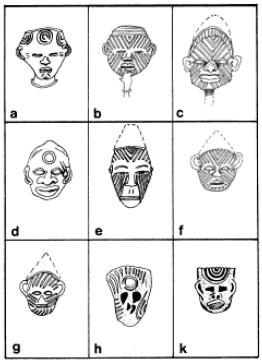
Nri people were so serious about their veneration of Anyanwu, that they would wear it on their faces. This facial scarification was called ichi“In standard Nri scarification, the artist would carve the first line to run from the center of the forehead down to the center of the chin. They would then carve a second line to run across the face, from the right cheek to the left. The second line met the first at the center of the nose, making it a perfect cross. The second cross was drawn with one line running from the left side of the forehead down to the right side of the chin and another line running down the opposite direction. This sequence and pattern was repeated until the pattern looked like the rays of the sun. Altogether, it took sixteen straight lines, eight crosses, for a full face scarification that mirrored the rays of the sun. It was their way of honoring the sun that they worshiped. But it was more than that. It was the face and service and another way of losing one’s facial personality.” (Anuobi, Chikodi. Nri Warriors of Peace. Page 203-204).

Ichi Facial Markings

One very important part of Nri’s mission was as the peacemakers and cleansers of abomination in Igboland. They attempted to broker peace deals and end wars, even going so far as to run onto battlefields to stop them. When a land needed to be cleansed for whatever reason, and it was beyond the scope of the ritual specialists of that area, Nri priests were sent in to do the job of restoring balance.  Ironically, the sun itself is a cleansing agent, and it is capable of destroying pathogens in liquids.In alot of ways, the Nri were like the Jedi of the Igbo people. However, instead of using lightsabers, they used Otonsi rods to vanquish evil.

I always thought Obi Wan’s name looked Igbo


Anyanwu bestows many gifts to people. One gift is the one of sight. When the sun is out, things that were once in darkness are brought to light. This is meant both in the physical as well as metaphysical sense. Darkness is often used to symbolize something that is hidden or unknown, while light in this sense represents something that has been revealed.

Anyanwu Shrine in Ovoko Village

Returning back to the previous examples of the Sun manifested as an eye, it should be clear by now that the eye that is being symbolized is YOUR OWN. It represents YOUR enlightenment, YOUR sight, YOUR vision. This is is reiterated by the usage of a hawk to represent Ra. One of the things that hawks are known for is to be birds of prey. For an animal that flys to be able to spot and capture its prey from so high up in the sky, they must have incredible vision. The Avenger known as Hawkeye is appropriately named as such because of his ability to hit targets with his bow and arrow, which requires a very sharp eye.

Hawkeye, the Avenger

Hawkeye, the Avenger

A former mentor of mine once told me that ones eyes are their first oracle. For this reason, he said, he was unable to consult Afa Ugili/Akpukpala (divination apparatus)  if he were outside, as Agwu (the Igbo spirit of divination) would be working primarily through his eyes. In fact, in his book, After God Is Dibia Vol. 1, legendary Dibia John Umeh proclaims that “As Ose Obala, Agwu is the God of Light, Anwu, whose eye is the Sun (Anyanwu). ..As the God of Light, Agwu is an integral part of Ose Ora (Uche Chukwu), the universal Consciousness of God…which is the completeness awareness of what was, what is, and what will be…..God of Light whose blze or Divine Light disperses and/or extinguishes danger, evil or darkness.” (Page 114).

“Anyanwu and Agbala were not there, only coldness” by Uche Okeke

Metaphorically, this sight represents itself as insight, which is the capacity to gain an accurate and deep intuitive understanding of a person or thing, and foresight, the ability to predict what will happen or be needed in the future. In short, insight is the ability to see things as they really are, and foresight is the ability to see things as they will be.

There are many people who seek solutions to problems when the answers are typically right in front of their face, and the thing about your senses is that if you don’t use them, you will lose them. Have you ever wondered why despite all of the oracles that were all over Africa, none of them seemed to give an adequate solution to the coming domination by the Europeans? (Or if they did, the people definitely did not listen to them!)  Why is it that the only nation that was never to formally colonized in Africa was Ethiopia? Could it have anything to do with the incredible foresight of its leader, Emperor Menelik II? Were other African people overdependent on their shrines and oracles that they forgot how to use their abilities of foresight and insight?

HEM Menelik II: King of Kings of Ethiopia

One also didn’t need to use an oracle to see that the present systems we have (economic, political, industrial, religious etc) were unsustainable and would eventually fail us. A major flaw of Western Civilization is the complete lack of foresight in a lot of the decisions that have been made throughout the years. Sometimes it makes one scratch their head and wonder if those in power ever consider the future consequences of their actions or if they even care.

Other examples of a Sun god granting powers of foresight and insight would be Apollo of the Greeks and Romans, whose Oracle at Delphi was the most important oracular site of the classical Greek world. Apollo once granted Cassandra the gift of foresight in order to seduce her, but after she rejected him, he proclaimed that nobody would ever believe her prophecies. She foresaw the fall of Troy due to the Trojan Horse, and even foresaw her own death, but was powerless to stop either. Pretty messed up situation to be in right?

Apollo: Graeco-Roman God of Light, Wisdom, Prophecy, etc

As  I stated in the Amadioha post, my personal shrine of Anywanu uses the image of the Johny Storm AKA the Human Torch. He is one of the members of the Fantastic Four, with each member representing one of the four classical elements of: earth (The Thing) , air (The Invisible Woman) , fire  (The Human Torch) and water (Mr. Fantastic). However, that is a topic for another day.

The Human Torch

Another comic book character that can be used to represent Anyanwu would be Phoenix from the X-Men. In fact, I would say that she represents Anyanwu way better than the Human Torch because of the significance of the Phoenix, which is  a mythological fire bird found across many cultures that represents rebirth, immortality and renewal. Plus, the comic version also granted enhanced psionic (psychic) abilities  to its host, as Anyanwu also does.

The Phoenix

If you wish to gain access to the infinite wisdom, joy and love of Anyanwu, you can start by greeting her every morning as our ancestors used to do. If you decide to do so, ask yourself: Are you ready to be awakened? 

The Corruption of Igbo Sacred Sciences

Standard

by Wise

Many people think that modern day Igbo sacred sciences (Odinani) is a good overall representation of the very ancient metaphysical systems. They are very incorrect. In fact, the decline of the divine Kingdom of Nri and the rise of the European controlled Atlantic slave trade corrupted Igbo civilization. British colonialism and the Nigerian Civil War practically destroyed what was left of Igbo civilization. What is left of Odinani is only a very faded shadow of how it used to be.

Anyanwu (Eye of Light) : The Igbo divinity that dwells in the sun

Although Odinani is one of the oldest science systems in the world, we will just briefly discuss the last one thousand years. Nri Kingdom (in present day Anambra State) was a major power in present day Eastern and Midwestern Nigeria from 1000 A.D. to 1600 AD.  Unlike most kingdoms, Nri did not gain their influence nor maintain it through military force. Nri’s influence came from metaphysical power. Their culture, tradition, and philosophy was centered on peace, harmony, knowledge, wisdom, justice, and oneness with Creation (Chi, Aja Ana, Anyanwu, Igwe, and etc) and the Creator (Chineke). Eze Nri (Divine king of Nri) was the traditional Igbo pope and he and his mediators (real Nze and Ozo men) spread peace and civility throughout the land and found many settlements abroad. The Nri are responsible for the Igbo Ukwu sites, Four market days, Ozo/Nze title systems, Igu alu, and etc. Unfortunately, between 1400-1700 Nri declined due to internal disputes, the slave trade (which was illegal in Nri), and the rise of rival states.

One of the many famous Igbo Ukwu bronze castings

In the late 17nth and early 18nth century, the Aro Confederacy (their capital Arochukwu is in present day Abia State) was formed and quickly became a major economic power in present day Eastern Nigeria. The Aro people were expert long distant traders that developed and controlled a complex trading network in the region. The Aros were also known as priests and agents for their famous Ibini Ukpabi (Drum of the high God) oracle that was located in Arochukwu.  After Aro conquest, Ibini Ukpabi was also used as an oracle to settle disputes serious disputes and problems. The oracle quickly became popular for its effectiveness, accuracy, and its useful divinations. Ibini Ukpabi became the main oracle in the region and beyond for many years until the early stages of British colonialism in the 20th century. However, shortly after Aro expansion, the Europeans increased their slave trade interests on the Bight of Biafra. This brought chaos.

Ibini Ukpabi Oracle

Igboland and adjacent areas was very violent and chaotic in the 18th century as the result of the Atlantic slave trade. Some oracles in Igboland such as Ibini Ukpabi unfortunately became commercialized. Although many agents and priests of the oracle continued to do honest and fair work, others used the opportunity to sell innocent people as slaves. The Slave trade also introduced the outrageous Osu caste system in Igboland. Initially, Osus were very sacred and respected assistants to high priests. However, as a result of the slave trade, wars in Igboland increased and many people (including runaway slaves) sought refuge in shrines and become an Osu. In some cases, criminals also decided to be an Osu rather than becoming enslaved. Suddenly, being an Osu became a taboo.

Shrine priest (sitting) and Osu (standing)

British colonialism and Christianity tried to destroy what was left of Odinani. After the 1901-1902 Anglo-Aro War, British troops attempted to destroy the Ibini Ukpabi shrine. The British even called the Nri people, a group that has always stood for justice and peace, evil. Initially, Christian missionaries referred to Odinani as totally evil and tried to force the population to convert. Although Igbo people embraced Western education, they heavily resisted colonialism and the British efforts to destroy their tradition. While the British condemned our culture, they did absolutely nothing to help it. Many Igbo people (Osus were among the first) did convert to Christianity but there was still respect for the many good aspects of Odinani and Igbo culture overall. A strong traditionalist population was still among the Igbo before Nigerian “Independence” (1960) and the Nigerian Civil War (1967-1970). After the brutal Civil War, more missionaries came to a war torn Igboland in the 1970s and began the evangelical movement. This movement has been very devastating to Odinani and Igbo culture in general. Some foolish and overzealous Christian youth have looted and destroyed shrines and priceless artifacts. And what have they gained? Absolutely nothing! Instead of creating jobs, developing Igboland, and becoming self sufficient some misguided youths have decided to take the place of the European missionaries and destroy their own Igbo culture.

Igbo children during Biafran War

Igboland in modern times is lawless and very violent. We have been losing wars for our freedom and now have lost our minds because we are fighting a war against ourselves. The land is very underdeveloped and polluted. Many Igbo people at home and abroad have completely turned their back on our ancestors and put a much higher value on Western culture. Many Igbo children have close to no knowledge of their own people. IGBO PEOPLE THIS IS A EMERGENCY. PLEASE LISTEN! Unless we get back to who we are and revive/improve on the productive aspects of our sacred science system or “spirituality”, get rid of outrageous aspects of our tradition like the Osu caste system, stop putting useless foreign institutions over our own WE WILL CONTINUE TO BE IN DEEP TROUBLE!

Chi (God) Bless

A Conversation with Chi (God)

Standard

by Omenka Egwuatu Nwa-Ikenga

Everything was all good just a week ago. There are some people who say that Rome wasn’t built in a day. Well it took seven days for Chidi’s life to come crashing into pieces. You see, from the surface, Chidi seemed to have it all; a high paying job at an investment firm, a beautiful wife, kids in college. However, things started to fall apart last Wednesday. That’s when he came home to see that his wife had packed up her things and left a note explaining that she was calling it quits after 24 years of marriage. Chidi had no idea why she wanted a divorce. He had done his best to give her the type of lifestyle that most Nigerian women had desired. After 19 of his calls going straight to voicemail, and 18 of those 19 calls actually ending up with him leaving a message, he decided to give her space while he called his family members and in-laws asking what he should do. Just as he was still in the midst of making sense of his imminent divorce, the second blow came to him two days later when during his annual doctor check up, he was diagnosed with cancer. As a person with no ailments, who attended the gym religiously, Chidi was one of those people who felt that things like cancer could never happen to a person like him. But cancer, being a disease, is no respecter of persons and could strike anyone at any time. The straw that broke the camel’s back occurred Tuesday when he found out that he would be let go by his job despite his 15+ years of service to them.

Each of these three situations were tough to handle on their own, and them happening at the same time was pure torture. Upon facing this immense level of stress in such a short time, Chidi did what most people do when put in similar situations: he turned to drugs and alcohol. After a few days sitting in his room, drowning his sorrows with hard liquor and barbiturates, he decided that life was no longer living anymore; Chidi would commit suicide. Chidi had known alot of people who had nearly died from taking certain over the counter drugs in combination with one another. He figured that if he took those same drugs at a higher dose, he would be sure to kill himself but still make it look accidental. Although it was the 21st Century, suicide was still considered very taboo and cowardly amongst his group, the Igbo people of Southeastern Nigeria, and if he died of drug overdose, he would still retain some type of dignity. And perhaps his family members could sue the drug companies for negligence. Maybe it would work, maybe it would not. The most important thing was for him to be able to off himself in a peaceful way since he definitely was too cowardly to do things like jumping from a bridge or shooting himself.

Despite not being in the right frame of mind, Chidi was meticulous in preparing his cocktail of death, calculating how much of each drug it would take to ensure his relatively painless death. He said a short prayer and raised the cocktail of death to his lips, preparing to take it with some alcohol. Just as he was ready to pop the pills in his mouth, he heard a voice say “Are you sure this is what you want to do?”

Chidi paused. Perhaps it was a figment of his imagination or a product of his drunkenness. He raised the death cocktail to his mouth and once again heard the voice, but even louder this time. Chidi was confused. He hadn’t been taking any hallucinogens, so he was confused why he was hearing voices. The voice appeared to be coming from the mirror. Perhaps it was someone deciding to play a trick on him.  He put the pills and the alcohol down, rushed over to the mirror and shouted angrily, “Who are you?”

The voice replied, “You should know who I AM my child.” Chidi was confused. Both his parents were dead. Suddenly it dawned upon him who it was that was speaking to him.

He put both hands on his head and yelled out, “Chinake nna! I can’t believe this is happening to me!”

The voice replied, “What were you expecting…a burning bush or something?”

Chidi’s bewilderment immediately turned to rage as he yelled out, “Where were you when I was going through all of my suffering?”

The voice replied to him, “I’ve been here all along, where have you been?”

Chidi responded by asking: “What do you mean where have I been?”

In return the voice asked ,“All the many years that things were going great for you, when your life was full of blessings, where was your appreciation? Where were your songs of praises? Where were your prayers of gratitude?”

Chidi paused and looked at the mirror. It had been a couple of years since he last made thanked God for all the blessings in his life. “But I pay my tithes faithfully! And yet you allowed me to lose my job!” he responded.

The voice replied, “First of all, do you really think that I NEED something like money or anything for that matter? When you give, you give to one another, not to me, and there are plenty of better things that you can give , such as your time and talents in service to your fellow man and women, in other to show appreciation for your blessings. Secondly, when you were giving money, you were doing it solely because you felt that doing so would bring you more money, like an investment with a guaranteed return. It was the same type of thing that you did for your job, and there was no sense of gratitude in it whatsoever! Now on the issue on your job, everyday you would say to your Self  how much you hated it, but how you just loved the money that it brought to you. In all honesty, I was doing you a favor. You losing your job was designed to give you an opportunity to re-evaluate your life and find your calling. Do you really think that you or anyone else was put on earth to work 40+ hours a week for 40+ years, retire and then die soon afterwards?”

Chidi was flabbergasted. He had indeed hated his job. He hated the commute. He hated his coworkers and his superiors. He hated the unscrupulous practices that went on there everyday. But he loved the money and status that it brought to him. As he looked deeper in the mirror, he remembered how he had a passion for agriculture when he had been younger, but how his mother had laughed at him and asked him if he wanted to be a menial yam farmer like his great-grandfather had been. She had told him to follow the money and get rid of those silly notions that had crept in his head.

Chidi then asked “Well what about my marriage? Why did my wife Amarachi leave me? I did alot for her!”

The voice replied: “When was the last time you told her that you loved her? When was the last time you showed that you appreciated her? When is the last time that you spent time with her? Sure you brought home enough money to keep the entire household comfortable, but what about her contributions? She has a career too you know!  And she after a long days work, she wants attention and affection from the man she married! Where you thinking of her all those late nights you spent at the office? I hope you know that she was thinking of you!”

Chidi was dumbfounded. He couldn’t believe what he was hearing. He had worked hard and given her so much…

The voice interrupted his thinking by saying: “Why can’t you admit to your selfishness? Why is all about what YOU brought to the table? This woman sacrificed so much for you. She suffered for many years and brought you four children. And yet you neglected her for the sake of your career. How long will you keep lying to your Self? I don’t have to remind you of the numerous issues that you have in your marriage, but I will say that you have have avoided addressing them by hiding behind your career!”

Chidi continued looking in the  mirror and remembered the numerous times he would come up with work related excuses to avoid having to deal with the difficult issues with his wife. He recalled how she had told him that he had stopped doing the things that had made the marriage so magical in the first couple of years and how she barely even knew who he was anymore. He realized that he had indeed sacrificed his relationship for career advancement and now had lost both. He began to cry.

“Well Chi,” he said with tears flowing down his cheeks, “what did I do to deserve getting prostrate cancer?”

The voice replied: “Its very unfortunate that this type of cancer disproportionally affects men of African descent in America far more than of any other group. There are a number of reasons why you, and other men of African descent have developed this cancer, but that’s something that I would rather you to discover for yourself. Nonetheless, be encouraged that you possess all the tools and resources to heal yourself and to help other similar men to do the same. The same applies to all of the other issues that have befallen you. Always remember that…”

With that last statement, the voice faded away. To where? Only Chi knows. But Chidi was left staring at nobody but himself in the mirror. He really didn’t know whether the entire episode had been real, or merely a figment of his imagination. But at this point, it really did not matter. It had dawned upon him that he had no one to blame for himself for his recent pitfalls. They say you never know what you have until its gone. He had a job that he hated, but was even more upset when he lost it. He had a wife that loved him, but who he had neglected and now she wanted to leave him. He had health that he had taken for granted, and now it had failed him. He decided that from this day forth, he was going to show appreciation for everything that he had, and was going to take responsibility for his actions and reactions. He wiped the tears from his eyes and said words of thanks in his native language. He arose a new man, with a new lease on life. He would do everything in his power to get his life on the right track. He would make amends with his wife and make sure that she always felt appreciated. He would look at how and why he developed this illness, and most importantly, what he could do to heal himself. And last but not least, he would begin a new career in something that dealt with agriculture, because feeding people was an excellent way for him to feed his soul. Chidi planned on doing all of these things, but first, he wanted to call his good friend Onyemobi and tell him everything that had just happened to him.

Know Thy Self and Know God – Ancient Egyptian Proverb

Interview with Obinna Ozoigbo, author of “The Dust Must Settle”

Standard

In the last few weeks, I have been reading a great book written by my friend, Obinna Ozoigbo, titled The Dust Must Settle. What attracted me to the book was that it was the first novel that I have ever seen mention my ancestral homeland, Arochukwu. When I got a chance to read it, it offered so much more than I would have ever imagined. This novel is like 3 books in one, and follows a West African family through multiple generations, starting at the advent of the colonial era. In essence, it picks up where Chinua Achebe’s classic Things Fall Apart leaves off, and also fills in the gap before and after Chimamanda Ngozi Adichie’s Half of a Yellow Sun. You could almost say that it is like a modern day version of Alex Haley’s Roots. One of the things that engaged me the most was the historical context in which the novel is set. You have to see what happened to some people of African descent in the UK, USA and Nigeria at the same time in the early to mid 1900s. My favorite scene, in particular, was set when two of the descendants of Uzo Ogbonna attempt to return to Arochukwu. The conversation amongst the elders and their subsequent action is a classic! Rather than writing a normal review, I decided to interview Obinna. Check out the interview below.

The Author of "The Dust Must Settle", Obinna Ozoigbo

Who are some of your literary influences?

My literary influences make up a rather long chain. They are great writers I look up to, even when they do not know me. I have known them through the power of the pen, and through their “brainchildren”. You see, when I was growing up, I read a lot of Denise Robins. Granted, her novels fall in the romance genre, and are therefore mainly meant for women. But I was not necessarily moved by her romantic stories. I was moved by her style, especially her syntax. Denise Robins is one person, I must confess, who “taught” me creative writing during my formative years. My friends called me sissy, because I was always with her novels. But I didn’t care, because she was teaching me a lot of things about writing by mere reading some of her more-than-a-hundred novels. She was a superstar, in my own estimation.

Then, still as a teenager, I came across a novel titled The Other Side of Midnight by Sidney Sheldon. Oh, my! Ever since, it was Sidney Sheldon, Sidney Sheldon, Sidney Sheldon–all the way! I have read almost all his novels. Through Nothing Lasts Forever, my life was never the same again. From the age of thirteen to that of twenty-seven, I hoped to meet him personally. Then in 2007, when I was thirty-five, I almost shed tears upon hearing the sad news of his death! And then, as soon as his autobiography The Other Side of Megot to Nigeria, I quickly ran to grab my own copy! Indeed, without mincing words, Sheldon affected my life so much, I was obsessed by him and his works.

Cyprian Ekwensi, of blessed memory, was Nigerian, of Igbo descent. I was about nine when I read some of his books for young people, such as Drummer BoySamankwe and the Highway Robbers, andThe Passport of Mallam Illa. Then before age 13, I read his People of the City, which was even published long before Chinua Achebe’sThings Fall Apart . . . No, it was not originally published by Heinemann under the African Writers Series (AWS). I also read Jagua Nana’s Daughter as a teenager. But I was so anxious to read its“predecessor”, Jagua Nana . . . Ha! Ha! Ha! You know what . . . My mother told me then, as soon as she saw me with Jagua Nana’s Daughter, that Jagua Nana was published in the sixties, and is a “corrupt” novel. Out of curiosity, therefore, I began to look for Jagua Nana. I never saw it until I got to the age of thirty-two in 2004 and stumbled into it in a place called Ojuelegba in Lagos, Nigeria, where old novels are sold. After reading it, I understood why my mother had said that. But, as a budding writer in the English language, I learned a lot of English lexicon from that book. It also gave me an insight into the depths of Ekwensi’s literary talent! Even though he is dead now, he still holds a special place in my heart. As a teenager, I also read his Survive the Peace, a novel that hinges on the Nigeria-Biafra War of 1967-1970. I also read For a Role of Parchment and Divided We Stand. Sincerely, I hail Ekwensi much more than people hail Achebe. But I am yet to find the reason why the whole world rates the latter higher.

In fact, there are so many of them. Like I said early on, it is a rather long chain. The few that deserve mention are Jeffrey-Archer, Barbara Taylor-Bradford (who is presently my Facebook friend), Flora Nwapa, Doris Lessing (who won the 2007 Nobel Prize for Literature), Dillibe Onyeamah (the famous author of the famous novel, Nigger at Eton, which I presume is out of print now), and . . . Oh, my God . . . I will not forget Buchi Emecheta whose Destination Biafra, in my opinion, is a classic, and Chukwuemeka Ike, whose Chicken Chasersis one of the novels I regret ever losing through my book borrowers.

I just started reading North and South, one interesting literary work among the trilogies of John Jakes, and have begun to bask in the realization that he is going to be one of my biggest influences, because from just reading the opening chapter alone (of North and South), I fell in love with his style immediately.

Prior to North and South, however, I read Vera Brittain’s Testament of Youth which has its tv mini-series adaptation by BBC. I never knew that a writer like Vera Brittain, born a few years close to the turn of the 19th century, ever existed among the great 20th-century writers until I stumbled into Testament of Youth, something I would like to refer to as a collection of her First-World-War experiences in which she narrated in great detail all her highs and lows, ups and downs, pain and misery, hopes and disappointments. The book is one of her most popular works. She is terrific!

What got you into writing?

Writing is inborn. You don’t force it upon yourself. Once you notice it, you cannot help letting it show, otherwise Barbara Cartland would never have written more than some two hundred romantic novels, books of cookery, etc. And Danielle Steel would not have said in one of her interviews, which I stumbled across on the internet, that once she begins to write, she pounds away on the keyboard. Once I heard her say that, I told myself “Whoa! That’s me!” It comes naturally. I have read so many books as a teenager, especially novels, that I told myself one day in the 80s’ : “Ol’boy, you can do better than some of them!” Hence, at 17, I finished a 208-page novel titled Lovebirds which I sent to Longmann, Lagos. But the big shot I met there looked down on me. And all I read from his expression was “What can a seventeen-year-old offer”. And you know what, I felt offended when he asked me: “Young man, what do you know about love?” I left and never came back. Up to this day, the manuscript of Lovebirds is still in the safety of my cupboard! I felt bad, because Ben Okri wrote Flowers and Shadows when he was 19! What difference does it make, anyway, for someone even younger than that to submit a 208-page manuscript talking about love?

Then I grew up amid so many books. My father had a library in our living room. But the books were safely locked behind the facade of a glass shelf. I kept seeing them as I was growing up. But I never read even one of them! They were mostly novels. But whenever I had access to his bedroom, I would tiptoe to find the key to the shelf. I would unlock it and begin to flip through, wondering how the writers came up with books of such volumes, hoping that someday I would do the same. However, I would read some of them randomly. That is, I would read, say, a paragraph on page 10, then flip to (say) another on page 100. I mostly did this when my father had gone out, and my mother, who happened to be a lot more liberal and less cynical, was at home. Unlike my father, she did not bother whenever I came into their bedroom to take anything, especially the key to the glass shelf. Sometimes, I could not make out what some of the books were talking about, because they were much more adult. All the same, I continued reading, believing somehow that, someday, I would write my own. At 13, I joined the literary society in my secondary school. It was there that it dawned on me that I have the gift of writing. Prior to then, I was always scoring highest in my English Language compositions. Also, it was then that I realized that I could express myself better when I write than when I speak. As a result, I was not in the debating/oratory arm of the society. I just wanted to write, write, and write–and until I am known all over the world, just like all the writers I have early on mentioned.

Are any of the stories in the book based on situations you or someone else has experienced?

The Dust Must Settle is a product of my imagination. I must be quick, however, to say that the Welsh missionary, Mary-Ann Spencer, was a character I developed based on the real life story of Mary Slessor, the Scottish missionary that was sent to Calabar, Nigeria in the late-19th century and lived among the Efiks up to the nineteen-thirties, where she died and was buried.

How long have you been writing?

As a matter of fact, I have been writing from as far as when I was 13. I wrote for my secondary school in Owerri, Imo State, Nigeria. And that was in 1985. And then I sent a lot of short stories to magazines in Lagos by post. But up till now, I can’t quite decipher their reason(s) for not wanting to get me published. Perhaps they felt I was too young then to write such adult stories. Then I already told you about my Longmann experience. Now, however, I kind of cringe whenever I go back to read the manuscript of Lovebirds. I began to work in the bank at 19! Due to the “jealousy” of the tasking job, I never had time to write. By “jealousy” I mean, my job not allowing me to give time to other things to do to better myself. Besides, Lagos is such a big West African city that it took me five hours sometimes to get back home from work! After all the bumper-to-bumper traffic jams, after all the inhaling of exhaust fumes of rickety cars and buses, I would slump into my bed, completely tired and exhausted. For some fifteen years this was the case. It was after I left banking in 2004/5 that I began to write The Dust Must Settle, greatly inspired by the life story of Mary Slessor, greatly challenged after reading Chimamanda Ngozi Adichie’s Purple Hibiscus and Barbara Taylor-Bradford’s A Woman of Substance and Voice of the Heart. Presently, I am working on another novel, a project in which I want to involve the United Nations Population Fund, the Ministry of Women Affairs of the Federal Republic of Nigeria, and the Nigerian Women Trust Fund. Now that I have finally left the Nigerian sub-banking sector as a result of inconsistencies and damaging reforms in the country’s financial terrain, where I found myself from 1991 (at 19) through 2005 (at 33), I feel as free as a bird let out of its cage to write, write, and write. Ha! Ha! Ha! I met a well-known publisher in Lagos in 2005. He told me I was a banker, and not a writer. How wrong he was! And how contradictory he sounded, because Cyprian Ekwensi was a pharmacist! Anezi Okoro, who wrote quite a number of novels, was a dermatologist! One Dr. Chukwuezi, an ENT physician, has written novels in the Igbo language at that! And then Sefi Attah, whose Everything Good Will Come was published by this same man, is a chartered accountant!

How do you feel about the state of African literature?

At some point along the line, I felt really bad that the new generation of African writers were sleeping, or so it seemed, until Adichie sprang up with her Purple Hibiscus at the age of 26 or so. Some people hail her for achieving such a literary feat at that age. But I ask them: Don’t you know that Cyprian Ekwensi was a teenager when he wrote For a Role of Parchment, Ben Okri (the winner of the 1991 Booker) was also a teenager when he wrote Flowers and Shadows, Buchi Emecheta was 20 or so when she wrote In the Ditch, and Chinua Achebe was also 26 or so when he wrote Things Fall Apart? What do I mean by that, you might say. They began to write in the prime of youth! The truth is that today’s youths, the African youths, are not doing much as far as writing is concerned. And another truth is that no one encourages them! No, I am not making up excuses for them, neither am I exaggerating! You see, those that make up the old generation of African writers were greatly encouraged by their European teachers and mentors who happened to have been key players in the British colonial administration in Africa. They read so many quality works of literature by Shakespeare, Dickens, Austin, Twain, Elliot, Chaucer, etc! Besides, they left for England by sea through the coasts of Africa to study one course or another. Even those who attended the then University College, Ibadan were thoroughly taught by the British! Unfortunately, now that they are in the twilight of both their lives and writing careers, we still suffer a terrible literary dearth in the upcoming ones that make up the new generation. Many are disenchanted and disillusioned, and even confused, perhaps because they were badly taught in the universities, especially now that the Nigerian educational system has been messed up by our leaders. They need another generation to hold the dream, to take up the “scepter” from them. It is our inheritance! I mean, the “scepter”. Just as it is the inheritance of a prince or princess. They must continue from where the old generation stopped–with the African story! Otherwise we will have no more story or stories to tell our young ones and the ones that are not yet born. No European will tell us our story, about our origin, about our bloodline, about our forefathers, about our cultures, about our heritage. No American will. No Indian will. No Jamaican will. Not even the African-Americans will! If we lose this knowledge, we have lost everything. There is no man or woman on earth who does not know his or her origin, where he or she comes from. If there is, then he or she has not been told anything! And that is what we are trying to prevent, bless my colleagues-in-African-literature, the new generations, in the persons of Helon Habila, C. N. Adichie, Jude Dibia, Sefi Attah, Uwem Akpan, Adaobi T. Nwaubani, and all the rest of them–and bless such NGOs as the Commonwealth Foundation and the Hurston/Wright Foudation who are working hard to ensure that the old generation of African writers will never be disappointed. In a nut shell, I would therefore say that there are great prospects for the state of African literature today. Kudos to Aminatta Forna, a wonderful lady from Sierra Leone, whose The Memory of Love won the 2011 Commonwealth Writers’ Prize (Africa), in the Best-Book Category! And it was recently brought to my knowledge by my publisher that The Dust Must Settle has great film potential in Hollywood, California! That is to say, Americans, blacks and whites alike, are getting more and more interested in African literature!

Which character in the book are you most like?

Mmmmh . . . The Dust Must Settle is like a trilogy bound together. Yes, it is quite a large volume, and has Book One, Book Two and Book Three! I fell in love with the major character in Book One. He is Uzo Ogbonna. This is a man that gets fed up with all the heathen practices of his people in Arochukwu. His father hates him for being an Anglophile, for being “lazy”, because he prefers doing the work of the white man to doing the farm work of his people, the Aro people. And his father is the owner of the largest farmland in all the 19 villages of Arochukwu! . . . I am an Anglophile. And I hate to go to the farm to work the land. I prefer to go to England to live and study–perhaps until I become a professor.

What inspired you to write this story?

In 2005, I casually went to the internet to study the life of Mary Slessor. Just out of curiosity, because I have heard so much about this Scottish missionary who served so selflessly in South-East Nigeria and spearheaded the stopping of the killing of twins. I didn’t want to continue hearing from people: older people and younger people alike. And my mates, too. I had to look her out myself.Then as I read along, I got to where it was written that she sailed back to Scotland with some African children to receive medical attention. As I scrolled, I gasped when I saw a picture she took with those African children.When I began to wonder what could have happened to those children (I mean, what later became of them) in Scotland, my imagination was fired, and the idea ad concept of The Dust Must Settle was conceived.

Describe the research process for this story?

Actually, I have not yet left the shores of Nigeria. You see, I have a book, Colour In Britain (published in the 60s), which was based on a series of radio interviews compiled by BBC on the sociological position in Britain of coloured people and their children from all the Commonwealth countries. This book helped so much when I was writing about the growing-up days of two of Uzo Ogonna’s triplets–Ruth, Esther and Timothy–in Belfast and Nottingham. Then I depended so much on Wikipedia, the internet encyclopaedia, which opened my eyes to a lot about the conurbations or cities of London, Brooklyn in New York, Nottingham, Belfast and so on. I have a friend who comes from Kano, Nigeria. He did a lot to give me an insight into the socio-economic lifestyle of Northern Nigeria. Then I asked a lot of questions to my friends who live in Britain and in the United States and Canada. Then I have friends who are doctors and lawyers whom I asked a lot of questions which enabled me to work around Ruth’s nursing career, Esther’s rail accident with Bolu, et cetera. I applied the legal advice to all the plots that had to do with testament. Edward Spencer, Mary-ann’s late father, wills his house in Soho, London to her, and she in turn wills the same house, jointly and severally, to Ruth, Esther and Timothy. There are plots revolving around testament administration in the saga.

One common theme that is very strong in this novel is bloodline and children (male ones in particular). Why did you decide to focus on this?

Bloodline is of paramount significance in the Igbo genealogy. Africans do not joke with it, neither do the Jews. That is why the subject of adoption has not developed a strong foothold in Africa, even in this twenty-first century. In the Western world, water may be as thick as blood. But in Africa, blood has always been thicker. And there is no compromise! In concrete terms, the African extended family system, especially among the Igbo in South-East Nigeria, does not readily accommodate or favor the female children. For example, no female child among the offspring of the Igbo landed gentry is allowed to inherit any property in her (late) father’s real estate tabled for sharing. Doing otherwise is against the Igbo tradition, and would raise a lot of flak. Yes, a lot of the people, who hold tenaciously to such traditions as this, especially the elders and the council of chiefs, would definitely kick against it. In a nutshell, it is not (and can never be) done. Then you have the question of posterity. No Igbo man is happy when he does not have male offspring to carry on the family name. But the only exception here is if, and only if, the man is a Christian through and through, and therefore has jettisoned tradition and broken stereotypes, to the bewilderment of the people. The Dust Must Settle tells about Obiageli Okoli (in Book Two) who devises every possible means to bring in a male presence among her all-girl offspring. She foresees her husband’s kith and kin claiming all his (her husband’s) inheritance, and every single asset that make up his real estate. If Mezue Okoli (her husband) dropped dead “today”, her exceptionally brilliant daughters (six of them) would lose everything. Yes, practically everything! And she has to do everything within her power to forestall this. That is why she goes to the United States (Texas) to be delivered of her baby girl. But she comes back to Nigeria with a baby boy after carrying out a successful swap through the connivance of two American midwives—Crawford and Nash. But Obiageli does not know that the mother of this boy is her cousin’s daughter, Nwadi Mbonu, a student in Canada, who has also gone to the same hospital, stealthily, to give birth to her son—and then give him away to an adoption agency in Texas. This baby boy of Nwadi’s, whom Obiageli has claimed as hers, ends up playing a role in linking the now old triplets together after seventy-nine years of their separation. In fact, if I had not brought in bloodline and the preference for male children among the Igbo, the saga would never have been complete. And mind you that we are talking about the pedigree, the common ancestry, of an African family that spans over four generations.  Without bloodline, without the male child, it may be difficult for one to trace one’s roots.  Have you ever wondered why the formidable Kizzy Waller, daughter of Kunta Kinte and Belle (called Kizzy Reynolds in the TV series), refuses to marry, even though she falls in love with a charming young man? The answer is simple: to propagate the name, Kinta Kunte. If she had married that man, the name will have gone into extinction. To hold her father’s dream, Kizzy makes the hardest decision of her life: obstinately putting herself in the position of a man in the family.

What made you decide to have three books in one?

Mmmmh . . . actually, I am now contemplating having them separated, so that they would become a trilogy. And to be frank with you, it was never my intention to have it like that. That I divided the saga into Books 1, 2, and 3 does not mean (to me) that I have three books in one. It was my readers around the world who have been suggesting to me that I separate the book in order to have a trilogy. To answer your question, however, I would like to start by referring you to such
family sagas as John Jake’s North and South, Alex Haley’s Roots, Colleen McCullough’s  The Thorn Birds, and Barbara Taylor-Bradford’s AWoman of Substance, which were all made into TV miniseries.  These novels are as voluminous as the 600-page The Dust Must Settle. Both The Thorn Birds and North & South, for example, are well over 600 pages, yet each of them is just one novel. A Woman of Substance is about 800 pages, yet it is one novel. I think the confusion lies in my calling the three parts of The Dust Must Settle “Book One”, “Book Two”, and then “Book Three” — which is not strange, because I have read a lot of novels which are divided into Books, not Parts. Whether Books or Parts, they mean the same to writers. Just choose whichever you want. It is only the layman who does not understand it like that, hence all the “complaints” or “points of observation” that flood in, asking me why I put three books in one. And like I said early on, I never conceived the idea of separating the book into three separate books until I began to receive a torrent of mails and calls to that effect.

What’s your lineage?

First of all, I am of Igbo extraction, in South-East Nigeria, the first son—but the second after my elder sister—in a family of eight. I come from Ihiala in Anambra State. My (late) father, Mr. Benjamin Jude Enyika Ozoigbo, had a dual profession: he was a nurse/medical illustrator and, at the same time, a fine-arts lecturer. Well, he studied nursing, and after he got disenchanted with it, he proceeded to the university to study Fine Arts after meeting my mother who happens to be a nurse, too. He was the fourth son from his mother’s womb (his mother had five sons only in a polygamous family of three wives and twelve children). My grandfather, John Anisobi Ozoigbo, was among the well-known titled men in Ihiala. He had a lot of lands, and had a lot of dealings with the colonial administrators, hence my father’s and my uncles’ impressive educational backgrounds. I cannot go beyond my grandfather, because we do not have a family tree. In any case, I believe a little research can do that for me.

Are you currently working on any other novels?

Oh, yes. I am working on another one that hinges on gender. Just like The Dust Must Settle, it involves intensive research. It is a very important project in which I want to involve Virgin Unite (an NGO in Britain owned by Sir Richard Branson’s Virgin Group), the United Nations Populations Fund, the ministry of Women Affairs of the Federal Republic of Nigeria, the Nigerian Women Trust Fund, and all women around the world who have dedicated, or are still dedicating, their creative energies to human rights activism, pacifism, and feminism. It is a project I want to finish in record time, so that the better part of its launching proceeds will go to the funding required for the treatment of VVF (Vesico-Vaginal Fistula) which is prevalent in Northern Nigeria. I came across an article in the Nigerian Health Journal of January 21, 2011.  According to this article, it is estimated that 2 million women, globally, suffer from obstetric fistula, with approximately 400,000-800,000 of such cases in Nigeria alone, the northern part having over 85 percent of these cases. Obviously, these women are mostly very young, uneducated and inexperienced. Many of them die as a result of VVF. They do not have a voice. I want to lend them a voice, and financial help also for the corrective surgical procedures, through this project I am working on. The next project is exclusively a historical novel, and has to do with a descendant of slaves, who becomes the richest man in Nottingham, one ofthe conurbations of England. I won’t go into details. Let’s leave it at that for now.

Do you have any words of advice for aspiring writers?

This question that is the most common in all the interviews I have had with both the print and broadcast media.  In any case, I have to tell the budding writers to read extensively. Many of them have plunged into writing because they want to win awards. Writing is not for you to win awards. Writing is for you to pass a message, a satire, to society. It is akin to the work of a journalist. The only difference is satire which must be evident in every novel. Journalists tell the plain truth. And that is why some of them are assassinated. Do you want to write to simply tell a story to the people in your community in the whole world? Or do you want to just trade the story for money? The choice is yours. But note that you cannot go far if you make the latter choice. A lot of aspiring writers want to just write and get published. They don’t care about the impact of their writing on society. That is what I call writing without purpose. Still a lot want to write when they don’t read. Reading and writing go together. You can’t be a great writer when you do not read. I am presently involved in a world competition in which five or so participants who eventually win will have their works published on both sides of the Atlantic by the world-leading publishers of J. K. Rowling, Stephen King, and Dan Brown. We have begun to review the opening chapters of one another, which will take the whole of this June. I shake my head in wonder, and also in disgust, when I read for my own review what some of these young aspiring writers have submitted for the competition. And what is worse, some of them are not willing to take any criticism, no matter how constructive! So, every aspiring writer must be willing to learn, otherwise there are no prospects—and there will never be.


Amadioha: The Igbo God of Thunder and Lightning

Standard

by Omenka Egwuatu Nwa-Ikenga

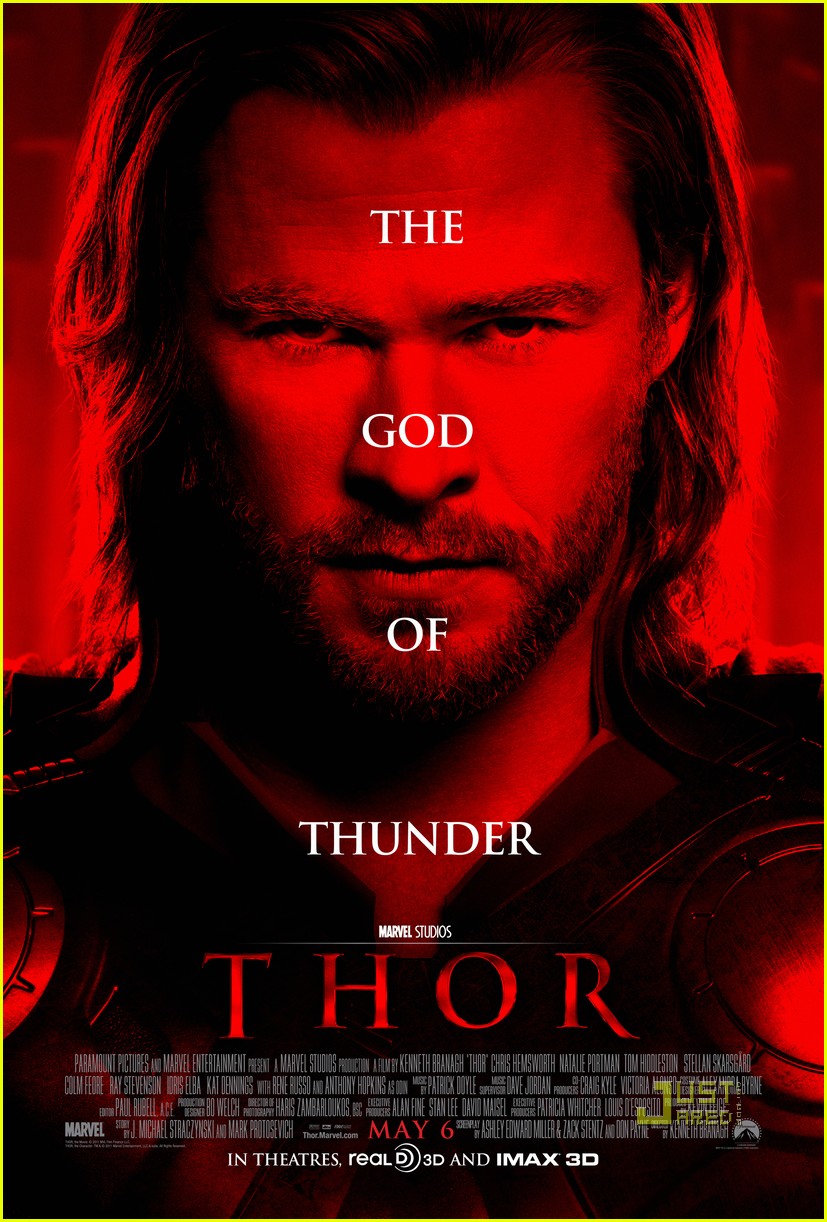
Last week, I had the luxury of seeing the movie Thor. I was very excited to see the movie for a number of different reasons. For one, I am a very big  fan of superheroes, and love to watch both animated and live action movies and television series based off them. Secondly, I also happen to be a huge fan of mythology (In particular, Graeco-Roman, Judeo-Christian, Hindu and of course , the various ones of Africa) and I think that one of the best ways to understand a peoples culture and values is to read their mythology.  So since this movie was a mixture of two of the things I love most, it was at the top of the list for on my “movies to watch” list.

thor-movie-posters-05

The comic book character Thor was based off the Norse God of Thunder by the same name. According to Stan Lee, he had been looking for a hero that could compete with the Hulk, and he figured that since no man could, he would have to use a god…literally. So he adapted various characters from the mythology of  the Nordic and Germanic people into comic book characters.

The Mighty Thor

Thor was said to  rule over thunder, lightning, and storms. He was associated with oak trees, strength, destruction, fertility, healing, and was seen by his worshipers as the protector of mankind against the Jötunn, a race of malevolent nature spirits.  The day of the week Thursday actually stems from his sacred day, and literally means “Thor’s day.” He carried a large hammer called Mjölnir which is still worn today as a pendant by many European neo-pagans.

Hammer of Thor

But the most compelling reason that I was drawn to see this movie (more so than most of the other superhero films that were coming out this year such as Captain America and the Green Lantern was the fact that Thor reminds me ALOT of another God of Thunder that also happens to be one of my favorites: Amadioha.

Artist’s depiction of Amadioha

Amadioha is one of the most popular of the Igbo deities. In fact, right after water spirits, the gods of thunder and lightning like Shango, Siete Rayos, Nzaji, etc  seem to be the most well known and liked of all the deities all over Africa and its diaspora.  Although he is usually referred to as Amadioha, that is not really a name, but one of his many epithets, which also include Igwe, Ofufe, and Igwekaala. The proper name of this entity would actually be Kamalu, or Kalu Akanu, and that’s the name that I use personally when referring to him.

Much of what is said about the other gods of thunder and lightning can be said about Amadioha: They serve as agents of justice, they are associated with war and aggression, and their colors tend to be red and white.  People who have been accused of crimes go to their shrines to declare their innocence, less they be struck by lightning.

Unlike his fellow thunder and lightning deities, Amadioha doesn’t carry an object of power like Thor carries his hammer or like his second cousin Shango carries his axe. If he did carry something, I would assume it would be an Ogu stick, seeing as though its the symbol of justice. The ram is sacred to alot of the African thunder and lightning gods, both as a sacrifice and as a symbol. In fact, Amadioha at times appears to people in the form of a large white ram.

Amadioha

Amadioha in the form of a ram

Even though the vast majority of Igbo people profess to be Bible believing Christians, belief in Amadioha still remains strong. I remember a conversation I had with a traditional ruler  a few years ago while he was visiting the states about when he described an evening when he went outside during a storm and saw his the grass near his compound on fire, but not burning. Afterwards, a white ram appeared out of nowhere. When it was all over, it was like nothing had happened.

Amadioha is also still used to curse people or threaten them. I can’t count the number of times that I have heard the phrase “thunder fire you!” or “Amadioha magbukwa gi!” (Amadioha will punish you!) Just the other day, I read an article where one of the priests of Amadioha proclaimed that the deity would punish any of the candidates if they dared try to rig the Governorship or House of Assembly polls in Nigeria.  I personally would have more confidence in elected officials in Nigeria if they had to swear oaths at Amadioha’s shrine instead of swearing them on the Bible or Koran, and I’m pretty sure I’m not alone in that sentiment.

What tends to happen when folks swear on the Bible/Quran

Although I was raised as a Christian, I was always very curious about what my ancestors believed and practiced. So I took it upon myself to actually research it. When I read about the Igbo deities, Amadioha was one that really stuck out to me for some odd reason. That affinity towards him never went away, and to this day, he’s one of my favorite of the Igbo Alusi.

When I was in the early days of my traditional practice, I was trying to figure out how I would make shrines and alters for the different deities. I asked some elders for images of the different Alusi  and the response I got was one of amusement. They explained to me that trying to find an image of a Mmuo (spirit) was like trying to find an image of the wind, and that each picture or carving that you’ve ever seen of any of them is just an artistic representation of an invisible force.

Wind Blowing

Wind Blowing

Furthermore, the vast majority of the times, most of the shrines  to the different forces of nature weren’t carvings or images at all, but rather plants, trees, or simple combination of rocks and wood. For example, one  examples of a traditional shrine to Amadioha would be a log resting on two large bamboo posts. I didn’t get the lessons at first, but one day it hit me:  My ancestors were very artistic in the way they created their shrines, and the spirits that they represented would always appear to my ancestors in ways that they could recognize them. So I asked myself, how would I want them to appear to me? I’m a young man growing up in the age of Youtube, Facebook and Iphones. What would a supernatural being look like to me? Perhaps a superhero? A superhero representation for Amadioha was the first one that came to mind. It was pretty easy too:

The Man of Steel (John Henry Irons)

Steel (also known as the Man of Steel) is a comic book character in the DC universe. His alter ego is Dr. John Henry Irons, a brilliant weapons engineer who creates a high powered suit of armor to fight crime after Superman gets killed by Doomsday. This character was inspired by the legendary African American folkhero John Henry. He is very similar to Marvel’s Iron Man.  Although he has no superpowers, but his suit grants him flight, enhanced strength, and endurance.

Steel was the image that I decided to use to represent Amadioha for my shrine. If he were to appear to me in a vision or dream, that is how he would look like, combined with the abilities of Thor. What I did was very similar to what alot of enslaved Africand did in Santeria, Voodoo and Palo Mayombe when they placed pictures of Catholic Saints to represent their deities in order to avoid religious persecution. However, since I could never see myself using images of my enemy to represent my deities, I choose to use comic book characters instead.

After I made one for Amadioha, I started making similar shrines for other Alusi, using various comic book characters. If one went into my room and didn’t know any better, you would think I was just obsessed with comic books and nothing more 🙂 Another comic book character I used to represent an Alusi was The Human Torch. He is the image I use to represent Anyanwu, which is the spirit of the Sun. I will go in depth in the near future on the process of syncretism and how one can start to create shrines and images that work for them.

The Human Torch

While we are on the topic of symbolism, lets break down what Amadioha really means. Metaphysically, Amadioha represents the collective will of the people. An analysis of his name says so much. The name is a combination of Amadi and Oha. The first word, Amadi, is a name given to freeborn males. Oha  is a concept that deals with the power community. Traditionally, Igbo communities were not ruled by monarchs, and made their decision by using Ohas (community assemblies). Whatever they agreed on, the community was responsible for enforcing. From my understanding, the Oha title is also supposed to be the last highest level of the Ozo title system. And its one that is virtually impossible to get, because it belongs to the people!  So as the rules are made by the Earth Mother Ani (who metaphysically represents the unity of the people), they are enforced by Amadioha (their collective willpower) through lightning and thunder.

In other words, the Amadioha shrine, along with the other similar ones in Africa were said to be an indigenous form of weather manipulation. Besides being used to bring rain (which exists in just about EVERY society in the form of  a rain dance/prayer…even until today!), it also was used to enforce the rules and regulations that were made by the community. While people have conspiracy theories about alleged government weather warfare programs like HAARP, some Africans in the bush might have claimed to be successful in doing naturally what modern scientists  have attempted to do with machines. The power of Amadioha really makes me wonder what else Africans could do if they decided to come together. It also brings a whole new meaning to the phrase: “The Power to the People!”

Black Power!!!

A Prayer

Standard

We honor and greet Our Chi (God within us)
We honor and greet Chineke (Creative aspect of God)
We honor and greet Ani (Earth Mother)
We honor and greet Igwe (Sky Father)
We honor all the Alusi who stand around to guide and guard us
We honor the Alusi of the four points, Eke, Orie, Afo, Nkwo

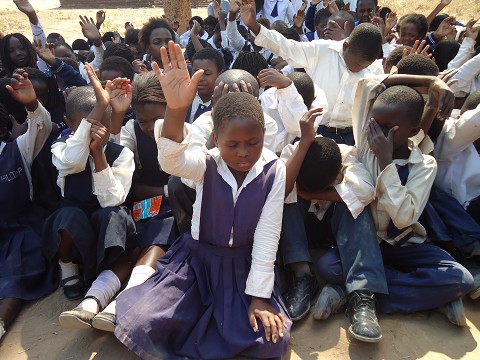
African-children-on-their-knees-praying

We pray they never abandon us or get weary of us
We pray we are always able to access them
We honor and greet our sacred ancestors
We call upon the ones who lived and died for our freedoms
We pray their memories will not be forgotten
We pray they forgive us for forgetting them a lot of the time
We pray they remain with us for the healing of our homes,
communities, and the planet


We greet the elemental life in the four elements of fire, air,
water and earth
We offer thanks for their efforts in healing the planet
We pray we can learn to work with them in healing our planet
In conclusion
We pray for all humanity, all plant life, all animal life and in fact
all matter to awaken
We pray for heaven and earth to meet and dance in perfect
harmony
Now and forever more
Ise!

Nwaonishe Ezenwanyi from Conversations with the African Gods

“Conversations with the African Gods” Review

Standard

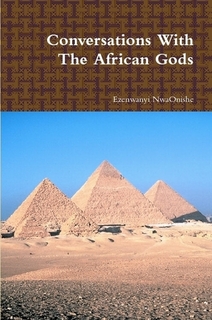
Conversations with the African Gods

This past weekend, I had the pleasure of reviewing another book written by an Igbo author who goes by the name Nwaonishe Ezenwanyi, entitled Conversations with the African Gods. Many of you might be familiar with the similarly titled “Conversations with God” series, written by Neale Donald Walsch, in which he has a number of conversations with “God.” To say that this book is the African version of that would be an understatement. Conversations with the African Gods is a journey for anyone who reads it, on humanity’s past, present, and future, from an African point of view. For far too long, perspectives, philosophies, and religions have been placed into a  false dichotomy of being either Eastern or Western, with Africa being excluded.  This book challenges that false dualism and brings forth commentary on world events from African gods and ancestors.

False Dichotomy

The author begins by describing her personal journey.  Like many of us born during the African Dark Ages, she was raised as a Christian (specifically Catholic), but was still extremely curious about the other religious and spiritual traditions in the world. Her journey took her to exploring Buddhism, Hinduism, Islam, amongst others. Eventually, after doing a lot of seeking and searching, her journey didn’t lead to her finding the “right” tradition, but to the tradition “finding” her. In fact, she  ended up  listening to the voices that had been calling her all along. She claimed her birthright and began practicing the spiritual science of her ancestors, Odinani.

Her spiritual awakening has also lead to her becoming aware of and developing different abilities such as clairvoyance, clairaudience, etc.  One of the most interesting gifts that she learned was how to invoke spirits.  The one that she was able to invoke the most was Onishe, who happened to be her “head deity”, or the one most in control of her life.  For that reason, she goes by the name Nwaonishe, which means a child of Onishe. She also happens to be the spirit that makes the most commentary. She opens up the dialogue by stating:

“I am a prophetess, a chosen one, selected apart by god/dess to speak the words of god/dess. I am manifestation of god/dess as I surrender each moment to my essential nature. I am speaker of life and death. Avenger for the just, the pure, the clean. There is only one Onishe and she is here and now, in you, and in many. I am the word. Atu. Word that forms everything. Logos. Mami Wata, Supreme Water, Essence liquid, Nut of Khemet. I am the word of Nut, the goddess of creation.”

Statue associated with Onishe in Asaba

While Onishe is the Igbo Alusi (spiritual force) that speaks the most, others also make their voices heard including Eke, Ikenga, Amadioha, Ani, and Anyanwu. Two other African Gods who are typically associated with Ancient Egypt also make substantial contributions: Ausar (Osiris) and Auset (Isis).

Ausar and Auset: Real Love

Contrary to popular belief, while  the gods of Ancient KMT (Egypt), especially Ausar and Auset, might have been popularized by that particular nation, they are actually much, much older than it and can be found all around the continent under different names and titles. This will be elaborated on in future posts.

These African Gods, as well as other ones including the popular ones made popular by Hinduism, Kali and Krishna (who both have names that mean “the Black One” ), as well Tehuti (Thoth) and Heru (Horus),  make commentary on a wide range of issues, including the ancient “Golden Age” civilizations of Atlantis and Lemuria, climate change, 2012, colonization, slavery, civil rights as well as the possible “Golden Age” to come. The discourse on how Africa (and Nigeria in particular) should structure their economies and governments to actually work for the benefit of the people (for once) is very enlightening, but is sure to shock a few people (Ikenga’s comments in particular).

Kali is not one to mess with

Commentary is made on the lives of difference ancestors as well, with some of them even commenting on where they are currently in the spiritual realm. Some of these ancestors include Fela Kuti, Malcolm X, Martin Luther King Jr, Olaudah Equiano, and others.  I found Fela’s mother, Funmilayo’s statements in reference to the Fela play to be pretty funny.

Olaudah Equiano

Another added bonus to the book is the use not only of the Nsibidi symbols associated with the different Alusi, but also practical rituals that one can do to commune with the Ndichie (ancestors) and Alusi, as well as attract abundance in one’s life.  I totally recommend this book to all  people of African decent, but it can speak to anyone  interested in advancing on their spiritual path. To order the book, click here.

SPECIAL BONUS:

To hear an interview with the author, on Igbo Kwenu Radio, click here.


“Akata Witch” Review

Standard

“Akata Witch” by Nnedi Okarafor

Imagine if Harry Potter were a she instead of a he? What if he was Nigerian instead of British? What if he were learning at Leopard Knocks instead of at the Hogwarts School of Witchcraft and Wizardry? Enter Sunny, Nnedi Okorafor’s latest anti-Disney heroine. I say that she’s anti-Disney because unlike most Disney films, the main females in her stories serve not as damsels that need to be saved, but as the ones that do the saving. Furthermore, they have physical features that are typically considered to be undesirable by society, such as the protagonist Onyesonwu being biracial in her most previous work Who Fears Death, and Sunny being an albino in this one.

Same Script, Different Cast

Before we get into the contents of the book, let’s start with the name of the book first. What is an Akata? When I was growing up, I was taught that it was a slang (and somewhat derogatory term) that Nigerians used for African Americans. That was until I was referred to as one by a native born Nigerian. I then began to see that it could also be a term used to describe any black person born and raised in America. Like me, the protagonist Sunny was born and raised in the United States. At the age of nine, her family decides to move back to Nigeria. Like any girl, she feels out of place and spends the next couple of years trying to find her place,  when she finds out that her place is nothing like she imagined it to be. She discovers that she is a “Leopard person”, a person that is born with mystical abilities and she is has to undergo intense training to learn how to utilize her powers while still living amongst the “Lamb people”, or regular folks. One of the best things I loved about this book was the name dropping by the characters themselves of the books that had a large role in influencing this novel, including In the Shadow of the Bush by P. Amaury Talbot, Her Stories by Virginia Hamilton, and The Witches by Roald Dalhl.
“The Witches” by Roald Dahl

Different locations were also named, the significance of which will go unnoticed to the general population. One such location is referred to as being the African American “Leopard person” headquarters. This place is referred to as the Gullah Islands off the coast of South Carolina. This area is usually overshadowed by New Orleans, even though it has had a much larger impact on African American history, and mainstream American history. It also has retained more African culture and tradition (including the folk magic) than any other region in North America, but thats a discussion for another day.

The most creative literary element used by the author is the technique of having a “book within a book” (another very popular example being the  Necronomicon). As Sunny begins to learn and master her abilities, she reads from a book entitled Fast Agents for Free Agents by Isong Abong Effiong Isong.  The wonderful part is that the reader gets to also read from this short book. So instead of doing a typical review of  Akata Witch, I will actually do a review of the book within the book, and explain some of the terms used:

What is a Leopard Person?

“A leopard person goes by many names around the world. The term “Leopard person” is a West African coinage, derived from the Efik term “ekpe”, “leopard.” All people of mystical true ability are Leopard people. And as humankind has evolved, so have Leopard folk around the world organized…from Fast Agents for Free Agents

One of the real life “Leopard people” that the writer is referring to are the Ekpe society of southeastern Nigeria. This society, which was started by the Ekik people, spread through to the rest of the Ibibio, Oron, Igbo and Ekoi peoples.

Ekpe Society members during a procession in Arochukwu

The Ekpe Society was introduced to Igboland by the people of Arochukwu. In fact, their lodge is in my home village of Atani. In Igboland, the Ekpe Society usually went by the name Okonko.

Ekpe Lodge in Atani Village, Arochukwu

They were the premiere secret society in Southeastern Igboland, and the highest grades held alot of the secrets of the mystical arts, including the magical Nsibidi script.  An entire topic will be dedicated to discussing the Ekpe society and its legacy in the near future.

What is a Free Agent

“A free agent is one who isn’t privileged with even one pure Leopard spiritline from the survivors of the Great Attempt. She or he is a random of nature, a result of mixed up and confused spiritual genetics. Free agents are the hardest to understand, predict or explain. Learning will not come easy to you. you are a Leopard person only by the will of the Supreme Creator and as we all know, She isn’t very concerned with Her own creations.

After your initiation, make sure that someone is there to help you, for you will not be able to help yourself, so new the world will be to you and so fragile your ego. You’re likely an infant. You will be dumbfounded and disorientated. What’s most important is…from Fast Agents for Free Agents

Initiation, which simply means “beginning”, plays a huge role in Igbo culture, as well as with other cultures all over Africa. Traditionally, both men and women would receive multiple initiations at different points in their life.  A very good metaphor is employed by Okorafor when one of the character states: “Imagine that you are a computer that came with programs and applications already installed. In order to use them, they have to be activated; you have to , in a sense, wake it up. That’s what initiation is.”

Igbo boy being healed by a Dibia

Igbo boy being healed by a Dibia

What is chittim?

“Chittim is the currency of the Leopard people. Chittim are always made of metal (copper, bronze, silver, and gold) and always shaped like curved rods. The most valuable are the large copper ones, which are about the size of a dove’s egg. Least valuable are chittim made of gold. When chittim fall, they never do harm. So one can stand in a rain of chittim, and never get hit. There is only way to earn chittim; by gaining knowledge and wisdom. The smarter you become, the better you process knowledge into wisdom, the more chittim will fall and thus the richer you will be…from Fast Agents for Free Agents

The real life chittim that the author refers to are commonly known as manillas.  The most popular African name for manillas, Okpoho, comes from the Igbo language. They were used as currency (as well as worn as jewelry) all over West Africa, but particularly in southeastern Nigeria, Ghana and Guinea.

Okpohos

What are the Masquerades?

“Up to now you’ve known masquerades to be mere symbolic manifestations of the ancestors or spirits. Men and boys dress up in elaborate cloth and raffia costumes and dance, jeer, or joke depending on who they are manifesting. Up to now, you’ve believed masquerades to be nothing more than myth, folklore and tradition. Now that you are a Leopard person, know that your world has just become more real. Creatures are real. Ghosts, witches, demons, shape-shifters, and masquerades, all real. Masquerades are always dangerous. They can kill, steal your soul, take your mind, take your past, rewrite your future, bring the end of the world, even. As a free agent you will have nothing to do with the real thing, otherwise you face certain death. If you are smart you leave true masquerades up to those who know what to do with juju…from Fast Agents for Free Agents

The above statements say it all. Masquerades in Igboland are known as mmanwu. Here are some pictures of some of them. Some of them are people in costumes, but the older pictures might be real ones. We will never know for sure:

Agbogho Mmuo (Maiden Spirits)

Masquerade at Igbo Farm Village

Masquerade at Igbo Farm Village

Ijele Masquerade

Ijele Masquerade

The Ijele masquerade originated in Anambra state is known as the “King of all masquerades.” In ancient times, it had 45 masquerades perform on top of it, which are now represented by 45 figures. It was also used to scare away some of the early missionaries in Igboland. Masquerades made their way into the Diaspora, and can still be seen in modified forms in the Carribean Carnival celebrations:

Carnival Masquerade in Brooklyn, NY

Carnival Masquerade in Brooklyn, NY

Carnival Masquerade in Brooklyn, NY

Chapter 4: Your Abilities

“How to discover your ability: Its doubtful that you have the intelligence to figure out something so important. But here is something to think about: one’s ability lies with those things that mark him or her. They can be talents, like an affinity towards gardening or being able to play the guitar well. Often they are things that Lambs make fun of, imperfections. They can be physical, psychological, behavioral. And I do not mean things that are a result of your actions like being fat because you eat too much and sit and play video games all day…from Fast Agents for Free Agents

I really felt this was the most important chapter in the book. I truly feel that if more people did what they were naturally gifted at instead of trying to conform to the standards imposed on them by society, the world would be a drastically better place. By following these instructions, one could unlock their latent abilities, as Sunny and her cohorts were able to do. Who knows, you might even discover yourself to be a Leopard person 😉

Conclusion

“…So there you have it. All you need to know to get started. As I have repeated incessantly throughout this book, there is no direction you can turn that does not face you toward certain death. The best thing to do is be who you’ve been, don’t move, stay where you are, drop all ambition as a Leopard person. Relax. Don’t strive too high. Learn but do not use. And only learn the basics. It is best to remain in your protective shell. Ambition is not your friend. Be glad the Leopard world has been opened to you, but remain a mere spectator. And for the hundredth time, I repeat: “KEEP YOUR SECRET LIFE FROM YOUR LAMB RELATIONS AND ACQUAINTANCES. not only are there dire consequences for breaching secrecy, but you risk upsetting a very delicate, crucial hard earned balance. Now go well, free agent. Be well. And again I saw: Welcome…from Fast Facts for Free Agents

This book is an essential read for Leopard people who know that they are free agents,  free agents that think they are Lamb people, or for Lamb people who want to get a glimpse into the mystical and secret world of Leopard people. As of now, I cannot find any copies of Fast Facts for Free Agents, so the best way to get a glimpse of it would be by purchasing a copy of Akata Witch. It has an excellent story too 😀

Be sure to be on the lookout for an interview with the author  on Igbo Kwenu Radio in the near future.