Abu Ndu: The Songs of Life

Standard

by Ogonna Agu

Selected from The Book of Dawn & Invocations

Ndu bu ahia
Ndi ahia ebiliela ije,
Ha everela fam fam onu ututu guba ukpa ha onu
Ihe a na-anuzi bu nzookpa ndi mmuo;
Onyeodu ana-eje, ya na chi ya –
Onyeodu ana-eje, ya na onyinjo ya
Onye puta n’ututu o buru ogbe anwu ya n’ubu ya
Onye puta ula ututu o si kpakpando bia bere ya n’ihu

Life is a marketplace
Traders have all set out for the great journey,
They have started counting the luck in their baskets
in the little dawn of light
The noise we hear is the footprints of spirits;
Each one goes, each with his chi –
Each one goes, each with his shadow;
Each one awakens in the morning
carrying a beam of sunlight on his shoulder –
Each one awakens, each awakens
telling the stars to come and perch on his brow
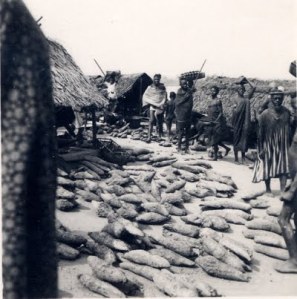
Uzo okpa ndi ahia ejula m nti
Ndi ije esila na mmuo puta mmadu
Ufu okpa ndi ahia dizi ka nke nedi-agha
Onu ahia adila ka ihu ogu
Ndi ga-ebe ana-eje n’ogbo udele
Ndi ga-anuri agbahari n’ogbo egwu

The countless feet of traders marching to distant markets have filled my ears
Traders have arrived in the land of the living from the land of spirits
The footprints of traders now look like that of men of battle
The market now looks like a battlefront – those that will cry have started facing the square where vultures hold their conferences
Those that will rejoice run around the festival ground

Ndu bu ahia –
Onye zuchaa, o buru ibu ahia ya laa;
O lakwuru uchichi, o lakwuru itiri mmuo

Anyanwu awaala n’owuwa
Anyanwu esorala chi ofufo hogolie elu ugwu ka
mna-elejere anyanwu ka m na-ahu Chi kere uwa,
Chukwu ewerela ugofu ya dika ihe were huo m aka n’isi
Mu bu mmadu esila n’uchichi puta ihe n’onu ama ndu ebe ahia na-azu

Life is a marketplace
Whoever finishes buying, carries his goods and goes home;
He goes to meet the night, he goes to meet the darkness of death

The sun has ascended in the east,
The sun has ascended over the hills without the morning ligh
As I look towards the sun, so I see the great deity, creator of all the universe,
Chukwu has stroked my head with the rays of his light –
I one, I have emerged from night into light
At the frontage of life where traders buy and sell

Olu okike ebuka
Anyanwu iwa n’igwe na olu okike aburu
Ubosi anyanwu wara n’igwe
ka Chukwu kezuru uwa niile
Etuakwu ka owuwa anyanwu na okike ihe ya siri buru ofu

The work of Creation is too great;
The rising of the sun in the sky
and the work of creation has become one –
The day the sun shone in the sky
is the day Chukwu created all over the world.
This is how the ascension of the sun in the sky
became one with the act of creation.

Eke bu nwoke mbu, o sila n’igwe ridalu ala –
Nwoke mbu bu ukpa bia ahia n’ubosi eke ka o bu
Oye esila n’igwe ridaluo ala –
Nwoke bu ukpa bia ahia n’ubosi oye ka o bu;
Afo esila n’igwe ridaluo ala –
Nwoke bu ukpa bia ahia n’ubosi afo;
Nkwo esila n’igwe ridaluo ala –
Nwoke bu ukpa bia ahia n’ubosi nkwo ka bu

Eke is the fist man, he descended from the sky down to the earth
The first man that entered the market with his long basket
Oye has descended into the work from the sky –
The man that came into the market on Oye day carrying a long basket
Afor has descended into the world from the sky
The man that entered the market on Afor day carrying a long basket
Nkwo descended into the world from the sky on Nkwo day
The man that c+ame into the market from the sky
On Nkwo day is he, carrying his long basket
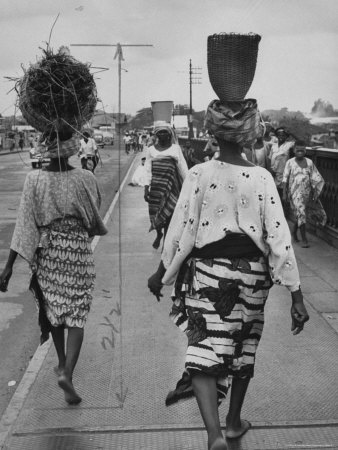
Anya mu bu mmadu e kere-eke esorola anyanwu kebe
Anya olupio m m ji elejere ihe di na mmuo-
Ahazuola m uwa nille;
Ahula’m ihe di n’anwuru di na mbara igw na-erughari n’oteaka
Ahula’m ihe di na nha-nha mmiri na-ezo n’igwe-
Ahula’m ka mmiri na-ehu ehu si esi na mkpume agbaputa
Ahula’m ka ihe e kere n’otu ngwugwu siri buru mmirir n’aloghachi n’ikuku
Ahula’m ka umu anu-ohia na-awughari n’okeagu –
Ahula’m ka azu bi na mmiri si ebi n’otu oke obodo
Ahula’m ka umu anunu na-efeghari na mbara igwe

Man like me, my eyes have begun to emit the light of the sun –
A tiny opening through which I behold that which is in the land of the spirits
I have seen all that is in this universe;
I have seen all that is gathering in the clouds in the distant sky
I have seen what is in the rain falling from the place above,
I have seen water break from the rocks as spring in the valleys
I have seen something wrapped in cocoyam leaves, returning with water in the wind
I have seen little animals running around in the great forests;
I have seen little fishes swimming in the waters, as if they belong to one large city
And I have seen little birds flying about in the sky

Chukwu bu nwoke mbu,
Nwoke mbu bi n’elu na uwa awa;
Chukwu bu nwaanyi mbu, nwaanyi mbu si na mmuo puta mmadu
Ya bu nwoke mbu burukwa nwaanyi mbu jezuru uwa niile

Chuwku is the first man,
The first man living in the sky when the earth appeared;
Chukwu is the first woman, the first woman who appeared from the land of the spirits to the land of the living
He is the first man and the first woman to walk round the whole world.

Eke bu otu nwoke na otu nwaanyi niime ndi mbu
Oye bu otu nowke na otu nwaanyi niime ndi mbu
Afo bu otu nowke na otu nwaanyi niime ndi mbu
Nkwo bu otu nowke na otu nwaanyi niime ndi mbu
Ha mmadu ino mbu si be chukwu muta oku so na ndi nwaanyi mbu
Ha biawara buru ukpa ahia ha bata n’Igbo na mgbe gboo
n’ututu nta
Ha ndi mbu nu uzo zuo ahaia n’ebe mmuo na mmadu na ezuko
ubosi ino na abali ano

Eke is one man and one woman among the first people
Oye is one man and one woman among the first people
Afor is one man and one woman among the first people
Nkwo is one man and one woman among the first people
These first four who brough fire from the abode of Chukwu are among the first women
They came carrying their long baskets to the land of the Igbo in very ancient ties
in the little dawns of light
These first men and women first traded their wares
in the meeting ground of spirits and men
In four days and four markets
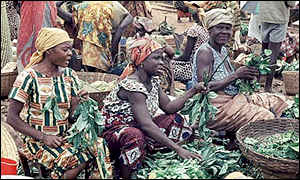
Ma mu onwe’m abu’m mmadu gboo-
Otu akuku’m bu ihe, otu akuku anysi
Otu akuku’m bu nwoke, otu akuku’m nyaanyi
Mmadu gboo si n’uchichi puta chi
Mmadu gboo si na ihe muta oku;
Ka o di na mbu ka o di taata were ga-adigide
Mu si n’odu hara onu were puta were bido ije
Site na mu bu uzuzu ka a hazuru uwa niile
Site na abu mma-ndi ka a huru Osebuluwa
Chukwu-Okike

Abu’m otu onye na-eje ije ndudugandu
Mu si na ogbu toro ogbu were eje,
Mu bu Ogochukwu nwa Uzonwa
Ada Ezennaerika n’Oka-etiti
Mu Ogonna nnwa nna’m Anaagudo Agu
nnwa Agu Olukoo o gbue
Mu bu Ogochukwu, nwoke Isi udughuudu

And I one, I am an ancient man
One side of me is light, one side of me is night
One side of me is man, one side of me woman
An ancient man who emerged from darkness into light
An ancient man who drew fire from light
As it was in the beginning so it is now and so will it continue to be
I am he who emerged from the sound of a trumpet and started off on a journey
From the dust of the earth I am made, and from the dust of which I am made
the whole universe is seen
From the song of the beauty of life behold the great and might Spirit Osebuluuwa
Chukwu-Okike

I am one man who is continuually undergoing the journey of the generations
I Ogochukwu, child of my mother Uzonnwa
Daughter of Ezeaerika at Oka-etiti
I Ogochukwu, child of my father Aagudo, child of Olukoo O gbue
I Ogochukwu, man with the bushy hair

Echi di ime, one ma ihe o ga-amu?
Uwa di ka nwaanyi di ime bu ite n’isi
O nwgh onye ma mgbe ime ga-awado ya
O nweghikwanu one ma mgbe o ga-amu nyabu nnwa

Tomorrow is pregnant, no one knows what she will bring froth
The world is like a pregnant woman carrying her pot of water
No one knows when her labor wil begin
No one knows also when she will deliver that child
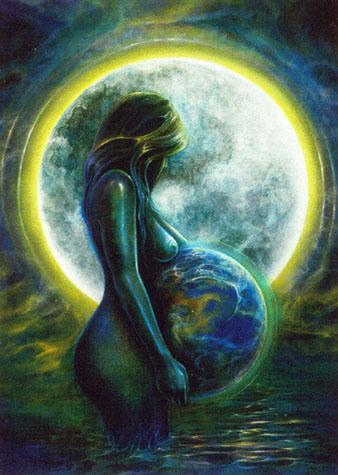
Echi di ime,
Ite ogwu ya riri nta na imo-
O bu onwa buru ma kpakpando
O bu ochichiri na ihe anyaanwu
O bu anwuru na-apu oku
O bu mmiri juputara uwa niile

Tomorrow is pregnant,
Its pot of medicine has taken in everything and all things
It has take the moon and the stars
It has taken the sun and the darkness,
It has taken rain-clouds carrying firebrands
It has taken water which fills all over the world

Nwaanyi mmuo ana-eje, na-asu ude nwaanyi di ime-
O bu uwa ya niile n’okuku ite ogwu ya,
Etua ka o siri buru na nwaanyi di ime bu ibu,
Nwaany mmuo na ibu ya ana-eme
Echi di ime, o nwegh onye ma ihe o ga-amu
Echi di ime, o nwegh oney ma mgbe o ga-exeda ibu

The spirit woman keeps going, heaving
like a pregnant woman
She is carrying all her world
Inside her medicine pot
Nwaanyi ime na ite gi awuru
Ndu akpoola igugu n’uzo ama gi, i were nye n’akwu
Nnwa a muru ohuru asaala chi
O narala oke chi ya were puta ihe
I muola ozuzu eke muo ozuzu oye
Anaanuw awagidela gi na oma ihu,
Anuri ejula gi obi

Behold, pregnant woman, your pot has broken
Life has flowered before your gate,
You have given to the nest what belongs to her
The newly born child has awakened
from darkness into the light of a new world
She has received her share of divine light
and so has come into the light of being
You have borne both male and female children
The sun has shone on you straight on the brow,
Your heart is filled with joy.
Ihe Chukwu ekezuola uwa niile
O werela ugofu ya chunaga anyaasi
Chi-ta amutala agu-ukwu na agu nta
O mutala ohimiri na mmirianyim
O mutala ilulo na oke osisi
O mutala anu-ohia na anu-ulo
O mutala anunu na-efe efe
O mutala elu na ala
O mutakwuola mmuo na mmadu

The light of Chukwu has shone in all the world
So that with his rays, he has chased away the darkness of night
This day has given birth to mighty forests and savannahs
It has given birth to mighty seas and oceans
It has given birth to green herbs and wooded lands
It has given birth to beasts of the forests and the creatures of home
It has given birth to the birds that fly
It has given birth to the sky and the earth
It has given birth to both spirits and humanity

Taata bu nkwo
Mmuo na mmadu ana-aga
Ndi bu odu, ma ndi bu oji
Mumuibiriachi, na ndi chiri ekwe,
Umuagbogho ndi ji jalijali oso
agbajekwulu Nkwo okwu

This Nkwo day
Spirits and men keep moving about
Those carrying ivory horns, and those carrying their sacred iron spears
Local women and those who have taken the ekwe title
Young maidens who with light and swift feet
Run to meet their beloved Nkwo
Nkwo oma ana-aga, nkwo oma ana-aga n’ilo
Ma mmuo ma mmadu, ha ana-akpaghari
Ma ndi na-ere ukpa, ma ndi na-ere mmanya ngwo
Ana-ha akpaghari
Bu ndi bu ukpa ahia ha
Ebe ha kwadogoro na taata bu nkwo
Na ahia ga-azu n’odu ndi ukwu

Beautiful Nkwo walks the streets, beautiful Nkwo walks along the streets
with men and spirits, they mill around
Those selling ukpa, and those selling upwine
They mill around carrying their long baskets
Since they are prepared that on this very Nkwo day
The fair will be at the stalls of the mighty

Ahia ewee buru otu ebe nnukwute mmuta
Ebe a na-eyie mma fuo ya onu;
Onye e yielu mma o na-ebe,
Onye o baara o kpowa so kekeke
Uwa ewere gwu m ike
Uwa ewere buru so otu oke mmuta
N’ahia nkwo
Ebe anyi jere iketakwa oke Chi ruru anyi
N’ubosi ahu ahia zuru n’ahia udele

The market then became one great place of knowledge
The market then become one very great place of learning
Here where hands cut deep into skins and blow cool air over them
Whoever is cut starts to cry
Whoever it profits starts to be crisp with laughter and I just became tired with the world
The world just became one great place of learning
At Nkwo marketplace
Where we went to get our shares of Chi
On that very day when a fair took place
At the market of vultures

Anyi ewere lawa,
lagide lagide lagide ije ebi-ebi
Lajekwute otu oke uchichi na oke oshimiri
Isi ewere buo anyi ka enyi
ka anyaasi dawasara anyi
Ka anyi siri diga
Ndi gba duu
Ma ndi ihu gbansim
Ma ndi ihu oma
Ma ndi oke ozu ha
Anyi niile n’ije any di iche iche
n’otu oke ozra ahu bu ndu
N’ije dnu a any na-eje

And we began going
Going and going and going on an everlasting journey
Came and met one great darkness and a mighty sea
And my head swelled like that of an elephant
As night befell us
As we went our different ways
As different as our Chi spirits
Those that were silent
And those who were quiet and indifferent
And those with the good face
And the really wealthy ones
All of us in our different journeys
In this great wilderness of life
In this journey of life which we are undertaking
Ula ka anyi niile na-alazi
M laruo ulo ka m zituo ibu m bu n’ukpa ahia m;
Ugolooma esorola chi na ubosi alaa
anyi sokwu chi na ubosi alaa
Anyaanwu adakpuola n’oshimiri
Ogonna nwoke isi udughuudu esorokwuola anyaanwu la ura
N’ogbu toro ogbu

Departing, departing, that s what we are now doing
On getting home I will lay down my long basket with which I went to the market
The eagle has gone with the light of day
As we also depart wit hthe day and the night;
The sun has fallen into the sea
Ogonna, man with the bushy haiir
has also accompanied the sun
into the depth of depths
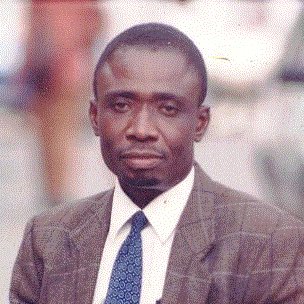
R.I.P Ogonna Anaagudo-Agu

The Ecotheology of Ahobinagu: An Igbo Deity of Wildlife and Forestry

Standard

by Nze Izo Omenigbo

“Uzu amaro akpu ogene, ya nee egbe anya n’odu” (A blacksmith who does not know how to fashion a twin gong—should observe the kite’s tail) —Igbo Proverb

A Primal Birth

Quite plainly, Ahobinagu or Obinagu is identifiable as the Igbo Alusi (Deity) that is spiritually inherent in the flora, fauna and extensive wildlife of the forest. A brief etymological assessment of the word itself reveals Obinagu as an essentially aggregated Deity. In other words, it is a spirit-guild of the countless, highly diversified essences immanent in the ecosystem of forest life. However, this definition should not–by any means–be seen as a cementing point of the obviously far more complex nature of this Deity. Perhaps, a very convenient way to comprehend the nature of this unique Alusi is to picture a host of spirits, each embodying a specifically assigned purpose in its nature, but all sharing one great cognitive head. Also, the somewhat similar image of an octopus might come to mind. But surely, an octopus is no contestable match for Obinagu, any day.
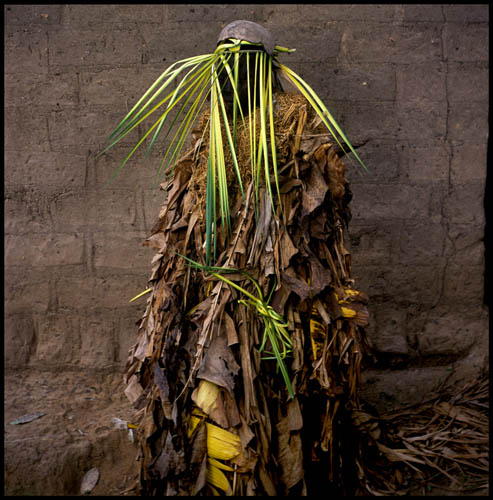
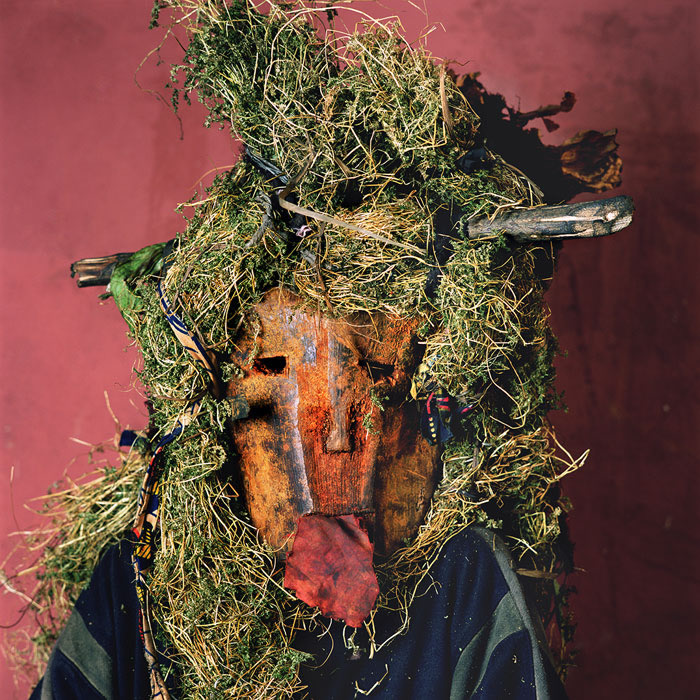
Okpo Masquerade from Calabar, Nigeria

For a credible theogonical account (Deific Birth) of this Alusi, it is only right to refer to one of the two well-known and comprehensive cosmogonies of the Igbo world. In one of these ancient creation stories (or unified field theories as they’re branded today), both the known and unperceivable dimensions of the universe (Uwa) were considered to be in a unified state of rest at one time. A state simply referred to as “the primal house” in this cosmogony. In this immensely unifying house—once existed the “secret project” of Chi-Ukwu, the colossal God. However, given the very curios nature of Chi-Ukwu’s wife—Komosu, this “secret project” was consequently made known when she bravely ventured to peep into Chi-Ukwu’s coveted Obi or sacred enclave, which was located right in the middle of the larger “primal house”.

Subsequently, beautiful Komosu was martyred by the impact of the immense primal energy that escaped from this private enclave, and thus—the known world was born! In other words, it is essentially in this great outburst of dynamic manifestation that the basic building blocks of life were seeded or brought into being. However, as the Divine being that she is, Komosu consequently reincarnated back on Earth, as Ala, the Igbo Earth Goddess.

The Big Bang

So, following a brief analysis, it becomes rather logical that the very earliest “seeds” to have possibly emerged from Komosu’s initial mischance should be the immanent spirits/essences, incarnated in the infinity of created life across the universe, especially as is observable here on Earth. In this sense, the Alusi known as Obinagu is principally one of such primal incarnations. Moreover, as an indispensible ally of Ala, it is only proper that Obinagu should share one of the Earth Goddess’s imperative attributes, namely, an eco-system.

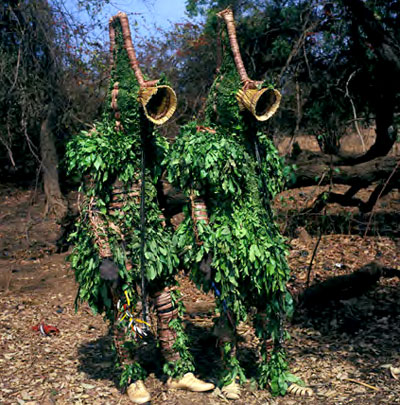
Gwarama Masquerade from Burkina Faso

Given the discovery of what must’ve seemed an incredible bond, the ancient Igbos most likely proceeded to place Obinagu in the readily acknowledged position which it continues to inhabit today in the larger Igbo Cosmo-theological system. In a more summative analysis of this multifaceted Deity—then, one can briefly consider Obinagu as partly serving as a well-realized “Spiritual Locus” of the Earth Deity within the intricate natural network of the forest. Hence, the dual meaning of the name: Obi-n’agu (I) That which lives in the forest (II) The heart of the forest.

Atam Masquerader from Alok Village, Nigeria


An Inherent Operative Synchronicity

In the many Igbo traditions where this Deity is highly revered, such as in Udi—Enugwu State, there are many associated activities that are considered sacred to it. One of such is the Egwu Obinagu, which literally means, Obinagu music. This sacred music is also known as Igede Obinagu, in other parts of Udi. It is essentially flute music (Egwu Oja). But the accompaniment of other wooden Igbo musical instruments is not entirely forbidden. However, the use of metallic musical instruments such as Ogene (twin gong) appears to be excluded from that opportunity.

Various Igbo Ogene

Indeed, if one would only stop to consider the profound and unrelenting reverence that ancient Igbos had for nature, then the much deeper mysteries behind the resource-specific instrumental selection of Egwu Obinagu will become evident. An important remark is the fact that the Oja (flute) is an instrument that is totally carved out of wood. And wood itself being a resource that can only be naturally acquired from the forest—strikes a note of great importance, in relation to the forest Deity itself. Hence, the reason for excluding the Ogene and other metal-honed musical instruments in the accepted implements for making the Obinagu sacred music.

Oja (flute)

It is also important to point out that the primal resident spirits that inhabit the various streams and springs that course through forests—are not left out in this intricate synchronicity of spiritual forces, which in turn aggregates into Obinagu. This becomes further obvious, following a recognition of the indispensible union between water and the boundless, naturally-laid network of trees, herbs and shrubs—all layered out in profound harmony, with the rest organic/inorganic presences in Earth’s ecosystem.

Nnabo Dance Group from Akpabuyo Village, Cross River, Nigeria,

Indeed, life feels itself and in return, it progresses to express what it feels through nature. However, beyond the overt, mundane and maneuverable aspect of a Deity such as Obinagu, there exists a core spiritual dynamic to nature that has continued to escape contemporary awareness. Yet this simple core can be appreciated once again through the grasp of a very ancient language. This language is no other than the sacred cosmic language, Afa. The amazing thing is that we’re told by the ancients that humanity once spoke in Afa. And even at that time, it was considered a sacred tongue, just as it’s still considered today. In other words, according to Igbo mythic account, if humanity had once regarded the language of Afa a sacred one, then surely, we must’ve—at one time—also viewed ourselves, the speakers of this language—as sacred beings.

We’re also told that among other things, Afa is also fundamentally a language of nature; a language of the gods. However, since nature is also our only viable means of interfacing with the gods—through Afa, then Afa is also a cosmic language, because all the higher Deities are principally cosmic beings. Now one might ask, what then is the basis of such a language and how did it come to be spoken by man? Well, the simple secret is that Afa language was patterned after the brilliant, vibratory harmony that is found in nature. And since it is held to be life’s very first language—spoken by the gods themselves—then it was destined that humanity should inherit this cosmic tongue from the gods, just as it inherited other wonderful gifts of civilization from them.

We don’t know how we came to forget or lose the ability of this divine tongue. But a very mystifying fact about Afa is that it is a language that can only be understood by nature; which means that we once spoke and communicated with nature, much like we do with ourselves today. Interesting isn’t it? Well, actually not all of us have lost this ability. Our Ndi Dibia still retain it and in fact, they still employ a great deal of it in their work. Notice that Afa proves to be an all-encompassing and all-knowing language—as a result of its ability to interface with all of nature, hence interfacing with all of life. At this juncture, the spirituality of nature and the bonding nature of spirituality is made evident, as one makes the connection to the earlier stated harmonic-essence that is fundamental of the Obinagu Deity.

Atiya Traditional Dance

Now whether in Igboland or elsewhere in the world, we might have succeeded in convincing ourselves that there are certain, extant members of creation that are strictly known as plants. However, the truth is that, at one time, man himself was also a plant in the garden of nature! Specifically, we were once “man-plants” or what is known as Akwu. A linguistic variation of this name is still used for the palm-tree in Igboland today. Moreover, the palm-tree is also considered sacred all over Africa, especially in its aspect as the tree of life. So, in contrast to the ‘exceptionist’ perception of most people today—in respect to the place of man in nature, Afa tells us that we once viewed ourselves as merely members of the colossal, cosmic organism known as life, whose outer ornament is the awe-inspiring nature.

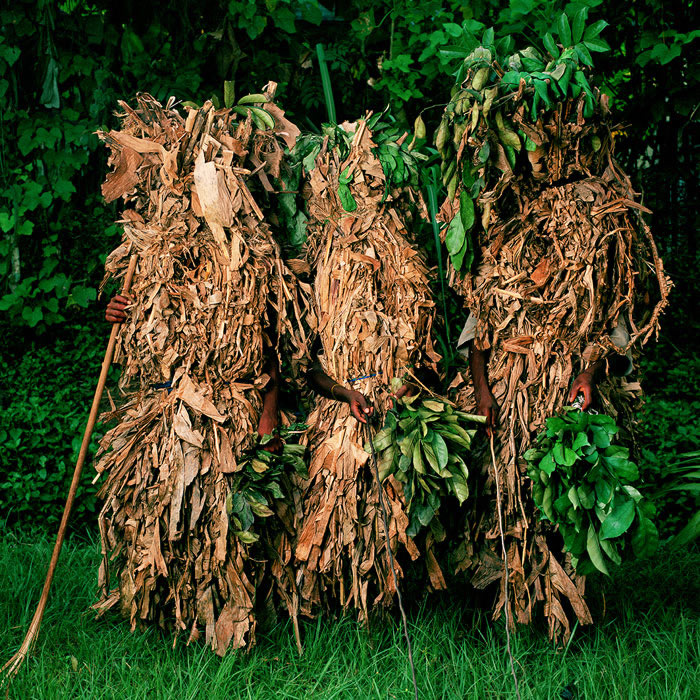
Minor Ekpe Masquerade with Mango Leaves from Calabar South, Nigeria,

For the keen-eyed observer, a plethora of clues abound in Igbo life and culture to substantiate the mystic remnants of Igbo antiquity, in respect to nature and how ancient Igbo societies related to nature. One of the most obvious of these is the Igbo word for name: Afa (pronounced differently). Already, one can sense the overt etymological relationship between Afa, the name and Afa, the tongue. Still, it becomes even more obvious when we consider that in Igbo culture (indeed in many African cultures) one’s name is believed to embody their existential lot or destiny in a given life-time—in addition to serving as their natural compass. In other words, one’s Afa (name) essentially becomes a dual conception; especially in the Igbo sense.  Firstly, as their sacred individual ‘code’ for assessing nature’s existential allotment for them (destiny) and then, as their divinely-accorded compass for identifying their place amidst nature (distinction). Hence, without even recognizing it, one’s name is essentially their own unique cryptogram; their cosmic code for relating to Chukwu and the gods. And even more, one’s name is their first Afa (divination).

Without diving too deep into the mystical dimensions of this fact, it can be observed that humanity actually has no choice but to recognize its sacredness once again—as part of the divine ornamentation that is nature. Therefore, as privileged and responsible members of this endless festivity of life, our role is precisely that of caretakers and not squanderers. Furthermore, in relation to this inherent role of custodianship, another sublime parallel exists here between man and Obinagu—as the custodian Deity of natural life in the forest. However, in the end, it appears that even more responsibility is expected of man as Mma Ndu, the crown of creation.

Ekong Ikon Ukom Masquerades from Calabar, Nigeria

Igbo Antiquity and Ecotheology

Regarding the sheer, immense reverence that ancient Igbo societies had for their natural environment, the opening axiom of this discourse makes it even clearer with its instructional diction—recommending that humanity should turn to nature for her absolute wisdom. In fact, it is arguably only out of such similar, passionate and overwhelming reverence that the ancient Igbos went as far as condemning the conception of twins, which they innocently considered an undoing of a primal modus in their cosmology of the human reproductive system—in relation to the  larger paradigm of nature. All this were done in their honest efforts of preserving the essentialities of what they considered as highly sacred, the Earth.

Ani, the Earth Mother

However, they also came to realize in the end, out of ensuing wisdom that “When something stands, another thing stands beside it”. Curiously, till this very day, this monumental amendment (termination of the twin taboo) along with its many theological and cosmological triumphs—remains one of many such profound turning points in Odinala and Igbo culture in general, that have managed to pass by without any epically recognized or institutionalized celebration of it, for unaccountable reasons.

At this point, it is also highly important to point out that even at the time when this act was still practiced, the twins were not exactly killed—in the literal sense of that word—but were merely taken to the very thickest parts of the forest, where they were plausibly left in the care of Ala and the forest Deity. An observable reason for this decision being that—instead of having to bear the more recognizable karma that comes with conventionally taking a life, one would rather have the fate of such children determined by the Deities themselves.

Yaie Masquerade from Burkina Faso

Still, what is far deeply inherent here is that, in this monumental case of theological defeat, the operative synchronicity of Obinagu and Ala is made even more evident, as one recognizes the explicit irony behind the act of handing over these children to two Deities whom were both considered as Divine Nurturers. At this point, we can imagine the outright perplexity that must’ve overwhelmed the ancients. However, in their infinite wisdom, they would guiltily return back home—only to mourn these same children and offer copious sacrifices to appease Ala for the mind-boggling act that had just transpired.

Carnival in Haiti

Essentially, the very multi-faceted and primal status enjoyed by Obinagu, as a custodian Alusi of the forest is almost unquantifiable. However, one only needs to be reminded of the highly agrarian nature of Igbo society prior this age to make the connection. Hence, given the very predictable preference for well-nurtured wildlife and agricultural yields at the time, there surely couldn’t have been a better role for this Deity.

Ekpo Masquerade from Calabar, Nigeria

The Imperative Need for Re-Consecration

The Deities (in their aspects as Gods and Goddesses) are profoundly influential by nature, and countless in number. However, since the  very beginning of time, humanity as Mma-ndu (the crown of creation) have unarguably enjoyed a God-given right to explore, harness and negotiate the potentialities of these various incarnated forces. But just as even the most mundane of life’s activity requires a procedural edict/code of conduct, so does the consecration of these higher forces require a spiritually sound arena to be made very effective.

Obinagu, for instance, cannot be “aligned” or brought into operation in a naturally deprived environment, because it is a Deity that operates simultaneously with nature herself, in the capacity of its custodian. Also, the mere knowledge of the esoteric operatives used in sacred science is not necessarily enough to potentiate a Deity. Just as an actual car will require a competent mechanical engineer to be present from its creation process to the manufacturing process—so as to ensure optimal performance in the finished product—in the same way, a potential Deity requires a competent Dibia Ogwu to be present from its creation (or negotiatory process, depending on the Deific hierarchy) to the erection and final dedication process. More importantly, a very spiritually disciplined mind/population is also imperative for such universal principles to be brought down—in the first place—to earthly dimensions and even more, to make them abide for a very long time. This is the inherent strength and genius of ancient Igbo societies. The discipline of their time should be a strong fascination for any clear minded Igbo person today.

Igbo Dibia

In fact, one of the utmost advantages of deific consecration to man is that, unlike modern scientific results and its technological triumphs that often waiver in their abilities, mystical/spiritual potencies (whether they come in the form of a massive “Esere-Ese/spiritual inscription”, a massive pyramid or even in the form of a simple tree-post) are still essentially non-third dimensional in their potency. Hence, they’re essentially predisposed to influence (positively) or mercilessly interfere with anything below their dimensions of origin; just as one cannot help but experience the inevitable presence of rain and sunshine here on earth, regardless of their personal opinions about these two perceivable forces of nature, whose origins are well beyond the third dimension.

So, in consecrating or aligning these Deities, we automatically implore them to oversee and influence our third dimensional experiences. But in other to be able to operate these higher forces (especially the more manipulative lesser deities), a sacred state of being is imperative. In other words, Igboland has to be re-consecrated once again, because our Deities cannot do much for us collectively at this point, until we jointly reinstitute our traditional ethics and re-consecrate the land for them to be able to co-inhabit it with us.

Fortunately, considerable efforts are been made towards this agenda, at this point in time. But there is no denying the intensity of the task ahead. Nonetheless, it is only common sense that Igbos all over the world should begin to see themselves as returning prodigals, in the most productive sense of that expression. Because eventually, one cannot grow too far from their roots, anyway.

—Nze Izo Omenigbo—

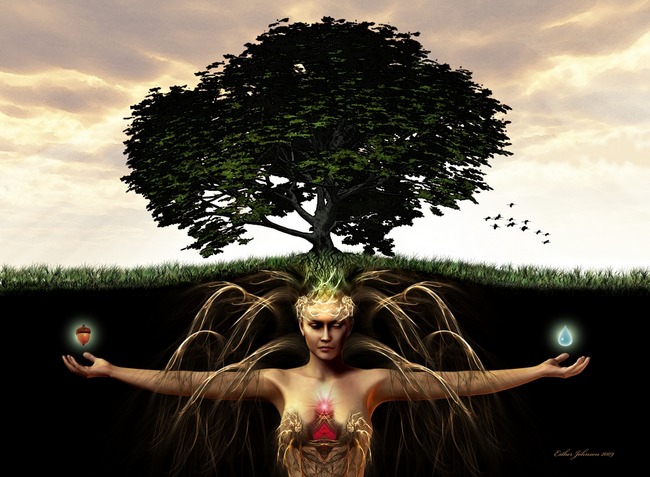
"Gaia's Child" by Esther Johnson

_______________________________________________________

Including excerpted sections from “Sacred Earth: The Divinities of Odinala”

(A work in the making)

_______________________________________________________

“We Came Out to Play”

Standard

by Ify Omalicha Agwu

The stars did not come
We began to chant and clap
The praises of the crescent
That the moon would not shut her eyes
At us waiting below the sky

The wind came whistling by
Laughing at our waiting.

If we ask Ogoo
Why the night is strutting by
in the dark
He’ll say the moon and stars
Are gone to the spirit land
To bring us a fortune
on Eke market day.

Now, we wait.

We know not many hidden ways
Lest we find you out
But you must come lighten this sky
That has grown dark with loneliness.


Come listen to our songs
Woven in our web of tales
Telling of births and life
Of yesterdays that never return
Of yesterdays that cling to now
Of todays that lie half-lived without tomorrow
And of many nights of tomorrow
When like Ogoo
We’ll know the ways of the wind and rain
Telling our children to clap and sing
While they wait for you to come to play.

R.I.P Ify Omalicha Agwu

Nkele Egede: In Praise of the First Ones

Standard

Nkele Egede

(Igbo Translation)

Lekwe anyanwu biara uwa,

Ihe ebi-ebi ka o Jiri choo ya mma.

Mmadu Jizi maka nke-a hu ya na-anya.

Aja-Ala, Nne mbu buru anyi n’afo izizi,

Anyi echeta gi.

Igwe na mmiri,

Ndi mbu lere anyi omugwo,

Ndi mbu biara abia na ogodo uwa.

Anyi echeta unu.

Ikuku na Okpoko, ndi mbu fere efe,

Ndi obu-akika-na-enwu-oku n’isi,

Ndi mbu lara agu n’asaa na mmiri n’asaa,

Were nu nke ru-ru unu.

Debe nu Chim na Chi uwam.

Uwam biara, lekwem.


In Praise of the First Ones

 (English Translation)

Now behold the Magnificent Sun,

The One who came forth and blessed the world with eternal light.

Oh—how endless our adoration.

Behold too, the motherly Earth,

From whose primal womb we’ve all emerged and continue to emerge,

How endless our appreciation.

Behold now, the very ancient Sky and primal Waters.

The most graceful ones who first suckled and guided us,

The manifest ones who first embraced the visible world.

How endless our adoration.

Behold the sacred Spirit that is Breath and its chosen bird, Okpoko.

Behold both earliest of all adventurers; inventors of the art of flight.

Behold them, the non-flammable head-bearers of Light—

Primal navigators of the Seven Wilderness and Seven Seas.

Oh—ancient ones of renown, how endless my appreciation.

Guide now, my Chi and the Chi of my Destiny.

Great manifested world, bear me well.

—Nze Omenigbo Izo

(Excerpted from “The Transfiguration of Izo and Other Mystical Feats: Poems”)


Connecting to Your Ancestry

Standard

One of the things that all humans have  in common is that none of us came into this reality all by ourselves. We had people that came before us that literally opened up the doors for us, who we owe our very existence to. The most recent of these would be our parents. For this reason, and many others, reverence for ones parents is a principle that is in virtually every culture on the planet. This reverence also extends to ones grandparents, great-grandparents, and so forth. Due to the impacts of colonization and the transatlantic slave trade, many people of African descent have stopped showing this reverence, and therefore have become disconnected from their roots. This has resulted in a stagnation of culture, broken family structures and very poor self esteem in many people.

It now appears to be a renewed interest in connecting to ones ancestry, and figuring out where one has been. Websites like Ancestry.com have helped a number of people, as well as methods such as DNA testing. To encourage people to help connect to their roots, I have decided to share my experiences, observations, and insights I have received from my own ancestors (both the living and “non-living” ones).

The first thing I would recommend is for people to shift their perception of their ancestry. Many people today like to use terms such as “lineage.” The problem with the term “lineage” is that it generally only counts the males ancestors of ones father as being important. This is patriarchal, linear thinking! The fact is, you get the same amount of chromosomes from your father as you do from your mother. When you look at your ancestors in their totality, what you get looks less like a line and more like a pyramid. And guess who is at the apex? YOU!

Standing at the apex

If you go back just one generation, you have two ancestors. Go back two, and that number becomes six. Skip to ten generations and now you can have up to 2046 ancestors . Mind boggling isn’t it?  You are a combination of millions of years of evolution. You contain traits from every one of your ancestors, starting from the first divine seed that humanity sprang from (Ifenta, which means “small light” was the name of the first human in Igbo cosmogony).

One should not fall into the trap of elevating your ancestors above ones self. Some people use the term “ancestor worship” to describe what a lot of Africans do to those that came beforehand. While I feel that back in the day, it was a misnomer, from my observations, today many people of African descent do tend to put to put their ancestors on a pedistool that they are unable to reach. Rather than elevating them to a high place, think of them as people in a relay race who have passed their torch to you. Your job is to run faster than they did. As long as you are caught up in worshipping them, you can never outdo them.

Passing the baton

With that being said, I would say that the first thing one should do if they wish to connect with their ancestry is to begin with your relatives that are in the flesh. This is a step that TOO many people neglect to do. It troubles me to see folks who yell and scream about their “ancient” ancestors but haven’t made sincere attempts to have a good relationship with their parents, aunts, uncles, grandparents or other living relatives.  The very first time I connected with my “non-living” paternal grandfather, it was a powerful experience. While in meditation, I began to focus on his image and name intensely. In making the connection, he told me very clearly that if I really wished to be able to connect with him on a deeper level, that I would have to connect better with my father, who I have often had a rocky relationship with. But it makes sense doesn’t it? Your parents are the bridge to your grandparents, and if you have a blockage in that relationship, it will extend to any deeper ones. The point that I’m trying to make is that one should do things in the right order.  It would be crazy to try to climb Mount Everest before conquering a small hill, just like it would be crazy to try to connect with some “ancient” ancestors if you don’t even have a good relationship with your recent ones.

I am blessed to still have both of my parents, and I have one grandparent left (on my mothers side). I met my maternal grandfather before he passed, and also my paternal grandmother when I was a baby. If you have any living grandparents, or great-aunts or uncles, you are a lucky person indeed. They are a living gateway to your “non living” ancestors, and you should took full advantage of their presence in the physical. Talk to them as much as you can, and if possible record the conversations using either audio or video. These conversations will prove to be invaluable in the future, both for yourself as well as your descendants, especially after they have made their transition. Don’t hesitate to also record conversations with other relatives including aunts and uncles, as well as your parents.

"Ana Muo" (Land of the Spirits) by Uche Okeke

A very important step that I would implore everyone to do is to take it upon themselves to create a family tree. This one single action can open up doors in ways that many people could not even imagine. By creating a family tree, you put together a puzzle that shows “your ingredients”, start to retrace the footsteps of your ancestors, and you gain the support of elders in your family and appreciation of the younger generations. Plus it will help you to connect to your ancestors more if you know their names,  what they looked like, where they were born, what they did for a living, how they lived, etc. Take note:  African definitions of family differ from the Western definitions as they includes as many people as possible from a particular bloodline, i.e extended family. That means aunts, uncles, cousins, and everyone in between. However, you can go as deep as you see fit.

Creating your family tree will quite literally be like trying to solve a grand mystery. In fact, to do it well, you will have to interview numerous family members of different ages, most likely visit various cities, states or countries, look into public records, etc. It will not be an easy process, but along the way, you will build key relationships, get valuable information, perhaps get hold of  key family artifacts and relics, and maybe even uncover some priceless secrets! One thing for sure, you and your family will not be the same after you start this process.

If you are a person that has a limited knowledge of their ancestry due to the Maafa (African Holocaust),  you might want to go and take a DNA test. These tests can trace your maternal lineage as well as your paternal lineage even down to a specific ethnic group in Africa. I personally would recommend African Ancestry as they are a black owned company and a number of my good friends have gotten excellent results from them.

Creating a family tree will turn you into Sherlock Holmes

As you continue on your ancestral odyssey, once crucial thing I would recommend you to start building would be an ancestral shrine. Although the word “shrine” has negative connotations due to Judeo-Christian propaganda, one definition of a shrine is simply “A site hallowed by association with a revered person or object or with an important event.” Another word for this would be a memorial. Here are some examples of some popular shrines:

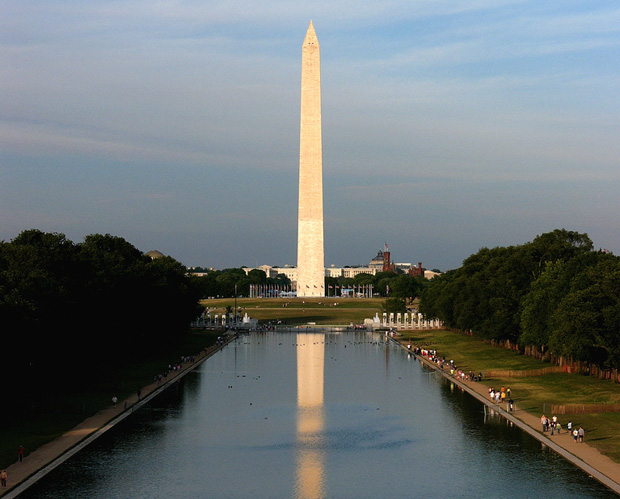
Washington Monument

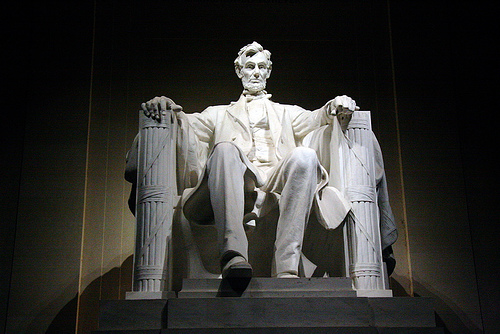
Lincoln Memorial

Stonewall Jackson Shrine

Shrine of the Black Madonna

Vietnam Veterans Memorial

All the time and energy you spent on putting together your family tree will enhance the ancestral shrine that you construct. Keep in mind however, that there is no “right way” to build an ancestral shrine. Do not fall into the trap of thinking that whatever is done on the African continent is more “correct” than what you can come up with. Let your spirit guide you, and you won’t be mislead. I recall a lecture I attended a few years ago from an organization who had a program of helping teach Africans in the Diaspora how to construct ancestral shrines. The women giving the lecture said that when they had an event with some older Black American women from the south, the presenters actually ending up learning more from the older Black women!

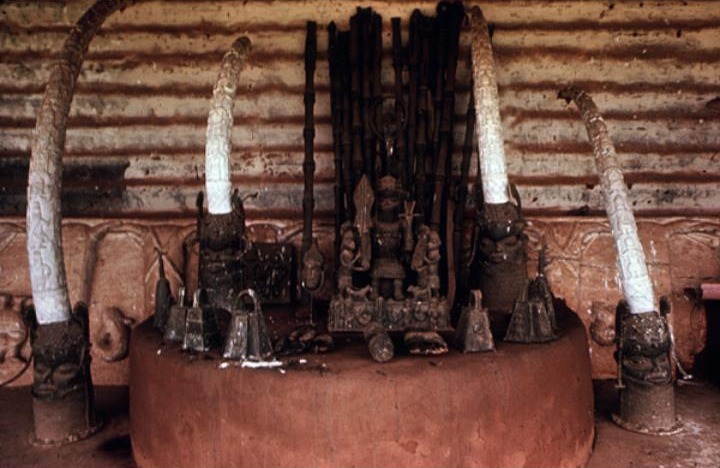
I’ve seen simple shrines and I’ve seen complex shrines. Use your imagination! Utilize pictures, personal possessions, candles, historical memorabilia, etc. to create your ancestral shrine. If you want, you can also include an alter where you can place water, plants, seeds, as well as articles of food or alcohol from time to time. Traditional Igbo ancestral altars typically contained sacred objects such as an Ofo stick (passed down from generation to generation) and an Ikenga. Kola nuts were broken at it every morning accompanied by a prayer for good favor.  Below is an example of one:

Igbo Ancestral Shrine

Here are some examples of ancestral shrines and altars from different cultures:

Urhobo Ancestral Shrine

Edo (Benin) Ancestral Shrine & Altar

A Korean jesa altar for ancestors

Mexican Day of the Dead Outdoor Altar

A Vietnamese altar for ancestors

Haitian Voodoo Ancestral Altar

I foresee a future where ancestral alters will resemble the hologram of  his father Jor-El that Superman keeps in his Fortress of Solitude, as seen in many of the Superman films. Its one project that I’m personally working on making a reality.

As you continue your journey, you will start to become aware of your ancestors speaking to you through signs, symbols, dreams, as well as through other people. In time, you will learn the language that they speak, and be able to communicate more effectively with them. If at any time you feel isolated or in need of guidance, become very still and remember that your ancestors live in you, and they will always be there to support you. Your body is a living shrine to them and your positive actions are better than any type of sacrifice you could offer them or libation you could pour. Yagazie (May we prosper) !

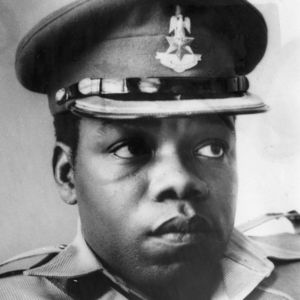
Dim Ojukwu: First Amongst Equals

Standard

by Augustine C. Ohanwe

A huge gaping gap
Is left unfilled
And its implications so vast
And beyond the grasp of an ordinary man.

Dim Ojukwu weeps
As he glides along the eternal lane.
Yes, he weeps, for we are a mere flotsam
Inside a boat in a capricious sea of existence.

Yes he weeps
’cause our boat needs a rudder
And a compass
To direct it to the harbour to berthe

Is it not true
That when the iroko tree falls,
Dwarfs tighten their girdles
To climb over it.

But after death
Dim Ojukwu proved to be huger than life.
And our today’s leaders
Have lots to learn from him.

He did not come
To line up his pockets but to serve.
His vision was to transform
And to challenge the status quo

His action, born in response
To events manufactured by history
And he rendered his vision in the present tense
As to bring the future near to his people.

Call him a rebel,
And he would respond
That he had a cause,
A cause to meet the needs of his people.

His mind created metaphors,
Symbols, slogans and examples.
Yes, whatever his shortcomings,
His people did admire him till death.

And clouds yeilded up their lightenings
To be imprisoned in his political rod.
In darkest hour of our history,
He proved his meetles.

Rest in Peace

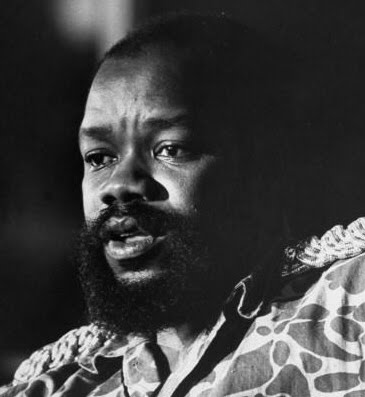
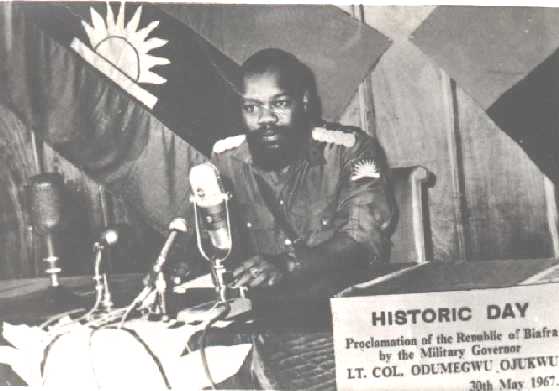
Chukwuemeka Odumegwu Ojukwu

(November 4, 1933– November 26, 2011)

Ezeigbo (King of the Igbo)

Ikemba (Strength of the people) of Nnewi

Dikedioramma (Beloved hero of the masses)

We Rise

Standard

by Ebele Chizea

Our father is the great rising Sun

Our mother, the serpent who birthed humankind

Records of our footprints reveal we have marched this way before

Who is our mother you may ask?

She is the energy in your spine, your back bone, the ground beneath your feet…

Our father is a wise king descended from a realm of gods

A city with numerous vortexes of light

He is known by some as The Dweller

He also dwells in our hearts

Which is why we smile so much

Even through the rain and the whirlwind

Through hunched backs and trepid movements

We dance & sing & make music…

By our stripes, the world was reborn into a new way of doing things;

Of loving, of expressing, of worship

More than that, the ones to come later were fed

Because of the great human sacrifice

That history shall never forget

Umu anwu (children of light) we were

And just like Anyanwu (the Sun), We rise

Just like our father

Who came before us

So that we may also live

And like our mother who bears witness in this breath of time.

Anyanwu: The Eye of Light

Standard

“Anywanwu” by Ben Enwonwu

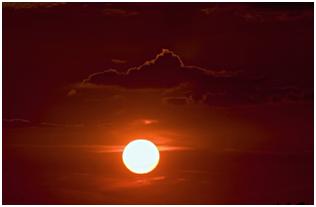
The sun is one of the most universally revered objects in human history. Just about every culture on the planet honors it for all the different gifts that it brings to our planet, bringing both the light and heat that make life on our planet possible.

Sol Invictus

For one, our method of keeping time is based on it, as for the majority of human history, our clocks were sundials. Most of our modern calendars (including days of the week ala Sun-day), are based off it, and lot of our major holidays originally started as solar equinox or solstice celebrations (such as Easter and Christmas respectively). Even western astrology focuses on a person’s sun signs. Needless to say, our lives revolve around the sun…literally.

“The Sun Shine Brightly” by Uche Okeke

Amongst Ndi Igbo, the Sun was referred to as Anyanwu (An-yan-wew). This is a combination of two different words. The first word, anya means eye. The second word, anwu, means light. Together, the phrase reads as “eye of light.”

Anywanu and other cosmic entities on an Igbo compound wall

Metamorphosing the sun as an eye is not an exclusively Igbo concept. Another famous example of this can be found in the ancient Egyptian character of Ra, who was depicted as a Falcon headed man who hand a sun disk on his head.

Ra

Eye of Ra

A modern example of a celestial eye can be found on the left side of a dollar bill. Here are some other examples found throughout different cultures:

Back of $1 bill

Masonic Eye of Providence

Coat of Arms of Brasłaŭ, Belarus

With the multiple appearances of this “all seeing eye”, one question will naturally arise: Exactly whose eye is it and why is it portrayed in that way? The answer will be revealed throughout this post.

The sun is a symbol of both physical and spiritual awakening. In most societies, peoples sleep cycles closely followed that of the sun. They would wake up around the time the sun rose, and go to sleep soon after the sunset. Many plants and animals also follow this trend.As an agriculturalist, I have been taught that the best way to save seeds is to keep them dry and in the dark, as they will germinate (awaken) if exposed to moisture and sunlight.

Awakening of a seed

Awakening of a seed

When spiritual awakening occurs, its usually referred to as enlightenment. If one has a good eye, they will notice that many of the holy men and women throughout history are quite often portrayed with a sun disc behind their head. Even their titles and epithets reveal as much. The Buddha, for example, name literally means “The Awakened One.”

The Buddha (Awakened One)

Lao Tzu

Green Tara

Jesus the Christ (Annointed One)

Kwan Yin (A Female Buddha)

Krishna

Krishna

It is no coincidence  that Alaigbo (Igboland) was referred to as the land of the rising sun. Many of the most enlightening spiritual teachings and examples in all of Africa had been found in that land in what is now southeastern Nigeria. One place in particular was so highly developed that people considered it to be  one of the  major cultural epicenters of modern Igbo civilization. This place was known as Agwukwu-Nri, from which I am descended from on my mother’s side.

Land of the Rising Sun

Anywanu played a very large role in life of the Umunri. “Nri people believed that the sun was the dwelling place of Anyanwu (The God of Light and Agbala (The Holy Spirit). They believed Agbala to be the collective spirit of all holy beings (human and nonhuman). The Holy Spirit was a perfect agent of Chi-Ukwu or Chineke (The big God or the Creator God). The Holy Spirit chose its human and nonhuman agents only by their merit. It knew no politics. It transcended religion and culture, and of course, gender. It worked with the humble and truthful. They believed Anyanwu, the Light, to be the symbol of human perfection that all must seek. Anyanwu was perfection and Agbala was entrusted to lead us there.” (Anuobi, Chikodi. Nri Warriors of Peace. Page 210).

Anyanwu and Agbala by Odera Igbokwe

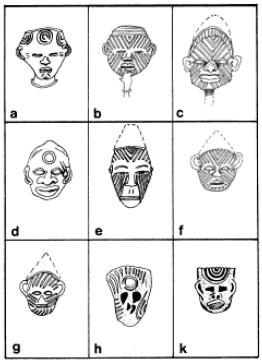
Nri people were so serious about their veneration of Anyanwu, that they would wear it on their faces. This facial scarification was called ichi“In standard Nri scarification, the artist would carve the first line to run from the center of the forehead down to the center of the chin. They would then carve a second line to run across the face, from the right cheek to the left. The second line met the first at the center of the nose, making it a perfect cross. The second cross was drawn with one line running from the left side of the forehead down to the right side of the chin and another line running down the opposite direction. This sequence and pattern was repeated until the pattern looked like the rays of the sun. Altogether, it took sixteen straight lines, eight crosses, for a full face scarification that mirrored the rays of the sun. It was their way of honoring the sun that they worshiped. But it was more than that. It was the face and service and another way of losing one’s facial personality.” (Anuobi, Chikodi. Nri Warriors of Peace. Page 203-204).

Ichi Facial Markings

One very important part of Nri’s mission was as the peacemakers and cleansers of abomination in Igboland. They attempted to broker peace deals and end wars, even going so far as to run onto battlefields to stop them. When a land needed to be cleansed for whatever reason, and it was beyond the scope of the ritual specialists of that area, Nri priests were sent in to do the job of restoring balance.  Ironically, the sun itself is a cleansing agent, and it is capable of destroying pathogens in liquids.In alot of ways, the Nri were like the Jedi of the Igbo people. However, instead of using lightsabers, they used Otonsi rods to vanquish evil.

I always thought Obi Wan’s name looked Igbo


Anyanwu bestows many gifts to people. One gift is the one of sight. When the sun is out, things that were once in darkness are brought to light. This is meant both in the physical as well as metaphysical sense. Darkness is often used to symbolize something that is hidden or unknown, while light in this sense represents something that has been revealed.

Anyanwu Shrine in Ovoko Village

Returning back to the previous examples of the Sun manifested as an eye, it should be clear by now that the eye that is being symbolized is YOUR OWN. It represents YOUR enlightenment, YOUR sight, YOUR vision. This is is reiterated by the usage of a hawk to represent Ra. One of the things that hawks are known for is to be birds of prey. For an animal that flys to be able to spot and capture its prey from so high up in the sky, they must have incredible vision. The Avenger known as Hawkeye is appropriately named as such because of his ability to hit targets with his bow and arrow, which requires a very sharp eye.

Hawkeye, the Avenger

Hawkeye, the Avenger

A former mentor of mine once told me that ones eyes are their first oracle. For this reason, he said, he was unable to consult Afa Ugili/Akpukpala (divination apparatus)  if he were outside, as Agwu (the Igbo spirit of divination) would be working primarily through his eyes. In fact, in his book, After God Is Dibia Vol. 1, legendary Dibia John Umeh proclaims that “As Ose Obala, Agwu is the God of Light, Anwu, whose eye is the Sun (Anyanwu). ..As the God of Light, Agwu is an integral part of Ose Ora (Uche Chukwu), the universal Consciousness of God…which is the completeness awareness of what was, what is, and what will be…..God of Light whose blze or Divine Light disperses and/or extinguishes danger, evil or darkness.” (Page 114).

“Anyanwu and Agbala were not there, only coldness” by Uche Okeke

Metaphorically, this sight represents itself as insight, which is the capacity to gain an accurate and deep intuitive understanding of a person or thing, and foresight, the ability to predict what will happen or be needed in the future. In short, insight is the ability to see things as they really are, and foresight is the ability to see things as they will be.

There are many people who seek solutions to problems when the answers are typically right in front of their face, and the thing about your senses is that if you don’t use them, you will lose them. Have you ever wondered why despite all of the oracles that were all over Africa, none of them seemed to give an adequate solution to the coming domination by the Europeans? (Or if they did, the people definitely did not listen to them!)  Why is it that the only nation that was never to formally colonized in Africa was Ethiopia? Could it have anything to do with the incredible foresight of its leader, Emperor Menelik II? Were other African people overdependent on their shrines and oracles that they forgot how to use their abilities of foresight and insight?

HEM Menelik II: King of Kings of Ethiopia

One also didn’t need to use an oracle to see that the present systems we have (economic, political, industrial, religious etc) were unsustainable and would eventually fail us. A major flaw of Western Civilization is the complete lack of foresight in a lot of the decisions that have been made throughout the years. Sometimes it makes one scratch their head and wonder if those in power ever consider the future consequences of their actions or if they even care.

Other examples of a Sun god granting powers of foresight and insight would be Apollo of the Greeks and Romans, whose Oracle at Delphi was the most important oracular site of the classical Greek world. Apollo once granted Cassandra the gift of foresight in order to seduce her, but after she rejected him, he proclaimed that nobody would ever believe her prophecies. She foresaw the fall of Troy due to the Trojan Horse, and even foresaw her own death, but was powerless to stop either. Pretty messed up situation to be in right?

Apollo: Graeco-Roman God of Light, Wisdom, Prophecy, etc

As  I stated in the Amadioha post, my personal shrine of Anywanu uses the image of the Johny Storm AKA the Human Torch. He is one of the members of the Fantastic Four, with each member representing one of the four classical elements of: earth (The Thing) , air (The Invisible Woman) , fire  (The Human Torch) and water (Mr. Fantastic). However, that is a topic for another day.

The Human Torch

Another comic book character that can be used to represent Anyanwu would be Phoenix from the X-Men. In fact, I would say that she represents Anyanwu way better than the Human Torch because of the significance of the Phoenix, which is  a mythological fire bird found across many cultures that represents rebirth, immortality and renewal. Plus, the comic version also granted enhanced psionic (psychic) abilities  to its host, as Anyanwu also does.

The Phoenix

If you wish to gain access to the infinite wisdom, joy and love of Anyanwu, you can start by greeting her every morning as our ancestors used to do. If you decide to do so, ask yourself: Are you ready to be awakened? 

Ogolo Mmuo (Maiden Spirit)

Standard

by Nze Omenigbo Izo

"Igbo Woman" by Arteyez

I: Invocation 

Ogolo Mmuo!!

The river-sides have gathered basins of sun.

Descend now, unnoticed, in your ethereal flush

My bright-faced maiden, revisit once again—

And possess the idle wind with your buoyant vigor.

Bring with you, all the gleam of your wonder realm

Come—blind our eyes with your shimmering beauty,

My vibrant one, rip your way through our red earth

And leave behind your unique dance trails for all to see.

With your frail, measured landings—never out-done,

Impact our fertile ground with unaging beatitude.

Possess the trees Ogolo—the eyes and ears that seek you

Out from the dark. Loosen our stiffened, mortality

With your enchanting aura, my gleaming one.  salvage

Please descend, for the river sides have gathered—

Sufficient sun; enough to fill up your rain-pouch,

My queen. Descend and I, seated by the ant-hill,

Untiring, Shall be waiting for you, Ogolo.

"Igbo Grace"

II: Manifest

The Maiden’s Dance

Faster than thunder through plantain-leaves

Follow those legs, famous for their tedious,

Penetrance of varied human soils.

Swiftly, stately—with few ascensions,

Ogolo, you rejuvenate the staid-struck

Pulsation of  an eager-earth—circling,

Through and through, endless…

With eyes that are life transient,

While doubt-shattering,

You induce in all soul: your distant home’s allure

Dream-rich and serene,

Like deep-flowing agrarian pastures…

I stare on as those sprite fingers,

Finely weave into the dread-troubled wind,

Unfettered tranquil—unbroken at all times,

Like the eternal reach of pure bliss.

Indeed Ogolo, the rain-chap does hold to himself,

Far greater feats—that to mere mortal life,

Will remain eternal yearnings.

Igbo maiden spirit maskers near Akwa, Nigeria 1935

The Corruption of Igbo Sacred Sciences

Standard

by Wise

Many people think that modern day Igbo sacred sciences (Odinani) is a good overall representation of the very ancient metaphysical systems. They are very incorrect. In fact, the decline of the divine Kingdom of Nri and the rise of the European controlled Atlantic slave trade corrupted Igbo civilization. British colonialism and the Nigerian Civil War practically destroyed what was left of Igbo civilization. What is left of Odinani is only a very faded shadow of how it used to be.

Anyanwu (Eye of Light) : The Igbo divinity that dwells in the sun

Although Odinani is one of the oldest science systems in the world, we will just briefly discuss the last one thousand years. Nri Kingdom (in present day Anambra State) was a major power in present day Eastern and Midwestern Nigeria from 1000 A.D. to 1600 AD.  Unlike most kingdoms, Nri did not gain their influence nor maintain it through military force. Nri’s influence came from metaphysical power. Their culture, tradition, and philosophy was centered on peace, harmony, knowledge, wisdom, justice, and oneness with Creation (Chi, Aja Ana, Anyanwu, Igwe, and etc) and the Creator (Chineke). Eze Nri (Divine king of Nri) was the traditional Igbo pope and he and his mediators (real Nze and Ozo men) spread peace and civility throughout the land and found many settlements abroad. The Nri are responsible for the Igbo Ukwu sites, Four market days, Ozo/Nze title systems, Igu alu, and etc. Unfortunately, between 1400-1700 Nri declined due to internal disputes, the slave trade (which was illegal in Nri), and the rise of rival states.

One of the many famous Igbo Ukwu bronze castings

In the late 17nth and early 18nth century, the Aro Confederacy (their capital Arochukwu is in present day Abia State) was formed and quickly became a major economic power in present day Eastern Nigeria. The Aro people were expert long distant traders that developed and controlled a complex trading network in the region. The Aros were also known as priests and agents for their famous Ibini Ukpabi (Drum of the high God) oracle that was located in Arochukwu.  After Aro conquest, Ibini Ukpabi was also used as an oracle to settle disputes serious disputes and problems. The oracle quickly became popular for its effectiveness, accuracy, and its useful divinations. Ibini Ukpabi became the main oracle in the region and beyond for many years until the early stages of British colonialism in the 20th century. However, shortly after Aro expansion, the Europeans increased their slave trade interests on the Bight of Biafra. This brought chaos.

Ibini Ukpabi Oracle

Igboland and adjacent areas was very violent and chaotic in the 18th century as the result of the Atlantic slave trade. Some oracles in Igboland such as Ibini Ukpabi unfortunately became commercialized. Although many agents and priests of the oracle continued to do honest and fair work, others used the opportunity to sell innocent people as slaves. The Slave trade also introduced the outrageous Osu caste system in Igboland. Initially, Osus were very sacred and respected assistants to high priests. However, as a result of the slave trade, wars in Igboland increased and many people (including runaway slaves) sought refuge in shrines and become an Osu. In some cases, criminals also decided to be an Osu rather than becoming enslaved. Suddenly, being an Osu became a taboo.

Shrine priest (sitting) and Osu (standing)

British colonialism and Christianity tried to destroy what was left of Odinani. After the 1901-1902 Anglo-Aro War, British troops attempted to destroy the Ibini Ukpabi shrine. The British even called the Nri people, a group that has always stood for justice and peace, evil. Initially, Christian missionaries referred to Odinani as totally evil and tried to force the population to convert. Although Igbo people embraced Western education, they heavily resisted colonialism and the British efforts to destroy their tradition. While the British condemned our culture, they did absolutely nothing to help it. Many Igbo people (Osus were among the first) did convert to Christianity but there was still respect for the many good aspects of Odinani and Igbo culture overall. A strong traditionalist population was still among the Igbo before Nigerian “Independence” (1960) and the Nigerian Civil War (1967-1970). After the brutal Civil War, more missionaries came to a war torn Igboland in the 1970s and began the evangelical movement. This movement has been very devastating to Odinani and Igbo culture in general. Some foolish and overzealous Christian youth have looted and destroyed shrines and priceless artifacts. And what have they gained? Absolutely nothing! Instead of creating jobs, developing Igboland, and becoming self sufficient some misguided youths have decided to take the place of the European missionaries and destroy their own Igbo culture.

Igbo children during Biafran War

Igboland in modern times is lawless and very violent. We have been losing wars for our freedom and now have lost our minds because we are fighting a war against ourselves. The land is very underdeveloped and polluted. Many Igbo people at home and abroad have completely turned their back on our ancestors and put a much higher value on Western culture. Many Igbo children have close to no knowledge of their own people. IGBO PEOPLE THIS IS A EMERGENCY. PLEASE LISTEN! Unless we get back to who we are and revive/improve on the productive aspects of our sacred science system or “spirituality”, get rid of outrageous aspects of our tradition like the Osu caste system, stop putting useless foreign institutions over our own WE WILL CONTINUE TO BE IN DEEP TROUBLE!

Chi (God) Bless