Category Archives: Mythology

Chukwu Bu Ulidereuwa: Odinala, Igbo Antiquity and the Esoteric Roots of Human Expressions

Standard

by Nze Izo Omenigbo

“Anyanwu rie asaa kwuru,

Ala ejiri Edeuli kwado ya” 

If the Sun consumes seven and survives,

The Earth will back it with Uli expressions”

—Igbo Mystical Axiom
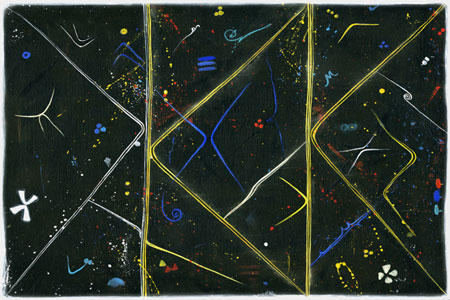
Igbo Uli

The Expression of the Sacred in Igbo Culture

The nature of expression (divine/sacred, mundane, mystical, occult and aesthetic) in Igbo culture is captured in many well-known Igbo proverbs. The following three examples are very key in this particular sense, “Onye n’akwa nka na adu ihu: the artist/craft-adept often appears to wear a frown in the process of their work”, “Edeala mara mma bu umeala onye dere ya: the beauty of Edeala sacred expression lies in the calmness of its scribe” and “Ube nkiti nwa nnunu bere n’ohia bu izu mmuo gbaara Dibia: the most simple expression of a bird is wisdom to the Dibia—coming from the spirit world”.

In all three axioms, it can be observed that a certain trait appears to be deep rooted in the traditional Igbo mind, and this is the act of often equating mundane observations with spiritual/phenomenal origins/qualities. To the contemporary mind, of course, this will seem ridiculous. However, in many provable ways, this pattern of understanding has been recognized as a major intellectual catalyst in some of the world’s earliest artistic/scribal traditions and societies.

In pre-modern times—contrary to conventional notions—there were at least four existing Igbo scripts, these were Edeala, Uli, Ukara and Nsibiri/Nsibidi. There is no known single origin of the scribal tradition in Igbo culture and most of the available accounts are heavily couched in myths as is the tradition; the better part of which are reserved for the highest initiates. However, some of these mythic narrations (given their heavy roles in the enculturation process of the general society) were often modified by the priests and passed on to the community griots—who later narrated these stories to the young/old of the society.

Court Record written in Nsibidi script

Also, significant of mention is the existence of many other cult symbol scripts, many of which are yet to be written down or even conventionally known. In a nut shell, it’s a well-accepted fact (at least within honest academic circles) that the scribal tradition has its roots in Africa. Yet often than not, there have also been adverse arguments as to whether such preserved/discovered inscriptions are of direct/literal or symbolic orientations; in other words, if they qualify as “writings” as we understand them today. Needless to say, this approach of judgment is highly biased; since strictly speaking, most ancient societies understood human expression—and expression generally—to be symbolic in its primary nature.

Resolvedly, most of the less esoteric cult teachings of the time were expressed through highly complex symbol systems—from which originated some of the mundane writing traditions of the modern world. Therefore any attempt to understand the communicative modes of ancient societies without an initial, dedicated understanding of their worldview—as concisely shown here—is erroneous by default. In the course of this discourse, insights will be drawn from two of such mythic narrations. As well, few snippets will be equally utilized from one of the aforementioned esoteric myths.


The Principle of the “First Word” in Igbo Cosmology

The archetypal Igbo society held that words were so potent that one must ensure to count their “teeth with their tongue” before or after any question. It is an advice for one to find out something for oneself, especially when one is indulging in self deceit and is seeking for answers from some other person instead of self-reflection. Usually the person advicing will say “i choro ka m gwa gi ya; were ire gi guo eze gi onu–Do you expect me to tell it to you? Count your teeth with your tongue.” However, in dealing with written expressions, the potency inevitably doubles, since the idea being communicated will now (supposedly) outlive its author. There is also the mystical tradition of “the first word” i.e. okwu izizi. In many ways, this ancient principle encapsulates—in totality—the Igbo cosmic orientation of life in relation to the Divine. The mystery of the first word is well illuminated in the classical Igbo tale about the journey that was undertaken by the Dog (Nkita) and the Tortoise (Mbekwu Nwa Aniga).

Dog and Tortoise

In this tale, it is held that the Dog and the Tortoise were both sent by humans to deliver two important messages to Chukwu; from which will be determined whether human beings will live to achieve immortality or die at a certain age. To the Dog was given the message of immortality, while the Tortoise was given the message of impermanence. As they both set out for Chukwu’s house, the Dog—priding itself with its ability of swiftness—was said to have stopped several times along the way to sleep, scout for bones or even a mating partner, while the persevering Tortoise continued on its path, undistracted. In the end, the classic endurance of the Tortoise led it to Chukwu’s house, long before the Dog—who was outraced during its many short breaks to sleep or explore the road sides.

Hence, Mbekwu Nwa Aniga (the Tortoise) delivered its message of “Death for the Humans” and thus was the mystery of death introduced into human life. Of course, the Dog did arrive later on—totally convinced that it was the first to reach Chukwu’s house, only to be told that “Chukwu and the Spirit World” does not accept second “Words”. Hence originated the Igbo mystical phrase “okwu izizi erugo be Chukwu: the first word has reached God’s house”.

From this particular tale, a great deal of Igbo cosmological principles dealing with expressions—can be illuminated.  Firstly, there is the duality of life as represented by the two choice animals. The principle of duality remains a core aspect of Igbo life and spiritual practices till this very day. And then there is the principle of pre-duality or unified existence. In other words, creation: although dual in nature proceeds from a unified point of One. Hence, the Dog was told that Chukwu and the Spirit World do not accept the second “Word”. The second word here symbolizes physical creation, realized in the sacred number Two.

Also, there is the principle of Uncontrolled Motion/Chaos and Controlled Motion/Order. Both principles were symbolized in the specific choice of animals used in the narration; where the Dog’s undisciplined swiftness stood for chaotic motion and the disciplined fortitude of the Tortoise stood for ordered motion. Both principles were further made potent in their meanings by the messages that both animals were meant to deliver. In the case of the Dog (embodied chaos) the message was immortality (unending spiritual enlightenment), while for the Tortoise (embodied order) the message was impermanence (interrupted spiritual enlightenment).

Chaos Star

The Spiritual and Aesthetic Potency of Human Expressions

As the Dog was late to reach Chukwu’s house, it then resulted that human life (as a mortal opportunity for spiritual learning) will be eternally teased with the mystical potency of Ndu Ebi-Ebi (Everlasting Life/Immortality). Just as the delivered message of the Tortoise meant that human beings (indeed all creations) will be forever bound to the physical responsibility of observing/maintaining Divine order.

This dual expression most likely gave rise to such classical Igbo thoughts as “okirikiri k’eji ari ukwu ose: the pepper tree is only climbed by means of cautious encirclement” and “nwayo-nwayo k’eji aracha ofe di oku: a hot soup can only be consumed gently”. Furthermore, the Dog symbolism is equally characteristic of the archetypal Ego (the precarious pride that originated with the Dog’s knowledge of its swift abilities). While the Tortoise in this sense, symbolizes the Super Ego (the self-regulating aspect of us that strives for perfection and orderliness). Although, this last feature is essentially interpretational, the instructional nature of the original tale however supports its validity.

In a sense then, it can be observed that the Igbo worldview fundamentally perceives human expressions/expressions generally as a holistic exercise. Indeed, the greater implication of this conviction is that no expression of creation/life is devoid of meaning and no human expression is devoid of sense; regardless of how “senseless” that expression might seem. This notion is well established by another ancient Igbo principle (stemming from another mythic account) which holds that Chukwu created the world using two words, Ọm and Om.
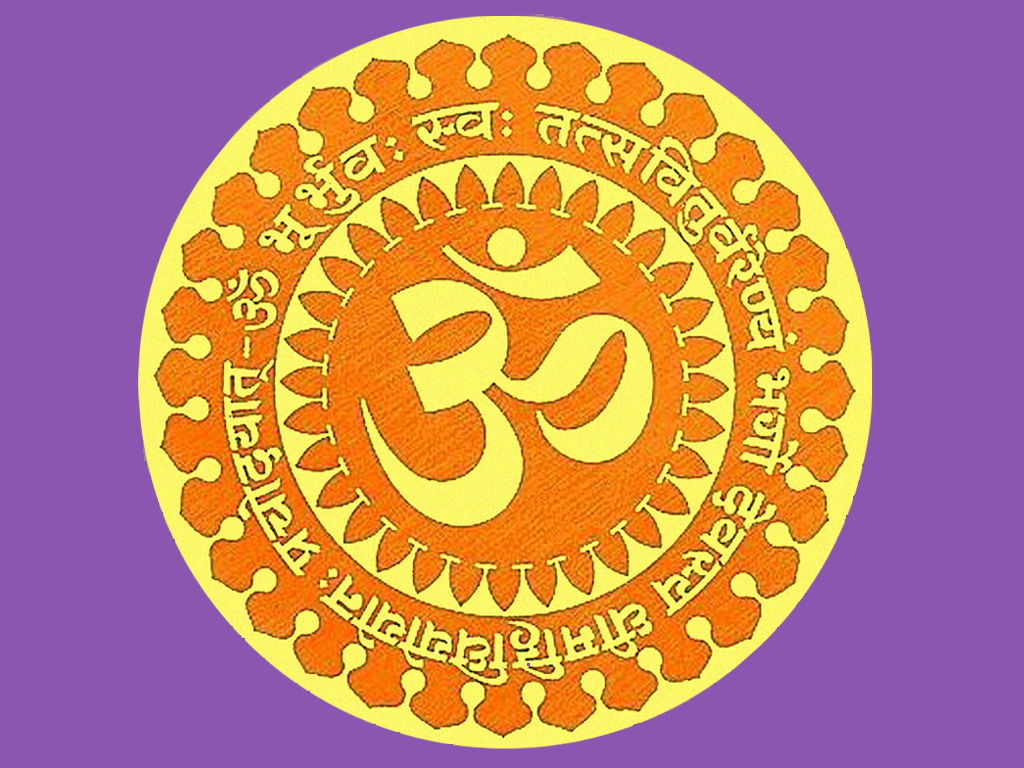
“Om” written in Devanāgari

These two Divine expressions, according to ancient Igbo mystics, became “The Two Sacred Words” i.e. Okwu abuo Chukwu ji were ke uwa”. Again, the basic notion here is duality—but specifically this time; duality dealing with the two Igbo mystical principles of Akwu na Obi (Stillness and Motion). It is remarkable to note that these two principles unified, remains one of the most utilized and infinitely explored of all Igbo mystery teachings. The “Two Sacred Words” as explored in another Igbo mystery cult is also held as the “Two Primordial Sounds”. In this respect, it expresses one of the most esoterically studied of all Divine expressions i.e. sound. In Igbo mystery circles, the naturally produced human-sound (phonetically molded continuously from birth, eventually condensed into a specific lingual form as the child matures) is held to be a mystery of its own. Hence, the ancients explored it in a separate, dedicated cult where its latent creative powers were synthesized for use in invocations, spiritual chants and several forms of oracular practices.

It can therefore be noted that the mystical/occult potencies of human expressions (in a very broad and in-depth sense) have always occupied a place of great significance in Igbo mystery traditions as well as, Igbo culture proper. In this sense, ancient Igbo mystics, after much in-depth observations, were able to ascertain that our voiced expressions do not merely stem from some innate human tendencies to communicate archetypal emotions, as is conventionally held today. But rather, every word we utter and each syllabic expression thereof is actually a released potency. The same goes for aesthetic/artistic expressions; as all forms of human articulations are essentially generated from one point of activity in the mind and charged forth with spiritual potency—at the point of release, whether consciously meant or otherwise.

It is for this great reason that another ancient Igbo axiom maintains that “okwu Igbo/uke bu n’ilu n’ilu: the Igbo language/cult communication is expressed through aphorisms”. Suffice it to say that the ancients well-considered the potency of their expressions/language (indeed the Igbo language in this case) apparently too heavy for any mere direct conveyance of ideas; given the possibility of unanticipated manifestations resulting from careless utterances. Hence, their language/voiced expressions had to be communicated by means of proverbs and indirect insinuations, colored once in a while by plain riddles and chants. Remarkably, this pattern of communication is still observed by the Afa, Mmonwu, Ekpe and Agwu cults (some other Igbo cults inclusive) till today.
It is also interesting to note that even the non-human naming tradition also followed this principle in the past. So that animals, trees, mountains, rivers and other forms of creation were not merely named through direct articulations of their perceivable essences. Rather, it was through a metaphorical intellection of their place in the greater scale of life that their names were articulated. For instance, the Chameleon (in Igbo culture) didn’t get its name from its immediate perceivable characteristic of rapid coloration. Instead, its name “Ogwumagana” literally translates as “If it sinks, I shall not step”. Hence, the name metaphorically denotes the ancient belief among the Igbo that the Chameleon was created at a time when the Earth was still wet. Thus it literally had to enquire from Ala (The Earth Goddess) before making each step, lest it sinks.

Also interesting is the fact that the Chameleon is sacred to Ogwugwu, an Igbo fertility Goddess. The name “Ogwugwu” also denotes a hole or the act of digging. Remarkably, conventional science has been able to determine that matter is basically a hole dug by sub-atomic propellants in space (ether). Therefore, the obvious connection between the Chameleon and this Goddess—as was long established by ancient Igbo mystics—not only preceded modern scientific thought, but unlike the latter, was more clearly expressed and aptly symbolized; so much so that even a youngster could grasp the concept. This tradition, so obeyed, extended even into the designation/articulation of numerical principles, planetary bodies and highly abstract undertakings such as astronomical calibrations.

Furthermore, the aesthetic principle of expression in Igbo culture is also embodied in the aforementioned Uli body-painting/inscribing tradition. The Edeuli or Uli, for short, is a sacred, linear-oriented body-inscribing aesthetic employed by women in pre-contemporary Igbo society. It’s highly attractive and intricately executed expressions were regarded deeply by women and young girls—even beyond the Igbo cultural area. Among other things, it is also a key feature of the Ala (Earth Goddess) cult.

Uli mystical writing (from “Afterr God is Dibia”)

Conclusively, as the name of this discuss states, “Chukwu bu Ulidereuwa: God embodies the Divine Script through which all creation was expressed”. In other words, the expressive nature of Chukwu as the primal aesthetist, as the most accomplished author that will ever be, as the first and original artist of all creative forms that ever was, is and will ever exist—is here underscored. From the ongoing, it is not only made clear that the tradition of expression in Igbo culture is apparently complex in both scope and depth, but also, the inexhaustible nature of indigenous knowledge preserved in Igbo culture is equally made evident here.

The Ecotheology of Ahobinagu: An Igbo Deity of Wildlife and Forestry

Standard

by Nze Izo Omenigbo

“Uzu amaro akpu ogene, ya nee egbe anya n’odu” (A blacksmith who does not know how to fashion a twin gong—should observe the kite’s tail) —Igbo Proverb

A Primal Birth

Quite plainly, Ahobinagu or Obinagu is identifiable as the Igbo Alusi (Deity) that is spiritually inherent in the flora, fauna and extensive wildlife of the forest. A brief etymological assessment of the word itself reveals Obinagu as an essentially aggregated Deity. In other words, it is a spirit-guild of the countless, highly diversified essences immanent in the ecosystem of forest life. However, this definition should not–by any means–be seen as a cementing point of the obviously far more complex nature of this Deity. Perhaps, a very convenient way to comprehend the nature of this unique Alusi is to picture a host of spirits, each embodying a specifically assigned purpose in its nature, but all sharing one great cognitive head. Also, the somewhat similar image of an octopus might come to mind. But surely, an octopus is no contestable match for Obinagu, any day.

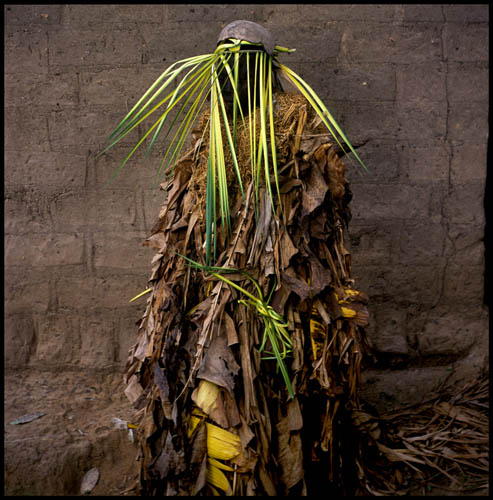
Okpo Masquerade from Calabar, Nigeria

For a credible theogonical account (Deific Birth) of this Alusi, it is only right to refer to one of the two well-known and comprehensive cosmogonies of the Igbo world. In one of these ancient creation stories (or unified field theories as they’re branded today), both the known and unperceivable dimensions of the universe (Uwa) were considered to be in a unified state of rest at one time. A state simply referred to as “the primal house” in this cosmogony. In this immensely unifying house—once existed the “secret project” of Chi-Ukwu, the colossal God. However, given the very curios nature of Chi-Ukwu’s wife—Komosu, this “secret project” was consequently made known when she bravely ventured to peep into Chi-Ukwu’s coveted Obi or sacred enclave, which was located right in the middle of the larger “primal house”.

Subsequently, beautiful Komosu was martyred by the impact of the immense primal energy that escaped from this private enclave, and thus—the known world was born! In other words, it is essentially in this great outburst of dynamic manifestation that the basic building blocks of life were seeded or brought into being. However, as the Divine being that she is, Komosu consequently reincarnated back on Earth, as Ala, the Igbo Earth Goddess.

The Big Bang

So, following a brief analysis, it becomes rather logical that the very earliest “seeds” to have possibly emerged from Komosu’s initial mischance should be the immanent spirits/essences, incarnated in the infinity of created life across the universe, especially as is observable here on Earth. In this sense, the Alusi known as Obinagu is principally one of such primal incarnations. Moreover, as an indispensible ally of Ala, it is only proper that Obinagu should share one of the Earth Goddess’s imperative attributes, namely, an eco-system.

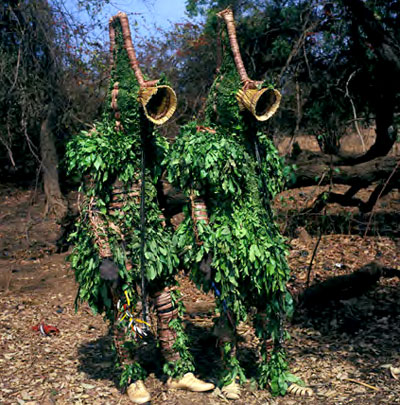
Gwarama Masquerade from Burkina Faso

Given the discovery of what must’ve seemed an incredible bond, the ancient Igbos most likely proceeded to place Obinagu in the readily acknowledged position which it continues to inhabit today in the larger Igbo Cosmo-theological system. In a more summative analysis of this multifaceted Deity—then, one can briefly consider Obinagu as partly serving as a well-realized “Spiritual Locus” of the Earth Deity within the intricate natural network of the forest. Hence, the dual meaning of the name: Obi-n’agu (I) That which lives in the forest (II) The heart of the forest.

Atam Masquerader from Alok Village, Nigeria


An Inherent Operative Synchronicity

In the many Igbo traditions where this Deity is highly revered, such as in Udi—Enugwu State, there are many associated activities that are considered sacred to it. One of such is the Egwu Obinagu, which literally means, Obinagu music. This sacred music is also known as Igede Obinagu, in other parts of Udi. It is essentially flute music (Egwu Oja). But the accompaniment of other wooden Igbo musical instruments is not entirely forbidden. However, the use of metallic musical instruments such as Ogene (twin gong) appears to be excluded from that opportunity.

Various Igbo Ogene

Indeed, if one would only stop to consider the profound and unrelenting reverence that ancient Igbos had for nature, then the much deeper mysteries behind the resource-specific instrumental selection of Egwu Obinagu will become evident. An important remark is the fact that the Oja (flute) is an instrument that is totally carved out of wood. And wood itself being a resource that can only be naturally acquired from the forest—strikes a note of great importance, in relation to the forest Deity itself. Hence, the reason for excluding the Ogene and other metal-honed musical instruments in the accepted implements for making the Obinagu sacred music.

Oja (flute)

It is also important to point out that the primal resident spirits that inhabit the various streams and springs that course through forests—are not left out in this intricate synchronicity of spiritual forces, which in turn aggregates into Obinagu. This becomes further obvious, following a recognition of the indispensible union between water and the boundless, naturally-laid network of trees, herbs and shrubs—all layered out in profound harmony, with the rest organic/inorganic presences in Earth’s ecosystem.

Nnabo Dance Group from Akpabuyo Village, Cross River, Nigeria,

Indeed, life feels itself and in return, it progresses to express what it feels through nature. However, beyond the overt, mundane and maneuverable aspect of a Deity such as Obinagu, there exists a core spiritual dynamic to nature that has continued to escape contemporary awareness. Yet this simple core can be appreciated once again through the grasp of a very ancient language. This language is no other than the sacred cosmic language, Afa. The amazing thing is that we’re told by the ancients that humanity once spoke in Afa. And even at that time, it was considered a sacred tongue, just as it’s still considered today. In other words, according to Igbo mythic account, if humanity had once regarded the language of Afa a sacred one, then surely, we must’ve—at one time—also viewed ourselves, the speakers of this language—as sacred beings.

We’re also told that among other things, Afa is also fundamentally a language of nature; a language of the gods. However, since nature is also our only viable means of interfacing with the gods—through Afa, then Afa is also a cosmic language, because all the higher Deities are principally cosmic beings. Now one might ask, what then is the basis of such a language and how did it come to be spoken by man? Well, the simple secret is that Afa language was patterned after the brilliant, vibratory harmony that is found in nature. And since it is held to be life’s very first language—spoken by the gods themselves—then it was destined that humanity should inherit this cosmic tongue from the gods, just as it inherited other wonderful gifts of civilization from them.

We don’t know how we came to forget or lose the ability of this divine tongue. But a very mystifying fact about Afa is that it is a language that can only be understood by nature; which means that we once spoke and communicated with nature, much like we do with ourselves today. Interesting isn’t it? Well, actually not all of us have lost this ability. Our Ndi Dibia still retain it and in fact, they still employ a great deal of it in their work. Notice that Afa proves to be an all-encompassing and all-knowing language—as a result of its ability to interface with all of nature, hence interfacing with all of life. At this juncture, the spirituality of nature and the bonding nature of spirituality is made evident, as one makes the connection to the earlier stated harmonic-essence that is fundamental of the Obinagu Deity.

Atiya Traditional Dance

Now whether in Igboland or elsewhere in the world, we might have succeeded in convincing ourselves that there are certain, extant members of creation that are strictly known as plants. However, the truth is that, at one time, man himself was also a plant in the garden of nature! Specifically, we were once “man-plants” or what is known as Akwu. A linguistic variation of this name is still used for the palm-tree in Igboland today. Moreover, the palm-tree is also considered sacred all over Africa, especially in its aspect as the tree of life. So, in contrast to the ‘exceptionist’ perception of most people today—in respect to the place of man in nature, Afa tells us that we once viewed ourselves as merely members of the colossal, cosmic organism known as life, whose outer ornament is the awe-inspiring nature.

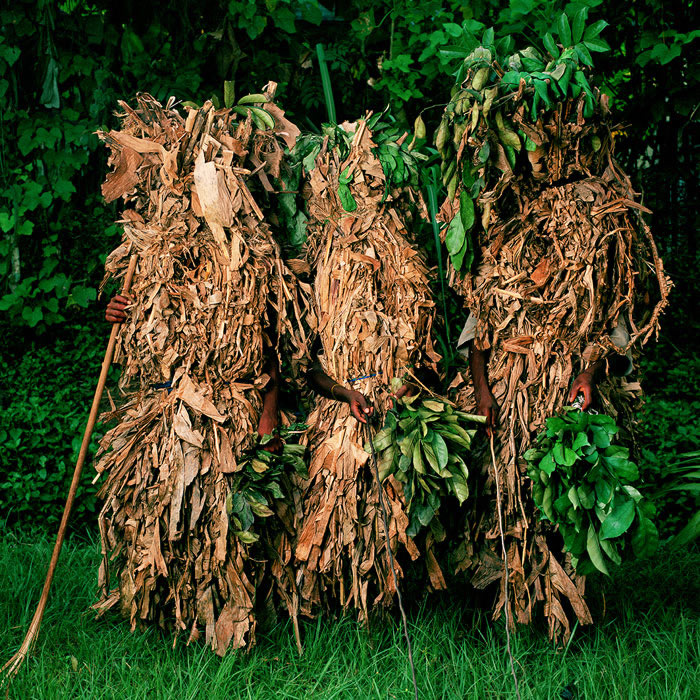
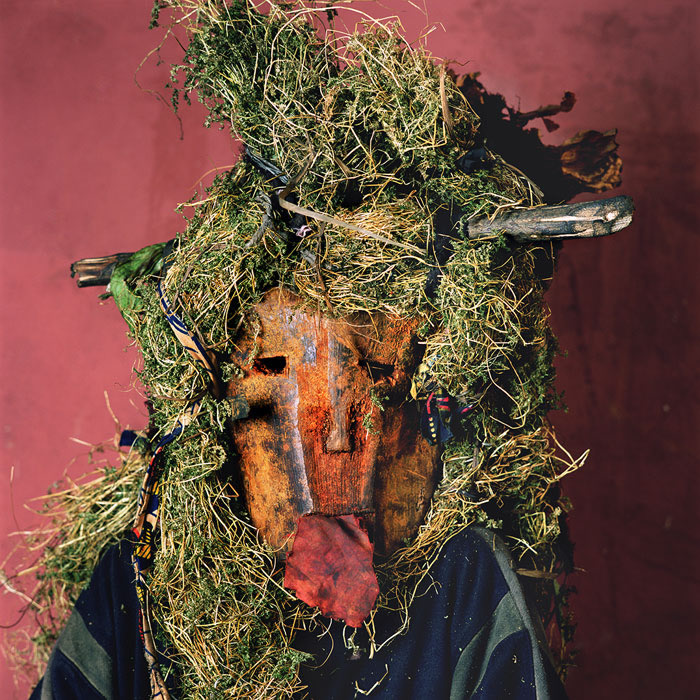
Minor Ekpe Masquerade with Mango Leaves from Calabar South, Nigeria,

For the keen-eyed observer, a plethora of clues abound in Igbo life and culture to substantiate the mystic remnants of Igbo antiquity, in respect to nature and how ancient Igbo societies related to nature. One of the most obvious of these is the Igbo word for name: Afa (pronounced differently). Already, one can sense the overt etymological relationship between Afa, the name and Afa, the tongue. Still, it becomes even more obvious when we consider that in Igbo culture (indeed in many African cultures) one’s name is believed to embody their existential lot or destiny in a given life-time—in addition to serving as their natural compass. In other words, one’s Afa (name) essentially becomes a dual conception; especially in the Igbo sense.  Firstly, as their sacred individual ‘code’ for assessing nature’s existential allotment for them (destiny) and then, as their divinely-accorded compass for identifying their place amidst nature (distinction). Hence, without even recognizing it, one’s name is essentially their own unique cryptogram; their cosmic code for relating to Chukwu and the gods. And even more, one’s name is their first Afa (divination).

Without diving too deep into the mystical dimensions of this fact, it can be observed that humanity actually has no choice but to recognize its sacredness once again—as part of the divine ornamentation that is nature. Therefore, as privileged and responsible members of this endless festivity of life, our role is precisely that of caretakers and not squanderers. Furthermore, in relation to this inherent role of custodianship, another sublime parallel exists here between man and Obinagu—as the custodian Deity of natural life in the forest. However, in the end, it appears that even more responsibility is expected of man as Mma Ndu, the crown of creation.

Ekong Ikon Ukom Masquerades from Calabar, Nigeria

Igbo Antiquity and Ecotheology

Regarding the sheer, immense reverence that ancient Igbo societies had for their natural environment, the opening axiom of this discourse makes it even clearer with its instructional diction—recommending that humanity should turn to nature for her absolute wisdom. In fact, it is arguably only out of such similar, passionate and overwhelming reverence that the ancient Igbos went as far as condemning the conception of twins, which they innocently considered an undoing of a primal modus in their cosmology of the human reproductive system—in relation to the  larger paradigm of nature. All this were done in their honest efforts of preserving the essentialities of what they considered as highly sacred, the Earth.

Ani, the Earth Mother

However, they also came to realize in the end, out of ensuing wisdom that “When something stands, another thing stands beside it”. Curiously, till this very day, this monumental amendment (termination of the twin taboo) along with its many theological and cosmological triumphs—remains one of many such profound turning points in Odinala and Igbo culture in general, that have managed to pass by without any epically recognized or institutionalized celebration of it, for unaccountable reasons.

At this point, it is also highly important to point out that even at the time when this act was still practiced, the twins were not exactly killed—in the literal sense of that word—but were merely taken to the very thickest parts of the forest, where they were plausibly left in the care of Ala and the forest Deity. An observable reason for this decision being that—instead of having to bear the more recognizable karma that comes with conventionally taking a life, one would rather have the fate of such children determined by the Deities themselves.

Yaie Masquerade from Burkina Faso

Still, what is far deeply inherent here is that, in this monumental case of theological defeat, the operative synchronicity of Obinagu and Ala is made even more evident, as one recognizes the explicit irony behind the act of handing over these children to two Deities whom were both considered as Divine Nurturers. At this point, we can imagine the outright perplexity that must’ve overwhelmed the ancients. However, in their infinite wisdom, they would guiltily return back home—only to mourn these same children and offer copious sacrifices to appease Ala for the mind-boggling act that had just transpired.

Carnival in Haiti

Essentially, the very multi-faceted and primal status enjoyed by Obinagu, as a custodian Alusi of the forest is almost unquantifiable. However, one only needs to be reminded of the highly agrarian nature of Igbo society prior this age to make the connection. Hence, given the very predictable preference for well-nurtured wildlife and agricultural yields at the time, there surely couldn’t have been a better role for this Deity.

Ekpo Masquerade from Calabar, Nigeria

The Imperative Need for Re-Consecration

The Deities (in their aspects as Gods and Goddesses) are profoundly influential by nature, and countless in number. However, since the  very beginning of time, humanity as Mma-ndu (the crown of creation) have unarguably enjoyed a God-given right to explore, harness and negotiate the potentialities of these various incarnated forces. But just as even the most mundane of life’s activity requires a procedural edict/code of conduct, so does the consecration of these higher forces require a spiritually sound arena to be made very effective.

Obinagu, for instance, cannot be “aligned” or brought into operation in a naturally deprived environment, because it is a Deity that operates simultaneously with nature herself, in the capacity of its custodian. Also, the mere knowledge of the esoteric operatives used in sacred science is not necessarily enough to potentiate a Deity. Just as an actual car will require a competent mechanical engineer to be present from its creation process to the manufacturing process—so as to ensure optimal performance in the finished product—in the same way, a potential Deity requires a competent Dibia Ogwu to be present from its creation (or negotiatory process, depending on the Deific hierarchy) to the erection and final dedication process. More importantly, a very spiritually disciplined mind/population is also imperative for such universal principles to be brought down—in the first place—to earthly dimensions and even more, to make them abide for a very long time. This is the inherent strength and genius of ancient Igbo societies. The discipline of their time should be a strong fascination for any clear minded Igbo person today.

Igbo Dibia

In fact, one of the utmost advantages of deific consecration to man is that, unlike modern scientific results and its technological triumphs that often waiver in their abilities, mystical/spiritual potencies (whether they come in the form of a massive “Esere-Ese/spiritual inscription”, a massive pyramid or even in the form of a simple tree-post) are still essentially non-third dimensional in their potency. Hence, they’re essentially predisposed to influence (positively) or mercilessly interfere with anything below their dimensions of origin; just as one cannot help but experience the inevitable presence of rain and sunshine here on earth, regardless of their personal opinions about these two perceivable forces of nature, whose origins are well beyond the third dimension.

So, in consecrating or aligning these Deities, we automatically implore them to oversee and influence our third dimensional experiences. But in other to be able to operate these higher forces (especially the more manipulative lesser deities), a sacred state of being is imperative. In other words, Igboland has to be re-consecrated once again, because our Deities cannot do much for us collectively at this point, until we jointly reinstitute our traditional ethics and re-consecrate the land for them to be able to co-inhabit it with us.

Fortunately, considerable efforts are been made towards this agenda, at this point in time. But there is no denying the intensity of the task ahead. Nonetheless, it is only common sense that Igbos all over the world should begin to see themselves as returning prodigals, in the most productive sense of that expression. Because eventually, one cannot grow too far from their roots, anyway.

—Nze Izo Omenigbo—

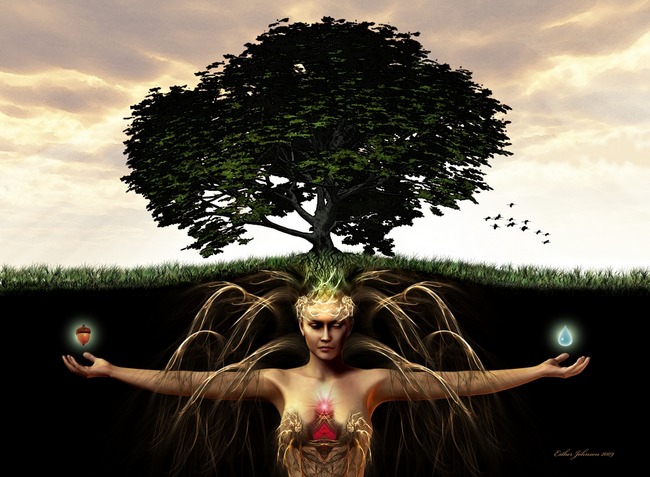
"Gaia's Child" by Esther Johnson

_______________________________________________________

Including excerpted sections from “Sacred Earth: The Divinities of Odinala”

(A work in the making)

_______________________________________________________

Nkele Egede: In Praise of the First Ones

Standard

Nkele Egede

(Igbo Translation)

Lekwe anyanwu biara uwa,

Ihe ebi-ebi ka o Jiri choo ya mma.

Mmadu Jizi maka nke-a hu ya na-anya.

Aja-Ala, Nne mbu buru anyi n’afo izizi,

Anyi echeta gi.

Igwe na mmiri,

Ndi mbu lere anyi omugwo,

Ndi mbu biara abia na ogodo uwa.

Anyi echeta unu.

Ikuku na Okpoko, ndi mbu fere efe,

Ndi obu-akika-na-enwu-oku n’isi,

Ndi mbu lara agu n’asaa na mmiri n’asaa,

Were nu nke ru-ru unu.

Debe nu Chim na Chi uwam.

Uwam biara, lekwem.


In Praise of the First Ones

 (English Translation)

Now behold the Magnificent Sun,

The One who came forth and blessed the world with eternal light.

Oh—how endless our adoration.

Behold too, the motherly Earth,

From whose primal womb we’ve all emerged and continue to emerge,

How endless our appreciation.

Behold now, the very ancient Sky and primal Waters.

The most graceful ones who first suckled and guided us,

The manifest ones who first embraced the visible world.

How endless our adoration.

Behold the sacred Spirit that is Breath and its chosen bird, Okpoko.

Behold both earliest of all adventurers; inventors of the art of flight.

Behold them, the non-flammable head-bearers of Light—

Primal navigators of the Seven Wilderness and Seven Seas.

Oh—ancient ones of renown, how endless my appreciation.

Guide now, my Chi and the Chi of my Destiny.

Great manifested world, bear me well.

—Nze Omenigbo Izo

(Excerpted from “The Transfiguration of Izo and Other Mystical Feats: Poems”)


Anyanwu: The Eye of Light

Standard

“Anywanwu” by Ben Enwonwu

The sun is one of the most universally revered objects in human history. Just about every culture on the planet honors it for all the different gifts that it brings to our planet, bringing both the light and heat that make life on our planet possible.

Sol Invictus

For one, our method of keeping time is based on it, as for the majority of human history, our clocks were sundials. Most of our modern calendars (including days of the week ala Sun-day), are based off it, and lot of our major holidays originally started as solar equinox or solstice celebrations (such as Easter and Christmas respectively). Even western astrology focuses on a person’s sun signs. Needless to say, our lives revolve around the sun…literally.

“The Sun Shine Brightly” by Uche Okeke

Amongst Ndi Igbo, the Sun was referred to as Anyanwu (An-yan-wew). This is a combination of two different words. The first word, anya means eye. The second word, anwu, means light. Together, the phrase reads as “eye of light.”

Anywanu and other cosmic entities on an Igbo compound wall

Metamorphosing the sun as an eye is not an exclusively Igbo concept. Another famous example of this can be found in the ancient Egyptian character of Ra, who was depicted as a Falcon headed man who hand a sun disk on his head.

Ra

Eye of Ra

A modern example of a celestial eye can be found on the left side of a dollar bill. Here are some other examples found throughout different cultures:

Back of $1 bill

Masonic Eye of Providence

Coat of Arms of Brasłaŭ, Belarus

With the multiple appearances of this “all seeing eye”, one question will naturally arise: Exactly whose eye is it and why is it portrayed in that way? The answer will be revealed throughout this post.

The sun is a symbol of both physical and spiritual awakening. In most societies, peoples sleep cycles closely followed that of the sun. They would wake up around the time the sun rose, and go to sleep soon after the sunset. Many plants and animals also follow this trend.As an agriculturalist, I have been taught that the best way to save seeds is to keep them dry and in the dark, as they will germinate (awaken) if exposed to moisture and sunlight.

Awakening of a seed

Awakening of a seed

When spiritual awakening occurs, its usually referred to as enlightenment. If one has a good eye, they will notice that many of the holy men and women throughout history are quite often portrayed with a sun disc behind their head. Even their titles and epithets reveal as much. The Buddha, for example, name literally means “The Awakened One.”

The Buddha (Awakened One)

Lao Tzu

Green Tara

Jesus the Christ (Annointed One)

Kwan Yin (A Female Buddha)

Krishna

Krishna

It is no coincidence  that Alaigbo (Igboland) was referred to as the land of the rising sun. Many of the most enlightening spiritual teachings and examples in all of Africa had been found in that land in what is now southeastern Nigeria. One place in particular was so highly developed that people considered it to be  one of the  major cultural epicenters of modern Igbo civilization. This place was known as Agwukwu-Nri, from which I am descended from on my mother’s side.

Land of the Rising Sun

Anywanu played a very large role in life of the Umunri. “Nri people believed that the sun was the dwelling place of Anyanwu (The God of Light and Agbala (The Holy Spirit). They believed Agbala to be the collective spirit of all holy beings (human and nonhuman). The Holy Spirit was a perfect agent of Chi-Ukwu or Chineke (The big God or the Creator God). The Holy Spirit chose its human and nonhuman agents only by their merit. It knew no politics. It transcended religion and culture, and of course, gender. It worked with the humble and truthful. They believed Anyanwu, the Light, to be the symbol of human perfection that all must seek. Anyanwu was perfection and Agbala was entrusted to lead us there.” (Anuobi, Chikodi. Nri Warriors of Peace. Page 210).

Anyanwu and Agbala by Odera Igbokwe

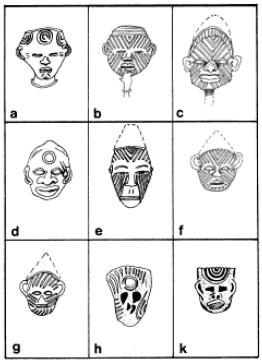
Nri people were so serious about their veneration of Anyanwu, that they would wear it on their faces. This facial scarification was called ichi“In standard Nri scarification, the artist would carve the first line to run from the center of the forehead down to the center of the chin. They would then carve a second line to run across the face, from the right cheek to the left. The second line met the first at the center of the nose, making it a perfect cross. The second cross was drawn with one line running from the left side of the forehead down to the right side of the chin and another line running down the opposite direction. This sequence and pattern was repeated until the pattern looked like the rays of the sun. Altogether, it took sixteen straight lines, eight crosses, for a full face scarification that mirrored the rays of the sun. It was their way of honoring the sun that they worshiped. But it was more than that. It was the face and service and another way of losing one’s facial personality.” (Anuobi, Chikodi. Nri Warriors of Peace. Page 203-204).

Ichi Facial Markings

One very important part of Nri’s mission was as the peacemakers and cleansers of abomination in Igboland. They attempted to broker peace deals and end wars, even going so far as to run onto battlefields to stop them. When a land needed to be cleansed for whatever reason, and it was beyond the scope of the ritual specialists of that area, Nri priests were sent in to do the job of restoring balance.  Ironically, the sun itself is a cleansing agent, and it is capable of destroying pathogens in liquids.In alot of ways, the Nri were like the Jedi of the Igbo people. However, instead of using lightsabers, they used Otonsi rods to vanquish evil.

I always thought Obi Wan’s name looked Igbo


Anyanwu bestows many gifts to people. One gift is the one of sight. When the sun is out, things that were once in darkness are brought to light. This is meant both in the physical as well as metaphysical sense. Darkness is often used to symbolize something that is hidden or unknown, while light in this sense represents something that has been revealed.

Anyanwu Shrine in Ovoko Village

Returning back to the previous examples of the Sun manifested as an eye, it should be clear by now that the eye that is being symbolized is YOUR OWN. It represents YOUR enlightenment, YOUR sight, YOUR vision. This is is reiterated by the usage of a hawk to represent Ra. One of the things that hawks are known for is to be birds of prey. For an animal that flys to be able to spot and capture its prey from so high up in the sky, they must have incredible vision. The Avenger known as Hawkeye is appropriately named as such because of his ability to hit targets with his bow and arrow, which requires a very sharp eye.

Hawkeye, the Avenger

Hawkeye, the Avenger

A former mentor of mine once told me that ones eyes are their first oracle. For this reason, he said, he was unable to consult Afa Ugili/Akpukpala (divination apparatus)  if he were outside, as Agwu (the Igbo spirit of divination) would be working primarily through his eyes. In fact, in his book, After God Is Dibia Vol. 1, legendary Dibia John Umeh proclaims that “As Ose Obala, Agwu is the God of Light, Anwu, whose eye is the Sun (Anyanwu). ..As the God of Light, Agwu is an integral part of Ose Ora (Uche Chukwu), the universal Consciousness of God…which is the completeness awareness of what was, what is, and what will be…..God of Light whose blze or Divine Light disperses and/or extinguishes danger, evil or darkness.” (Page 114).

“Anyanwu and Agbala were not there, only coldness” by Uche Okeke

Metaphorically, this sight represents itself as insight, which is the capacity to gain an accurate and deep intuitive understanding of a person or thing, and foresight, the ability to predict what will happen or be needed in the future. In short, insight is the ability to see things as they really are, and foresight is the ability to see things as they will be.

There are many people who seek solutions to problems when the answers are typically right in front of their face, and the thing about your senses is that if you don’t use them, you will lose them. Have you ever wondered why despite all of the oracles that were all over Africa, none of them seemed to give an adequate solution to the coming domination by the Europeans? (Or if they did, the people definitely did not listen to them!)  Why is it that the only nation that was never to formally colonized in Africa was Ethiopia? Could it have anything to do with the incredible foresight of its leader, Emperor Menelik II? Were other African people overdependent on their shrines and oracles that they forgot how to use their abilities of foresight and insight?

HEM Menelik II: King of Kings of Ethiopia

One also didn’t need to use an oracle to see that the present systems we have (economic, political, industrial, religious etc) were unsustainable and would eventually fail us. A major flaw of Western Civilization is the complete lack of foresight in a lot of the decisions that have been made throughout the years. Sometimes it makes one scratch their head and wonder if those in power ever consider the future consequences of their actions or if they even care.

Other examples of a Sun god granting powers of foresight and insight would be Apollo of the Greeks and Romans, whose Oracle at Delphi was the most important oracular site of the classical Greek world. Apollo once granted Cassandra the gift of foresight in order to seduce her, but after she rejected him, he proclaimed that nobody would ever believe her prophecies. She foresaw the fall of Troy due to the Trojan Horse, and even foresaw her own death, but was powerless to stop either. Pretty messed up situation to be in right?

Apollo: Graeco-Roman God of Light, Wisdom, Prophecy, etc

As  I stated in the Amadioha post, my personal shrine of Anywanu uses the image of the Johny Storm AKA the Human Torch. He is one of the members of the Fantastic Four, with each member representing one of the four classical elements of: earth (The Thing) , air (The Invisible Woman) , fire  (The Human Torch) and water (Mr. Fantastic). However, that is a topic for another day.

The Human Torch

Another comic book character that can be used to represent Anyanwu would be Phoenix from the X-Men. In fact, I would say that she represents Anyanwu way better than the Human Torch because of the significance of the Phoenix, which is  a mythological fire bird found across many cultures that represents rebirth, immortality and renewal. Plus, the comic version also granted enhanced psionic (psychic) abilities  to its host, as Anyanwu also does.

The Phoenix

If you wish to gain access to the infinite wisdom, joy and love of Anyanwu, you can start by greeting her every morning as our ancestors used to do. If you decide to do so, ask yourself: Are you ready to be awakened? 

Amadioha: The Igbo God of Thunder and Lightning

Standard

by Omenka Egwuatu Nwa-Ikenga

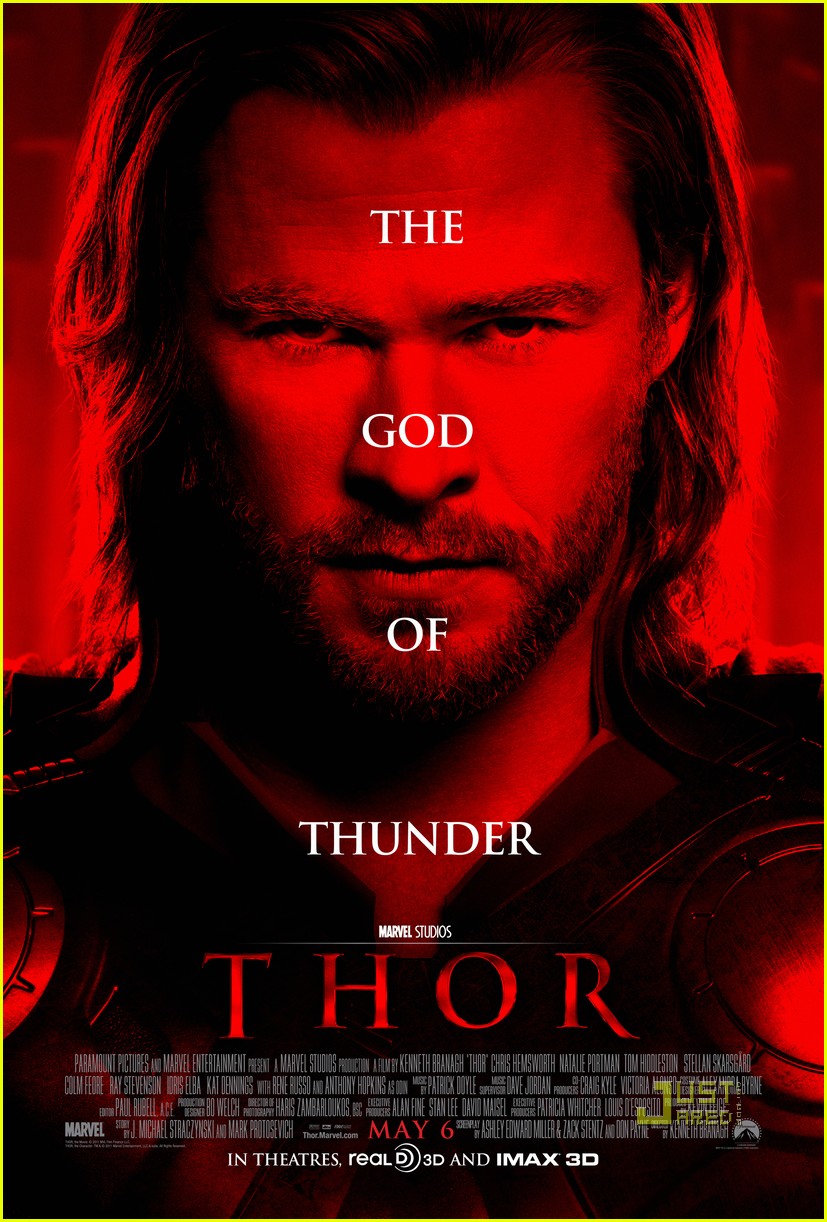
Last week, I had the luxury of seeing the movie Thor. I was very excited to see the movie for a number of different reasons. For one, I am a very big  fan of superheroes, and love to watch both animated and live action movies and television series based off them. Secondly, I also happen to be a huge fan of mythology (In particular, Graeco-Roman, Judeo-Christian, Hindu and of course , the various ones of Africa) and I think that one of the best ways to understand a peoples culture and values is to read their mythology.  So since this movie was a mixture of two of the things I love most, it was at the top of the list for on my “movies to watch” list.

thor-movie-posters-05

The comic book character Thor was based off the Norse God of Thunder by the same name. According to Stan Lee, he had been looking for a hero that could compete with the Hulk, and he figured that since no man could, he would have to use a god…literally. So he adapted various characters from the mythology of  the Nordic and Germanic people into comic book characters.

The Mighty Thor

Thor was said to  rule over thunder, lightning, and storms. He was associated with oak trees, strength, destruction, fertility, healing, and was seen by his worshipers as the protector of mankind against the Jötunn, a race of malevolent nature spirits.  The day of the week Thursday actually stems from his sacred day, and literally means “Thor’s day.” He carried a large hammer called Mjölnir which is still worn today as a pendant by many European neo-pagans.

Hammer of Thor

But the most compelling reason that I was drawn to see this movie (more so than most of the other superhero films that were coming out this year such as Captain America and the Green Lantern was the fact that Thor reminds me ALOT of another God of Thunder that also happens to be one of my favorites: Amadioha.

Artist’s depiction of Amadioha

Amadioha is one of the most popular of the Igbo deities. In fact, right after water spirits, the gods of thunder and lightning like Shango, Siete Rayos, Nzaji, etc  seem to be the most well known and liked of all the deities all over Africa and its diaspora.  Although he is usually referred to as Amadioha, that is not really a name, but one of his many epithets, which also include Igwe, Ofufe, and Igwekaala. The proper name of this entity would actually be Kamalu, or Kalu Akanu, and that’s the name that I use personally when referring to him.

Much of what is said about the other gods of thunder and lightning can be said about Amadioha: They serve as agents of justice, they are associated with war and aggression, and their colors tend to be red and white.  People who have been accused of crimes go to their shrines to declare their innocence, less they be struck by lightning.

Unlike his fellow thunder and lightning deities, Amadioha doesn’t carry an object of power like Thor carries his hammer or like his second cousin Shango carries his axe. If he did carry something, I would assume it would be an Ogu stick, seeing as though its the symbol of justice. The ram is sacred to alot of the African thunder and lightning gods, both as a sacrifice and as a symbol. In fact, Amadioha at times appears to people in the form of a large white ram.

Amadioha

Amadioha in the form of a ram

Even though the vast majority of Igbo people profess to be Bible believing Christians, belief in Amadioha still remains strong. I remember a conversation I had with a traditional ruler  a few years ago while he was visiting the states about when he described an evening when he went outside during a storm and saw his the grass near his compound on fire, but not burning. Afterwards, a white ram appeared out of nowhere. When it was all over, it was like nothing had happened.

Amadioha is also still used to curse people or threaten them. I can’t count the number of times that I have heard the phrase “thunder fire you!” or “Amadioha magbukwa gi!” (Amadioha will punish you!) Just the other day, I read an article where one of the priests of Amadioha proclaimed that the deity would punish any of the candidates if they dared try to rig the Governorship or House of Assembly polls in Nigeria.  I personally would have more confidence in elected officials in Nigeria if they had to swear oaths at Amadioha’s shrine instead of swearing them on the Bible or Koran, and I’m pretty sure I’m not alone in that sentiment.

What tends to happen when folks swear on the Bible/Quran

Although I was raised as a Christian, I was always very curious about what my ancestors believed and practiced. So I took it upon myself to actually research it. When I read about the Igbo deities, Amadioha was one that really stuck out to me for some odd reason. That affinity towards him never went away, and to this day, he’s one of my favorite of the Igbo Alusi.

When I was in the early days of my traditional practice, I was trying to figure out how I would make shrines and alters for the different deities. I asked some elders for images of the different Alusi  and the response I got was one of amusement. They explained to me that trying to find an image of a Mmuo (spirit) was like trying to find an image of the wind, and that each picture or carving that you’ve ever seen of any of them is just an artistic representation of an invisible force.

Wind Blowing

Wind Blowing

Furthermore, the vast majority of the times, most of the shrines  to the different forces of nature weren’t carvings or images at all, but rather plants, trees, or simple combination of rocks and wood. For example, one  examples of a traditional shrine to Amadioha would be a log resting on two large bamboo posts. I didn’t get the lessons at first, but one day it hit me:  My ancestors were very artistic in the way they created their shrines, and the spirits that they represented would always appear to my ancestors in ways that they could recognize them. So I asked myself, how would I want them to appear to me? I’m a young man growing up in the age of Youtube, Facebook and Iphones. What would a supernatural being look like to me? Perhaps a superhero? A superhero representation for Amadioha was the first one that came to mind. It was pretty easy too:

The Man of Steel (John Henry Irons)

Steel (also known as the Man of Steel) is a comic book character in the DC universe. His alter ego is Dr. John Henry Irons, a brilliant weapons engineer who creates a high powered suit of armor to fight crime after Superman gets killed by Doomsday. This character was inspired by the legendary African American folkhero John Henry. He is very similar to Marvel’s Iron Man.  Although he has no superpowers, but his suit grants him flight, enhanced strength, and endurance.

Steel was the image that I decided to use to represent Amadioha for my shrine. If he were to appear to me in a vision or dream, that is how he would look like, combined with the abilities of Thor. What I did was very similar to what alot of enslaved Africand did in Santeria, Voodoo and Palo Mayombe when they placed pictures of Catholic Saints to represent their deities in order to avoid religious persecution. However, since I could never see myself using images of my enemy to represent my deities, I choose to use comic book characters instead.

After I made one for Amadioha, I started making similar shrines for other Alusi, using various comic book characters. If one went into my room and didn’t know any better, you would think I was just obsessed with comic books and nothing more 🙂 Another comic book character I used to represent an Alusi was The Human Torch. He is the image I use to represent Anyanwu, which is the spirit of the Sun. I will go in depth in the near future on the process of syncretism and how one can start to create shrines and images that work for them.

The Human Torch

While we are on the topic of symbolism, lets break down what Amadioha really means. Metaphysically, Amadioha represents the collective will of the people. An analysis of his name says so much. The name is a combination of Amadi and Oha. The first word, Amadi, is a name given to freeborn males. Oha  is a concept that deals with the power community. Traditionally, Igbo communities were not ruled by monarchs, and made their decision by using Ohas (community assemblies). Whatever they agreed on, the community was responsible for enforcing. From my understanding, the Oha title is also supposed to be the last highest level of the Ozo title system. And its one that is virtually impossible to get, because it belongs to the people!  So as the rules are made by the Earth Mother Ani (who metaphysically represents the unity of the people), they are enforced by Amadioha (their collective willpower) through lightning and thunder.

In other words, the Amadioha shrine, along with the other similar ones in Africa were said to be an indigenous form of weather manipulation. Besides being used to bring rain (which exists in just about EVERY society in the form of  a rain dance/prayer…even until today!), it also was used to enforce the rules and regulations that were made by the community. While people have conspiracy theories about alleged government weather warfare programs like HAARP, some Africans in the bush might have claimed to be successful in doing naturally what modern scientists  have attempted to do with machines. The power of Amadioha really makes me wonder what else Africans could do if they decided to come together. It also brings a whole new meaning to the phrase: “The Power to the People!”

Black Power!!!

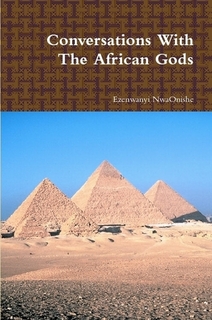
“Conversations with the African Gods” Review

Standard

Conversations with the African Gods

This past weekend, I had the pleasure of reviewing another book written by an Igbo author who goes by the name Nwaonishe Ezenwanyi, entitled Conversations with the African Gods. Many of you might be familiar with the similarly titled “Conversations with God” series, written by Neale Donald Walsch, in which he has a number of conversations with “God.” To say that this book is the African version of that would be an understatement. Conversations with the African Gods is a journey for anyone who reads it, on humanity’s past, present, and future, from an African point of view. For far too long, perspectives, philosophies, and religions have been placed into a  false dichotomy of being either Eastern or Western, with Africa being excluded.  This book challenges that false dualism and brings forth commentary on world events from African gods and ancestors.

False Dichotomy

The author begins by describing her personal journey.  Like many of us born during the African Dark Ages, she was raised as a Christian (specifically Catholic), but was still extremely curious about the other religious and spiritual traditions in the world. Her journey took her to exploring Buddhism, Hinduism, Islam, amongst others. Eventually, after doing a lot of seeking and searching, her journey didn’t lead to her finding the “right” tradition, but to the tradition “finding” her. In fact, she  ended up  listening to the voices that had been calling her all along. She claimed her birthright and began practicing the spiritual science of her ancestors, Odinani.

Her spiritual awakening has also lead to her becoming aware of and developing different abilities such as clairvoyance, clairaudience, etc.  One of the most interesting gifts that she learned was how to invoke spirits.  The one that she was able to invoke the most was Onishe, who happened to be her “head deity”, or the one most in control of her life.  For that reason, she goes by the name Nwaonishe, which means a child of Onishe. She also happens to be the spirit that makes the most commentary. She opens up the dialogue by stating:

“I am a prophetess, a chosen one, selected apart by god/dess to speak the words of god/dess. I am manifestation of god/dess as I surrender each moment to my essential nature. I am speaker of life and death. Avenger for the just, the pure, the clean. There is only one Onishe and she is here and now, in you, and in many. I am the word. Atu. Word that forms everything. Logos. Mami Wata, Supreme Water, Essence liquid, Nut of Khemet. I am the word of Nut, the goddess of creation.”

Statue associated with Onishe in Asaba

While Onishe is the Igbo Alusi (spiritual force) that speaks the most, others also make their voices heard including Eke, Ikenga, Amadioha, Ani, and Anyanwu. Two other African Gods who are typically associated with Ancient Egypt also make substantial contributions: Ausar (Osiris) and Auset (Isis).

Ausar and Auset: Real Love

Contrary to popular belief, while  the gods of Ancient KMT (Egypt), especially Ausar and Auset, might have been popularized by that particular nation, they are actually much, much older than it and can be found all around the continent under different names and titles. This will be elaborated on in future posts.

These African Gods, as well as other ones including the popular ones made popular by Hinduism, Kali and Krishna (who both have names that mean “the Black One” ), as well Tehuti (Thoth) and Heru (Horus),  make commentary on a wide range of issues, including the ancient “Golden Age” civilizations of Atlantis and Lemuria, climate change, 2012, colonization, slavery, civil rights as well as the possible “Golden Age” to come. The discourse on how Africa (and Nigeria in particular) should structure their economies and governments to actually work for the benefit of the people (for once) is very enlightening, but is sure to shock a few people (Ikenga’s comments in particular).

Kali is not one to mess with

Commentary is made on the lives of difference ancestors as well, with some of them even commenting on where they are currently in the spiritual realm. Some of these ancestors include Fela Kuti, Malcolm X, Martin Luther King Jr, Olaudah Equiano, and others.  I found Fela’s mother, Funmilayo’s statements in reference to the Fela play to be pretty funny.

Olaudah Equiano

Another added bonus to the book is the use not only of the Nsibidi symbols associated with the different Alusi, but also practical rituals that one can do to commune with the Ndichie (ancestors) and Alusi, as well as attract abundance in one’s life.  I totally recommend this book to all  people of African decent, but it can speak to anyone  interested in advancing on their spiritual path. To order the book, click here.

SPECIAL BONUS:

To hear an interview with the author, on Igbo Kwenu Radio, click here.


The Transmission of Odinani & Omenala in Pre-Colonial and Modern Society (Part 2)

Standard

by Omenka Egwuatu Nwa-Ikenga

Ifuru (mythology)

Ndi Igbo (Igbo people), like other ancient people around the world, created mythology to answer basic questions about how the world was created, where their people came from, and why things are the way they are in the world. However, unlike many unenlightened people today, they were not naive enough to take these stories literally, and understood them to be symbolic.

The following myth deals with the origin of Afa (divination). Although the Yoruba system of Ifa is the most popular, it did NOT originate with them and appears all over West Africa. The Fon people call it Fa.  The Urhobos call it Epha. To the Ewe, its also called Afa.

Divination Apparatus

The excerpt is from page 86 of  John Umeh’s After God is Dibia Volume 1:

“The Igbos have a very interesting history of the origin of Afa Ugili/Akpukpala. There was a very brilliant Igbo lady who made accurate prophecies and inspired utterances and accurately read the minds of God, spirits, ancestors, men and women, stars, planets and all that exists and saw clear and accurate visions of what was, what is, and what will be. Additionally, she heard, with the help of her mystical third ear, what was, what is, and what will be.

She was consulted on all problems which she solved with precision and complete satisfaction. She lived to a very ripe old age, serving humanity and God with her clear vision and uncanny audition. When she finally died, humanity was thrown into a great wailing, chaos and confusion.

A delegation was therefore sent to Chukwu (God) with a request that He kindly send a replacement or make it possible for all to have the vision and audition of the dead wise old lady sage. God consoled the delegates and sent back, through them, His merciful words of consolation to humanity.

He instructed them on how to bury the old, dead divination sage with a promise that an Ugili, sacred tree, will sprout and grow from her head and that its fruits, when they ripe and fall, should have their shells broken into two and arranged four on each of four strings, which when cast and interpreted will tell with accuracy, what was, what is, and what will be.The delegates left home for the human world with the good news, divine words of consolation and instruction on the new divination system that would replace the uncanny vision and audition of the lady sage of divination. God’s instructions were obeyed to the last letter. The result was as promised”

Ugili Tree

Unlike other mythologies where women usually are blamed for the downfall of the human race, a woman is seen as being the source of this sacred divination system, and women played very important roles in pre-colonial Igbo society as dibia afa (diviners) and priestesses.

Ukabuilu (parables)

Parables are alot like mythology, but mostly deal with moral lessons rather than answering questions of origins. The following is a parable from the Oraifite community of Igboland. More can be found at this link.

“Many years ago there was a Calabar hunter called Effiong, who lived in the bush, killed plenty of animals, and made much money. Every one in the country knew him, and one of his best friends was a man called Okun, who lived near him.

But Effiong was very extravagant, and spent much money in eating and drinking with every one, until at last he became quite poor, so he had to go out hunting again; but now his good luck seemed to have deserted him, for although he worked hard, and hunted day and night, he could not succeed in killing anything.

One day, as he was very hungry, he went to his friend Okun and borrowed two hundred rods from him, and told him to come to his house on a certain day to get his money, and he told him to bring his gun, loaded, with him.

Now, some time before this Effiong had made friends with a leopard and a bush cat, whom he had met in the forest whilst on one of his hunting expeditions; and he had also made friends with a goat and a cock at a farm where he had stayed for the night.

But though Effiong had borrowed the money from Okun, he could not think how he was to repay it on the day he had promised.

At last, however, he thought of a plan, and on the next day he went to his friend the leopard, and asked him to lend him two hundred rods, promising to return the amount to him on the same day as he had promised to pay Okun; and he also told the leopard, that if he were absent when he came for his money, he could kill anything he saw in the house and eat it.

The leopard was then to wait until the hunter arrived, when he would pay him the money; and to this the leopard agreed. The hunter then went to his friend the goat, and borrowed two hundred rods from him in the same way.

Effiong also went to his friends the bush cat and the cock, and borrowed two hundred rods from each of them on the same conditions, and told each one of them that if he were absent when they arrived, they could kill and eat anything they found about the place.

When the appointed day arrived the hunter spread some corn on the ground, and then went away and left the house deserted. Very early in the morning, soon after he had begun to crow, the cock remembered what the hunter had told him, and walked over to the hunter’s house, but found no one there. On looking round, however, he saw some corn on the, ground, and, being hungry, he commenced to eat.

About this time the bush cat also arrived, and not finding the hunter at home, he, too, looked about, and very soon he espied the cock, who was busy picking up the grains of corn. So the bush cat went up very softly behind and pounced on the cock and killed him at once, and began to eat him.

By this time the goat had come for his money; but not finding his friend, he walked about until he came upon the bush cat, who was so intent upon his meal off the cock, that he did not notice the goat approaching; and the goat, being in rather a bad temper at not getting his money, at once charged at the bush cat and knocked him over, butting him with his horns.

This the bush cat did not like at all, so, as he was not big enough to fight the goat, he picked up the remains of the cock and ran off with it to the bush, and so lost his money, as he did not await the arrival of the hunter.

The goat was thus left master of the situation and started bleating, and this noise attracted the attention of the leopard, who was on his way to receive payment from the hunter. As he got nearer the smell of goat became very strong, and being hungry, for he had not eaten anything for some time, he approached the goat very carefully.

Not seeing any one about he stalked the goat and got nearer and nearer, until he was within springing distance.

The goat, in the meantime, was grazing quietly, quite unsuspicious of any danger, as he was in his friend the hunter’s compound. Now and then he would say Ba!! But most of the time he was busy eating the young grass, and picking up the leaves which had fallen from a tree of which he was very fond.

Suddenly the leopard sprang at the goat, and with one crunch at the neck brought him down. The goat was dead almost at once, and the leopard started on his meal.
It was now about eight o’clock in the morning, and Okun, the hunter’s friend, having had his early morning meal, went out with his gun to receive payment of the two hundred rods he had lent to the hunter.

When he got close to the house he heard a crunching sound, and, being a hunter himself, he approached very cautiously, and looking over the fence saw the leopard only a few yards off busily engaged eating the goat. He took careful aim at the leopard and fired, whereupon the leopard rolled over dead.

The death of the leopard meant that four of the hunter’s creditors were now disposed of, as the bush cat had killed the cock, the goat had driven the bush cat away (who thus forfeited his claim), and in his turn the goat had been killed by the leopard, who had just been slain by Okun.

This meant a saving of eight hundred rods to Effiong; but he was not content with this, and directly he heard the report of the gun he ran out from where he had been hiding all the time, and found the leopard lying dead with Okun standing over it.

Then in very strong language Effiong began to upbraid his friend, and asked him why he had killed his old friend the leopard, that nothing would satisfy him but that he should report the whole matter to the king, who would no doubt deal with him as he thought fit.

When Effiong said this Okun was frightened, and begged him not to say anything more about the matter, as the king would be angry; but the hunter was obdurate, and refused to listen to him; and at last Okun said, “If you will allow the whole thing to drop and will say no more about it, I will make you a present of the two hundred rods you borrowed from me.”

This was just what Effiong wanted, but still he did not give in at once; eventually, however, he agreed, and told Okun he might go, and that he would bury the body of his friend the leopard.

Directly Okun had gone, instead of burying the body Effiong dragged it inside the house and skinned it very carefully. The skin he put out to dry in the sun, and covered it with wood ash, and the body he ate.

When the skin was well cured the hunter took it to a distant market, where he sold it for much money. And now, whenever a bush cat sees a cock he always kills it, and does so by right, as he takes the cock in part payment of the two hundred rods which the hunter never paid him.

MORAL: Never lend money to people (who cannot pay it back), because if they cannot pay they will try to kill you or get rid of you in some way, either by poison or by setting bad Ju Ju’s for you.”

Ute ikpe ekpere (prayers)

Prayer has always been a central part of Igbo life. It served as a direct link to ala mmuo (the spirit land). The following is an excerpt from pages 199-200 of Traditional Igbo Beliefs and Practices by  IK Ogbukagu. A morning prayer  of this nature was done every day by the head of each household while offering oji (kola nut) to the different divinities.

A kpopu uzo, a kpopu onu
The dawning of a new day marks the beginning of a routine struggling for the means of human and other beings existence

Ubosi kpatalu nu nya likalie
The day that fetches more benefits than others deserves to have more of those items of benefit

Uchu adi agba mma ekwu
The pen kinfe routinely deployed for splitting of kolanuts because of the nature of its assignment is always assured of early morning breakfast

O bu n’igwe , O bu n’ana, chedo anyi
God who lives in heaven and on earth, please protect our interest

Omebia, Odokwaa
God you destroy and regenerate lives

O sibe, O dika a ma elisi
God bestows gifts as though these benevolence would remain endless

E lisie, o dika a ma eweta ozo
He allows or rescinds these gifts as he considers appropriate or expedient

Taa oji a n’otu ka anyi taa ya n’ibe n’ibe
Almighty God, take this kolanut in whole, while we take it in cotyledons

Oru mmuo na nnu mmo bianu taa oji
All classes of spirit/elementals, especially the good ones, please have your own share of this nut

Ichie ukwu na ichi nta
Titled and non-titled ancestors to join us in this exercise

Ndi mvu na ndi egede
The primordial and other ancestors of the spirit world also to join

A nalu nwata ife o ji ama mma mma ya aluru
When a child is deprived of what he loves he subsequently is made miserable

Ana, ndi afulu anya na ndi afuro anya, nke na enwero okpa ibe ya kwota ya n’azu
This land, indigines dead and alive; among the dead;the deformed and the crippled helped by others also are invited to join

Unu ekwena ka oji dalue ana, ma o bu ka nwa-ngwele gbaa aji
(Almighty God) do not allow this kolanut to drop from my hand or subject us to any misfortune today

Ofo nn m nyiba m alo, e welu m aka abo bulu ya
I will at all costs endeavor to protect all the heritages handed over to me by my father

Mmuo na anoro ya, mmadu ebulu oche ya
If an oracle vacates its seat, a human being takes over

Izuzugbe nzugbe, anunu gbe
All (spirits/ancestors) are enjoined to rally and then fully participate in these early morning prayers

O sii nwata, jide nkakwu, ya ga-ekunye mmili o ga-eji kwo aka
Anyone who makes a child commit a crime will have to bear the consequence of his action

Oso chuka nwata, o gbanaa ikwu nne ya
A child who has a serious disagreement with his fraternal household may op to move over and settle with his maternal relatives

Nee ubosi taata dozie ya ka o di ka ibe ya
God bless today as you did with other days

Ndi ilo ezuana anyi n’uzo
We earnestly pray we do not fall prey to the evil plans of our enemies

O bialu egbu anyi gbue onwe ya
Wicked plans designed to harm the innocent are to have boomerang effect

Ile oma ka ejuna ji agan’ogwu
We achieve much progress by being good, kind and gentile

Ife any ga-eli bia, nke ga eli anyi abiana
We pray for the good things of life and abhor evil tendencies

Izu gbajulugwo o kaalu nti
Secrets and malevolent plants at some point in time, may be revealed

Ututu tutauta ife
May today be blessed with blessed with lots of good luck

Onye welu ututu tutuba otutujue akpa
If you start early enough to toil, you will achieve a lot by the end of the day”

As you can see, Igbo prayers were a combination of affirmations, praises, proverbs, and requests. There were not wish lists or the marathon sessions of begging that are prominent in some traditions today. Most importantly, Igbo prayer was almost always never done empty handed, and placed a good deal of responsibility on the part of the person doing the prayer to follow it up with the right actions and deeds that would lead to its fulfillment.